ICE vehicle stops draw review after Maine driver killed
ICE vehicle stops are being paused nationwide after fatal shootings in Texas and Maine intensified scrutiny of deportation tactics.
Atlas Newsdesk ·
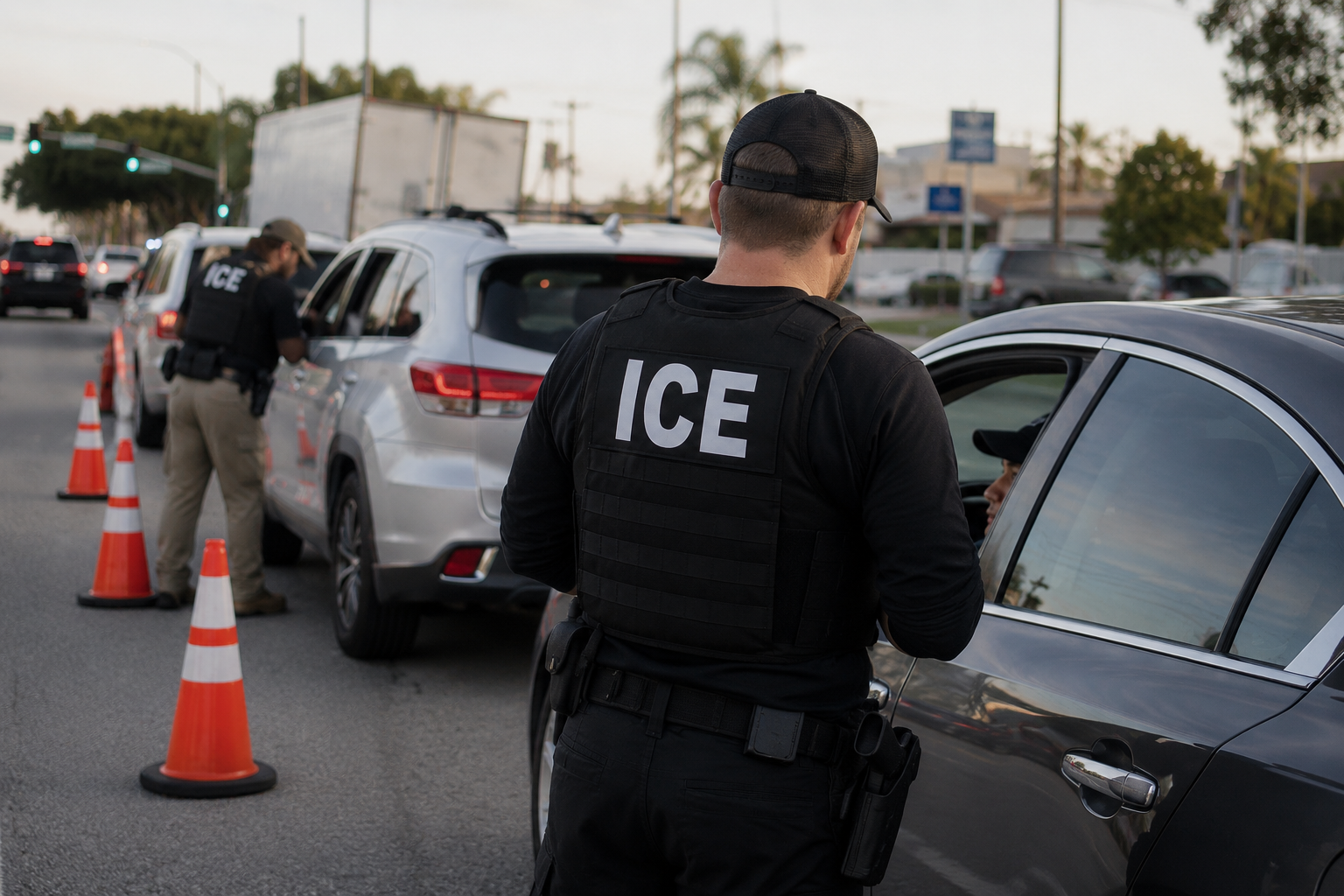
ICE vehicle stops are being paused nationwide after two fatal traffic-stop shootings in Texas and Maine put enforcement tactics under scrutiny.
Officials said the agency directed officers on Tuesday to halt most such stops across the country. Tom Homan, President Donald Trump's border czar, described the change as a "temporary pause," signaling a tactical retreat rather than a formal policy reversal.
Two shootings prompted the order
The instruction came one day after an ICE agent fatally shot a Colombian driver in Biddeford, Maine, a coastal city about 15 miles (24 km) south of Portland. That incident followed another fatal encounter six days earlier during an attempted vehicle stop in Houston.
On July 7, an ICE officer in Houston shot and killed a Mexican national while trying to stop his vehicle. The timing of the two deaths turned separate field incidents into a national operational problem for the agency.
DHS says neither man was targeted
The Department of Homeland Security, ICE's parent agency, described both men as "illegal aliens." DHS officials also acknowledged that neither man was the target of the deportation operations that led to the encounters in which they were killed.
That distinction matters because vehicle stops are often fast, fluid and dependent on officers making quick judgments outside controlled settings. When the person killed is not the intended target, the enforcement method itself becomes the focus of scrutiny.
Federal authorities have not produced public video footage of either shooting. They also have not publicly offered evidence supporting claims that either man posed a threat to agents or the wider public sufficient to justify lethal force.
Deportation drive faces tactical strain
The deaths come during a broader immigration enforcement campaign launched after Trump returned to office in January 2025. Officials said the two incidents brought to at least seven the number of people fatally shot during immigration enforcement operations since then.
For ICE, the immediate effect is operational uncertainty. Officers who had relied on vehicles as points of contact may now have to shift toward planned arrests, fixed-location operations or surveillance-heavy approaches that can take more time and require tighter coordination.
For DHS leadership, the pause creates a second problem: public accountability. Without video evidence or a detailed explanation of the threat assessment in the Texas and Maine shootings, the agency is asking the public to accept lethal-force decisions largely on official assertion.
The wider immigration-enforcement system also absorbs the disruption. Detention planning, transport scheduling, field surveillance and local coordination can all be affected when one common arrest tactic is pulled back, even temporarily.
Pause sets up three paths
If the pause remains narrow and brief, ICE may treat it as a training and risk-review interval before resuming vehicle stops under clearer internal instructions. The macro effect would likely be limited, while the agency would seek to preserve deportation capacity and reduce the chance of another lethal encounter.
If the suspension expands or lasts longer, enforcement tempo could slow in cases that depend on mobile arrests. That would put pressure on ICE to show results through other tactics, while contractors and local partners tied to detention logistics could face uneven demand.
If vehicle stops resume without public evidence from the two shootings or clearer use-of-force standards, legal and political scrutiny is likely to intensify. The key unresolved questions are whether DHS releases more evidence, whether internal rules change, and whether Congress or courts seek a larger role in reviewing immigration enforcement tactics.