Americans Still Don’t Trust Major Institutions — and Big Tech Just Hit Bottom
Gallup’s latest survey shows Americans' confidence in major institutions remains at a historic low of 27% amid rising partisan divisions.
Lauren Collins ·
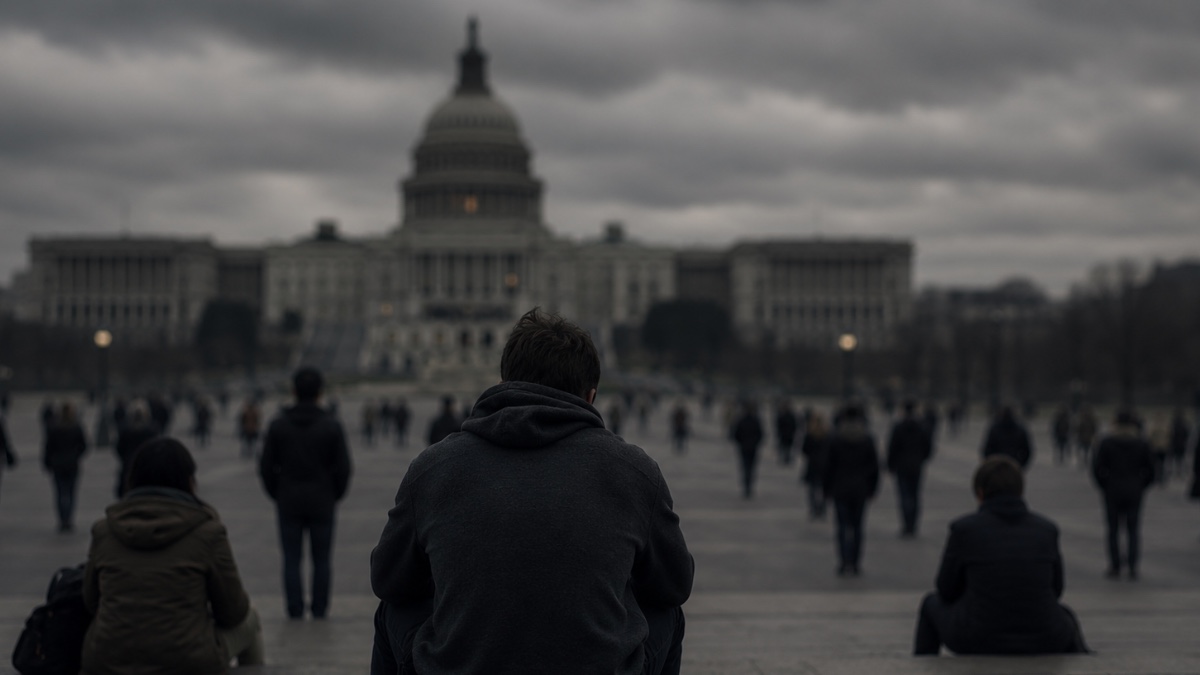
Public faith in America’s leading institutions remains close to the weakest level Gallup has recorded, extending a decline that has reshaped attitudes toward government, business, media and civic life. An average of 27% of adults selected one of the survey’s two strongest confidence categories across 14 organizations and sectors, according to polling conducted from June 1 through June 15. That result sits just one point above the series low reached in 2023 and leaves the measure below 30% for a fifth straight year. Gallup’s longer-running index of nine institutions, tracked on a near-annual basis since 1979, produced the same 27% reading, indicating that the result is not driven by changes to the broader list.
Twelve Institutions Crowd the Bottom
The weakness extends far beyond a single branch of government or troubled industry. Of the 14 institutions Gallup has evaluated each year since 1993, 12 are either at their lowest recorded level or close to it, covering organizations as varied as Congress, the military, news media, religious institutions, large corporations and the healthcare system. Banks and organized labor are the two exceptions, with each standing seven points above its own historical minimum. Small business remains the clearest outlier among the additional sectors included in the 2026 survey: its 67% confidence score is close to its long-term norm and 10 points above the low set in 1998.
2007 Changed the Trajectory
Institutional confidence has not declined in a smooth line, but the recoveries following major setbacks have become less complete. Drops during the early 1980s and early 1990s were followed by partial rebounds, while the deterioration surrounding the financial crisis proved more persistent. After reaching a low around 2007, confidence failed to recover fully and continued losing ground during the following decade. The pandemic produced a brief interruption in 2020 as Americans placed greater trust in hospitals, medical professionals and schools confronting the emergency, but that improvement faded as disputes over closures, health rules and public authority intensified.
Big Tech Falls to 20%
Large technology companies registered the most visible new decline in this year’s results, with confidence falling to 20%. Gallup first added the sector to its institutional survey in 2020, when 32% of Americans expressed strong trust, meaning the industry has lost 12 points in six years. The share reporting minimal or zero confidence climbed from 32% in 2025 to 41% this year, while another 38% placed themselves in the middle category. Higher education is also hovering around its weakest position, leaving two sectors central to innovation, workforce development and the information economy facing deeper public skepticism than they did earlier in the decade.
The Presidency Splits by 70 Points
Political identity now produces some of the largest differences in Gallup’s institutional data. Republicans’ average confidence exceeds Democrats’ by 13 points during President Donald Trump’s second term, compared with an 11-point gap a year earlier. The presidency creates the widest divide, at 70 points, followed by the military at 46 points, police at 45 points, and both the Supreme Court and organized religion at 40 points. Republicans also report greater trust in businesses, technology companies and the justice system, while Democrats give higher marks to universities, public education, labor unions, newspapers and television news.
Political Power Becomes the Filter
The pattern suggests that confidence increasingly reflects which party controls Washington rather than a durable national judgment about institutional performance. Earlier decades generally produced smaller differences between Republican and Democratic views, even when control of the White House changed, but the gap expanded under Bill Clinton, reversed under George W. Bush and continued shifting through the Obama, first Trump and Biden administrations. Democrats’ confidence has now fallen as Republican sentiment has risen with Trump’s return to office, reinforcing Gallup’s earlier findings of sharply negative Democratic views about the country’s direction. Congress, banks and the medical system generate smaller partisan differences, but those areas have not escaped the broader erosion in trust.
Five Years Below 30%
Economic strain may be contributing to the prolonged slump, particularly as households continue to focus on prices and affordability, but Gallup’s trend cannot identify a single cause. Previous declines have coincided with events including the Iraq War, the withdrawal from Afghanistan, the Supreme Court’s abortion ruling, conflicts over pandemic policy, religious abuse scandals and falling participation in organized religion. The risk is that institutions become dependent on support from the party currently benefiting from their decisions, leaving confidence vulnerable whenever political control changes. History offers evidence that trust can recover, but each rebound has tended to stop below earlier peaks, raising the possibility that 27% represents part of a lower long-term range rather than a temporary political dip.