

Iran secures Chinese oil sites for sanctioned crude, letter says
Direct unloading at designated docks would reduce ship-to-ship transfers and deepen China’s role as the main outlet for discounted Iranian crude.
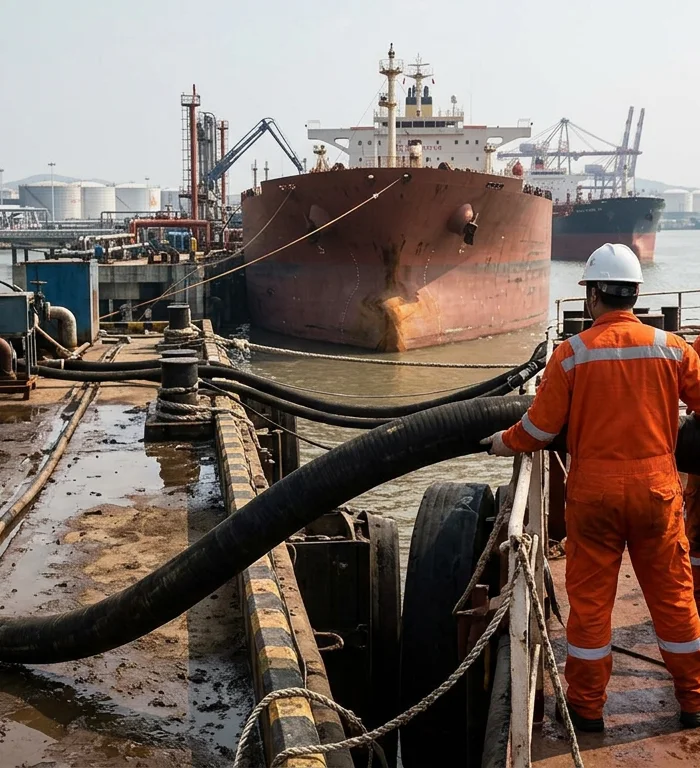
A Nov. 9 Moneycontrol report citing a leaked letter said Iran bought seven oil storage tanks in China and secured port access to keep sanctioned crude exports moving.
The facilities matter because China took more than 80% of Iran's shipped oil exports in 2025, averaging about 1.4 million barrels a day, according to Kpler data cited by Reuters in the Nov. 9 report.
The arrangement was described in correspondence from Hamid Bovard, former head of the National Iranian Oil Company, to Ali Shamkhani, a former secretary of Iran's Supreme National Security Council and political adviser to Ali Khamenei, according to the report.
Bovard criticised oil-trading policies used under former President Ebrahim Raisi and described an alternative structure developed under President Masoud Pezeshkian. Moneycontrol, citing Iran International, said the letter characterised the arrangement as involving covert cooperation from China.
According to Bovard, Iranian authorities told trusted oil intermediaries to keep using sanctioned vessels able to dock at designated Chinese ports. Iran's Foreign Ministry negotiated access to port facilities and oil terminals, while Tehran secured long-term leases on storage infrastructure, the report said.
The reported network spans the Ningbo-Zhoushan free trade zone and the Chinese ports of Qingdao and Pant in Shandong province. Moneycontrol said the docks are close to pipelines, allowing crude to move to Chinese refineries without transfers between vessels.
The report, citing two Iranian Oil Ministry sources quoted by Iran International, said Tehran gained control of a terminal in the Ningbo-Zhoushan free trade zone after helping build smaller transit facilities. It also acquired stakes in smaller docks at Qingdao and Pant in Shandong province, according to those sources.
Iran also purchased seven oil storage tanks in China, the report said. Four are at the ports of Dalian and Huizhou and in the coastal cities of Dongying and Weifang, while three others controlled by the Oil Ministry are in the Zhoushan area of the Ningbo-Zhoushan archipelago.
The facilities are reportedly used by tankers linked to Hossein Shamkhani, son of Ali Shamkhani, who operates vessels commonly described as a shadow fleet. Iran International said the US Treasury has sanctioned 51 vessels linked to Hossein Shamkhani.
China has long been central to Iran's ability to sell oil under US sanctions, with independent Chinese refiners, often called teapot refineries, buying much of the crude through intermediaries. The report said the two countries also use a barter-like payment mechanism that converts Iranian oil proceeds into credits for Chinese goods, bypassing conventional international banking channels.
Under that structure, oil-sale proceeds are routed through a special-purpose vehicle, a legal entity created for a specific transaction or function. The vehicle uses the funds to pay Chinese suppliers for goods including medicines, vehicles and communication equipment, according to the report.
More stories
- Syria rejects Yemen role after 600-troop Saudi border report
- Pangilinan questions Davao assessor on 379 sqm SALN lot
- Ruling-family cases leave reform uncertain in 6 African states
- Aigner nears German presidency before Jan. 30 vote
- French police officers face up to 15 years over 2020 beating
- Saudi officials report Aramco tower damage after attack
- Taiz hospital cuts dialysis sessions to 2.5 hours
- Lebanese doubt Oct. 27 Israel vote ends south Lebanon presence