

Aigner nears German presidency before Jan. 30 vote
The Bavarian CSU veteran would be Germany’s first female president and the first CSU politician to hold the largely ceremonial head-of-state role.
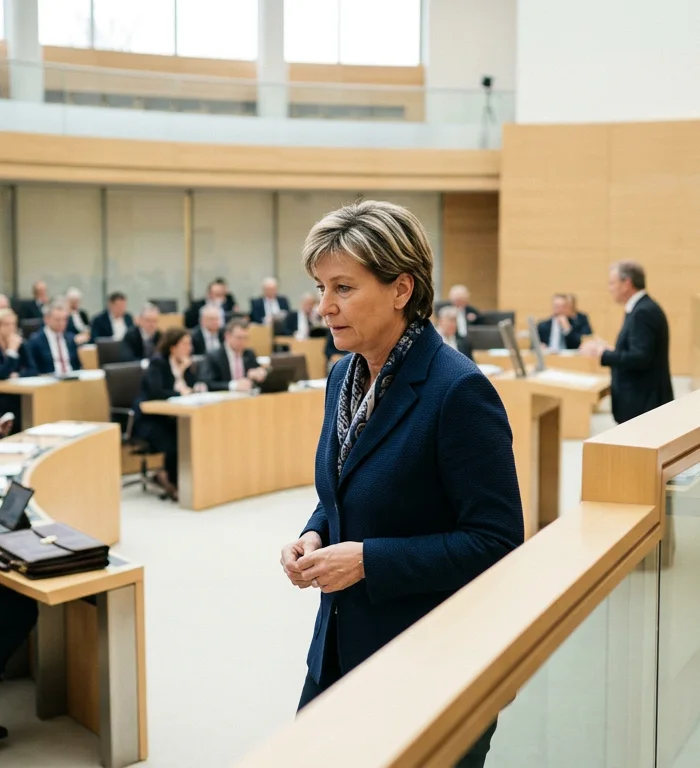
Ilse Aigner, 61, president of Bavaria’s state parliament for eight years, emerged as the leading candidate for Germany’s Jan. 30, 2027 presidential vote, Deutsche Welle reported Nov. 9.
If elected, Aigner would be Germany’s first female president and its first Christian Social Union head of state. Unlike female nominees since 1999, she is aligned with parties holding a Federal Convention majority.
The Federal Convention, a special assembly convened to elect the president, will choose a successor to Frank-Walter Steinmeier. Deutsche Welle said Aigner’s election is considered highly likely because the CDU, CSU and their coalition partner, the Social Democratic Party, control a majority in the body.
Chancellor Friedrich Merz, who leads the Christian Democratic Union, favored Aigner over the weekend, according to the report. Aigner belongs to the CSU, the CDU’s Bavarian sister party, and currently presides over Bavaria’s parliament.
Germany’s president is the official head of state, though the post is largely ceremonial. The office also carries symbolic weight as a source of national moral authority, making the choice politically important even without executive power.
Bavarian route to Berlin
Aigner’s profile is unusual in German federal politics, where legal training is common among senior politicians. She has no university degree, trained as a telecommunications technician in her parents’ electrical business and later worked for Eurocopter, now part of Airbus, developing electrical components.
She entered Bavaria’s state parliament for the CSU in 1994 and served in the Bundestag from 1998 to 2013. From 2008 to 2013, she was agriculture and consumer protection minister under then Chancellor Angela Merkel.
Those ministries exposed her to food-safety pressures, lobbying groups and European Union-level conflicts, Deutsche Welle said. The report said she left that period without a major crisis and was generally well regarded.
Aigner returned to Bavaria in 2013 as economy minister under then state premier Horst Seehofer, who sought to position her as his successor. Markus Söder later prevailed in the CSU’s internal contest and became Bavarian state premier in 2018.
Aigner and Söder both entered Bavaria’s parliament in 1994 as its two youngest lawmakers, and their careers have remained linked. Aigner has spent the past eight years as president of the Bavarian parliament and is described by Deutsche Welle as a respected figure in the state.
At a school visit reported by the Bavarian Merkur newspaper in January, Aigner told fourth graders she had not planned her career but was never able to “keep her mouth shut.” Deutsche Welle said she has largely refrained from public comment during the Union parties’ internal maneuvering over the presidency.
Party stakes
Aigner’s potential election would break two patterns at once. Germany has never had a president or chancellor from the CSU, a regional party that wields national influence through its alliance with the CDU.
A female president would also answer pressure to choose a woman as the majority candidate. Deutsche Welle said women have been nominated in almost every presidential election since 1999, but previous female contenders lacked the Federal Convention numbers needed to win.
The move also has implications for Söder. Deutsche Welle said an Aigner presidency could complicate his ambitions to become chancellor, because the CDU would be unlikely to accept two CSU figures leading the country.
Her departure from Bavarian politics would remove a rival to Söder at home. Aigner, still 61, has strong popularity ratings and is considered a natural competitor to the 59-year-old state premier, Deutsche Welle said.
The Federal Convention is scheduled to vote on Germany’s next president on Jan. 30, 2027. The checkable outcome is whether Aigner secures the majority expected from the CDU, CSU and SPD alignment.
The new German president is due to assume office in mid-March 2027. The handover will determine whether Aigner succeeds Steinmeier and becomes the first woman and first CSU politician in the role.
More stories
- Syria rejects Yemen role after 600-troop Saudi border report
- Pangilinan questions Davao assessor on 379 sqm SALN lot
- Ruling-family cases leave reform uncertain in 6 African states
- Iran secures Chinese oil sites for sanctioned crude, letter says
- French police officers face up to 15 years over 2020 beating
- Saudi officials report Aramco tower damage after attack
- Singapore links 4 aid groups to strengthen Gaza relief
- Israel coalition talks loom as rivals fall short of power