

Cotton faults Lutnick over AI chips allegedly sent to China
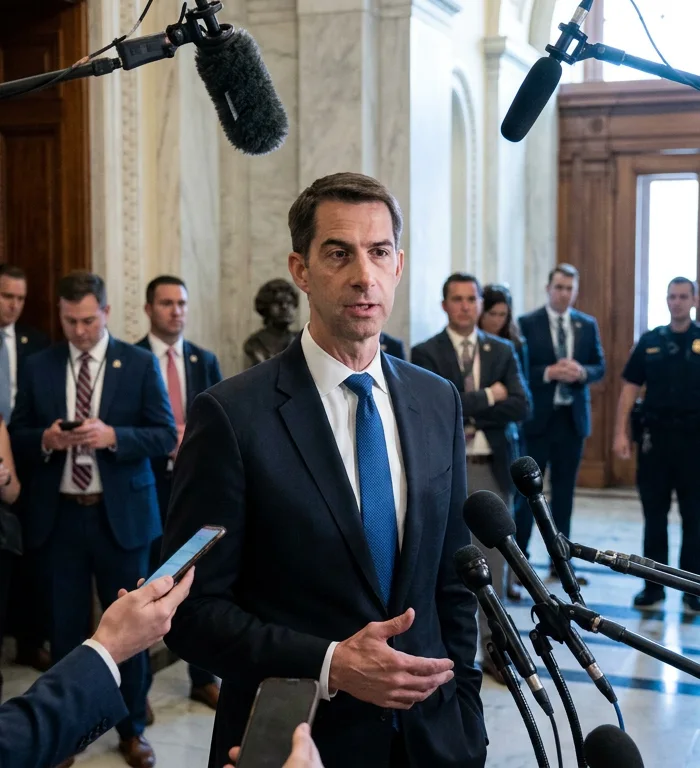
Sen. Tom Cotton accused Commerce Secretary Howard Lutnick of disregarding warnings about AI chips reaching China, putting export-control oversight under scrutiny.
President Trump defended Lutnick when questioned about Cotton’s criticism, saying, "I have not lost confidence." Cotton, the Arkansas Republican leading the Senate Intelligence Committee, withheld his endorsement of the secretary but did not explicitly demand his departure.
The disagreement centers on Commerce’s handling of suspected attempts to divert Nvidia semiconductors to China. Cotton alleged that warnings sent to Lutnick and other department officials had gone unanswered, placing the secretary’s response at the center of a congressional accountability dispute.
Cotton points to Megaspeed warning
Cotton identified an October 2025 letter urging Lutnick to examine Megaspeed, a company he suspected of involvement in chip diversion. He said that request formed part of a broader effort to strengthen restrictions governing sensitive technology exports.
According to Cotton, the department failed to act on repeated correspondence concerning companies he considered potential channels for Chinese access to restricted chips. Those allegations remain Cotton’s account; they do not establish that Megaspeed illegally transferred semiconductors or that Lutnick knowingly permitted violations.
The distinction between a warning and a demonstrated breach matters here. Cotton’s criticism concerns whether Commerce adequately investigated suspected diversion, while establishing an export-control violation would require evidence about the transactions, recipients and applicable restrictions.
Commerce faces licensing scrutiny
Commerce administers restrictions on sensitive exports and authorizes certain semiconductor sales involving destinations that present security concerns. That responsibility makes its licensing decisions and enforcement response central to the dispute, rather than leaving the issue solely with chip manufacturers.
The department did not respond to a request for comment on Cotton’s criticism. Its position on his account therefore remains unresolved, including how officials assessed his warnings and what action followed the October letter.
Nvidia’s products are central to the allegations, but Cotton’s criticism targets the government officials responsible for controlling their export. His account alone does not establish wrongdoing by Nvidia or demonstrate what the company knew about any suspected diversion.
Trump retains confidence in Lutnick
Cotton said a loss of presidential confidence should prompt Lutnick’s departure and a rapid nomination process for a successor. Trump accepted that conditional argument when questioned at a Friday news conference, while making clear that he had not reached that judgment about his secretary.
For now, those statements leave a clear political separation: Cotton is challenging Lutnick’s performance, while Trump continues to support him. Cotton also credited Marco Rubio, identified as secretary of state and national-security adviser, with supporting a tougher approach toward China.
If the dispute produces tighter export restrictions, the implications for Nvidia and other semiconductor suppliers would depend on which products, customers and destinations the rules cover. If existing restrictions remain unchanged, congressional scrutiny could instead concentrate on whether Commerce enforced them adequately.
The unresolved questions concern the handling of Cotton’s warnings, the evidence behind suspected diversion and any resulting enforcement decisions. Answers would distinguish an allegation of administrative inaction from a documented failure to prevent prohibited chip sales.
More stories
- Vance declines to back Iran strikes as Trump defends war
- Paul seeks 20%-30% federal credit for U.S. film shoots
- Trump targets data centers abroad with tax threat to firms
- Cao faces Senate scrutiny over $32.5m-a-day Iran blockade estimate
- Nvidia forms security panel as chip controls tighten again
- Sanders proposes $2,400 Social Security increase
- AI czar search now puts Jay Clayton on Trump’s shortlist
- Treasury sets Trump Accounts path for automatic sign-ups
Latest news
- Young adults overestimate life insurance costs by 10 times
- Estonia to close 5 Russia road crossings for six months
- Greece targets 2.3% growth in 2027 budget
- Mashatile seeks GBVF action after 1-in-3 violence finding
- Madrid teachers march for funding and oppose strike rules
- US stocks face Goldman warning on further forced selling
- Milan tenants seek lease safeguards as housing costs rise
- Al-Fatlawi recasts Iraq on screen with about $2.5m debut