

Rwanda faces budget strain from 85% electricity access push
A comparative paper contrasts Rwanda’s rapid rollout with Papua New Guinea’s 20% access rate and warns about risks transferred to the state.
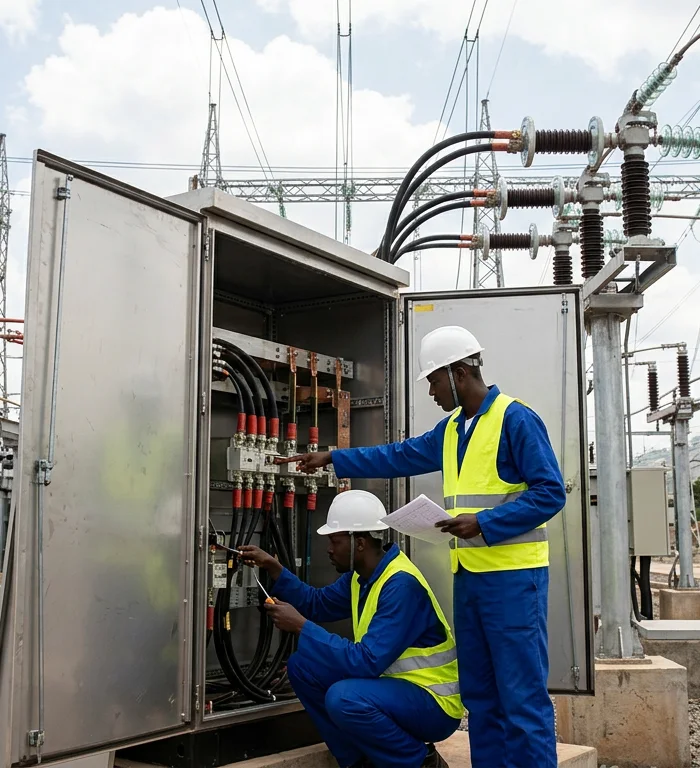
Rwanda reached 85% electricity access by 2025, far above Papua New Guinea’s 20%, The Conversation – Africa article published Monday said, citing a comparative energy-sector study.
The gap matters because both Rwanda and Papua New Guinea started in the early 2000s with roughly 10% of their populations connected, making their diverging outcomes a test of how states fund electrification.
The article said Rwanda added 41 power plants, mostly hydro and solar, and achieved what a World Bank report called “one of the fastest household electrification programs in history.” Papua New Guinea, facing similar rural access problems, made much slower gains.
The researcher said the paper drew on hundreds of government, media and private company documents and 38 interviews with energy executives, utilities, donors, development banks and public agencies in the two countries.
The study identified two main differences: Rwanda’s stronger bureaucratic capacity to carry out policy, and its wider use of derisking, which shifts much of the financial risk of private energy investment onto the state. In Papua New Guinea, the article said investors were discouraged by the absence of state guarantees that their power would be bought.
In Rwanda, the government created the Energy Access Roll-out Programme in 2008 and raised more than $1.4 billion between 2009 and 2024 to finance grid expansion. State institutions and the national utility were assigned annual electrification goals under imihigo, a performance-contract system.
Papua New Guinea’s National Electrification Roll-Out Plan was conceived in 2011 but approved only in 2022, the article said. An energy-company chief executive interviewed for the study said: “There are lots of energy strategies, but they’re not well coordinated or funded.”
Rwanda’s model relied on power purchase agreements, typically lasting 25 years, between independent producers and the state utility. The article said those contracts offered fixed long-term prices, dollar-linked payments and government guarantees if the utility failed to pay.
Those guarantees helped attract private capital, but they also created fiscal exposure. The article said Rwanda is paying for 90% of unused electricity under long-term contracts because supply has exceeded demand.
The burden has increased as the Rwandan franc lost nearly 50% of its value against the U.S. dollar over five years, raising the local-currency cost of dollar-priced contracts. The article said Rwanda now needs to spend 2% to 4% of gross domestic product to keep its energy utility afloat.
Papua New Guinea offered fewer such guarantees, and tariffs were often set or paid in local currency, leaving investors exposed to exchange-rate losses. A chief executive at one of its large independent power producers said the utility was “basically insolvent,” making investment a “huge risk.”
The article said Papua New Guinea’s gas power plant built in the 2010s, owned by provincial governments and local landowners, operated by a state company and financed locally, offers an alternative ownership model.
Source: Article, The Conversation – Africa, Nov. 23, 2026.
More stories
- AI doubts leave Asian stocks facing a new investment test
- Singapore core inflation eases to 1.5% in October
- Greece targets 2.3% growth in 2027 budget
- US stocks face Goldman warning on further forced selling
- Bitcoin falls below $57,742 as investors seek other bets
- Nvidia SEC probe examines chipmaker’s accounting issues
- Byrna revenue drops 46% as sales reset deepens
- PepsiCo cuts 2026 EPS outlook to 2.5%-3.5% growth
Latest news
- ICE arrests at Seattle airport draw protests and scrutiny
- EU rejects COP31 deal as fossil fuel divisions block pact
- Deal Sheet: Fortis shutdown costs over 400 jobs
- Germany to pay about $11 a month into child pension accounts
- Monrovia mayor-designate seeks $14.5m city budget
- Laura Brand curbs prison messages after YouTube dispute
- Nigeria's family-planning budget falls 97%
- Peter Attia reviews cold therapy claims on longevity