

Germany to pay about $11 a month into child pension accounts
Economists cited by DW said compounding may build assets, but the proposal leaves Germany’s worker-funded pension financing problem largely intact.
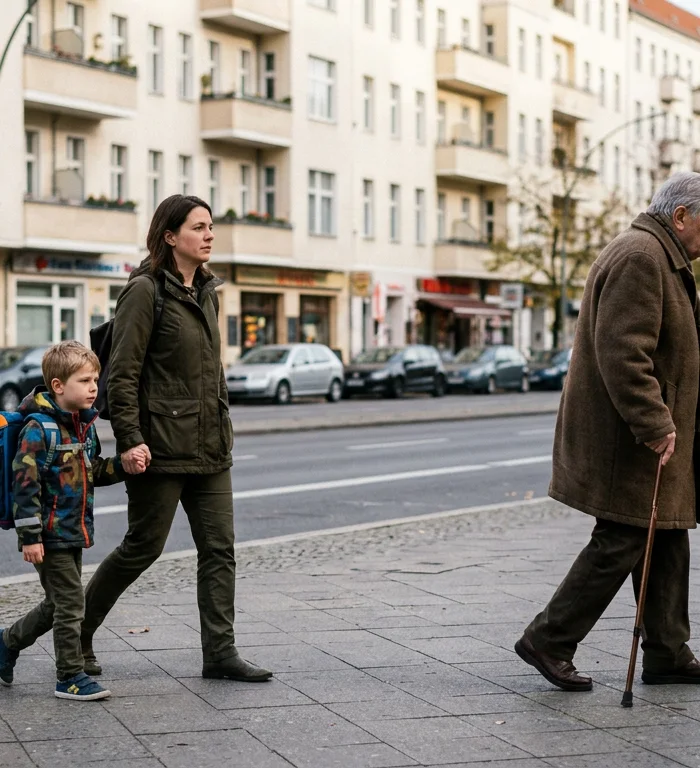
Chancellor Friedrich Merz's government plans monthly payments of €10 (about $11) into investment accounts for children and teenagers from age six through 18, according to a DW news article published Nov. 23.
The Early Start Pension targets a statutory system funded by current workers, with two contributors per retiree today compared with six in the 1960s, DW reported.
Under the plan, balances could not be used before retirement age, though they could be moved into private retirement accounts. Returns would not face tax while money builds; tax would apply when funds are taken out, DW reported.
The government projects that €1,440 in public contributions over 12 years could become about €53,000 by retirement if annual returns average 7%. With an extra €50 a month from parents or relatives, the balance could reach as much as €300,000, according to government projections cited by DW.
Axel Börsch-Supan, a professor of economics at the Technical University of Munich, told DW that early saving benefits from compounding. "But it will not solve Germany's pension problems, which stem from the pay-as-you-go system and costly policies such as the pension level guarantee and retirement at 63," he said.
Germany’s demographic problem is the backdrop. The fertility rate is 1.32 children per woman, below the 2.1 level needed to keep the population stable, the Federal Statistical Office said, according to DW.
The working-age population is shrinking by about 1% a year because of demographic change alone, German bank LBBW said, according to DW. Nearly a quarter of the federal budget, more than €123 billion ($135 billion), is transferred each year to the statutory pension system.
The government says the scheme gives every child access to capital-market saving regardless of family income and may improve financial literacy. Similar child savings or investment accounts exist in the U.K., Israel, Canada and Singapore, though DW said Germany’s version is more directly tied to retirement provision.
Economists cited by DW questioned the distributional effect. Börsch-Supan said the subsidies would probably help higher-income households more because they can already save for retirement and for their children.
Johannes Geyer, deputy head of public economics at DIW Berlin, told DW there is limited evidence that the program would change financial behaviour. "The idea is that people will develop a connection to the capital markets through their experiences with their investment portfolios," he said. "But this is not very convincing.
We neither know what experiences the future will bring nor what conclusions people will draw from them."
Opposition parties including the Greens and the Left Party have criticised the plan, saying better-off families would be able to add more money and widen social gaps. Geyer told DW the larger question is whether households with less money can be encouraged to invest in stocks.
Geyer said wider pension changes should include a moderate rise in contributions, a broader payer base that includes groups such as the self-employed, and policies to attract more qualified workers to the labour market.
Source: news article, DW, Nov. 23, 2026
More stories
- Social Security raises 2027 benefits 3.6%
- Young adults overestimate life insurance costs by 10 times
- Fidelity bars Anthropic IPO flippers for six months
- Tax uncertainty complicates Roth conversions for retirees
- Three-bucket strategy reduces retirement stock-sale pressure
- US 30-year mortgage APR falls 14bp to 7.24%
Latest news
- Monrovia mayor-designate seeks $14.5m city budget
- Laura Brand curbs prison messages after YouTube dispute
- Nigeria's family-planning budget falls 97%
- Peter Attia reviews cold therapy claims on longevity
- Singapore core inflation eases to 1.5% in October
- Hull City 2–0 Brighton: When Resilience Beat Reputation
- David Parr House to honor Victorian art-workman with blue plaque
- Iran's attacks hit 25 tankers near Strait of Hormuz