

AEye revenue grows ninefold as loss hits $10 million
The lidar company kept its full-year cash-use outlook and cited new sports, defense and automotive work as it tries to broaden demand.
AEye said in a Benzinga earnings-call transcript published Oct. 13 that second-quarter 2026 revenue grew about ninefold year over year and roughly 100% from the prior quarter.
In the same Oct. 13 transcript, AEye reported a $10 million net loss under GAAP, U.S. accounting rules, for the quarter, $71.5 million in cash and equivalents at quarter-end, and 2026 cash-use guidance of $30 million to $35 million.
The range frames how long the lidar maker can fund manufacturing and market expansion while losses continue.
Chief Executive Officer Matt Fisch said the company’s sales pipeline reached its strongest level to date and highlighted a new customer outside AEye’s traditional automotive focus. “Q2 revenue grew approximately nine times year over year and roughly 100% quarter over quarter, marking our fourth consecutive quarter of growth,” Fisch said on the call.
AEye said proof-of-concept programs from revenue-generating customers rose to 25 from 21 since its previous earnings call. Fisch said commercial engagements increased about 25% quarter over quarter, while quote activity rose about 40% over the same period.
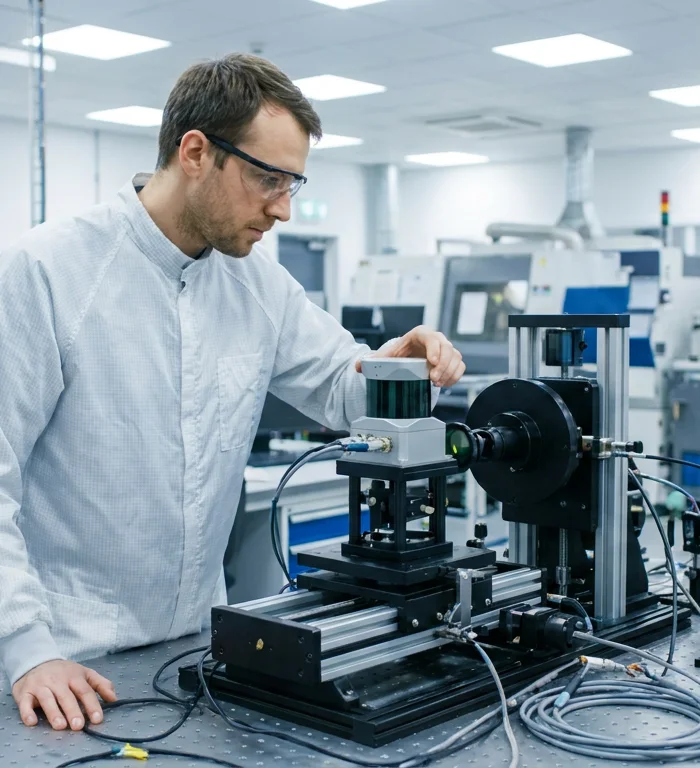
The company’s core product area is lidar, a sensor technology that uses laser pulses to measure distance and help machines perceive surroundings. AEye has been trying to position its Apollo and Stratos platforms across automotive, trucking, aerospace and defense, rail, infrastructure, intelligent transportation systems and sports analytics.
The new sports customer is Alive3D, which selected Apollo for next-generation sports analytics, according to Fisch. He said the product would support 3D spatial sports visualization, measurement and data analytics, and described the win as evidence that AEye can adapt the same hardware platform through software changes.
Defense remained the most active vertical, Fisch said, with engagements doubling from the first quarter. He said AEye’s lead defense customer placed a third consecutive paid order during the quarter, while the company’s partnership with Fintech, which he described as an international defense systems company, continued to promote and ship Apollo to customers.
AEye also pointed to automotive validation work. Fisch said Apollo was validated on NVIDIA DRIVE AGX4, NVIDIA’s next-generation automotive and physical AI compute platform, after earlier validation on NVIDIA DRIVE AGX Orin. He said AEye remains involved in multiple Level 3 and Level 4 evaluation projects with automotive and trucking manufacturers; Level 3 and Level 4 refer to systems with increasing levels of automated driving capability.
The main unanswered issue is scale. The Benzinga transcript summary did not provide the dollar amount of second-quarter revenue, and pipeline measures such as proof-of-concepts, engagements and quote activity are not the same as booked sales. Management also said cash consumption is expected to be higher in the second half because of ramped manufacturing.
Keith Nolsen, AEye’s investor relations manager, cautioned on the call that forward-looking statements are subject to risks and uncertainty, and said actual results may differ materially from current expectations. AEye did not provide a dated profitability target in the transcript.
Source: earnings-call transcript, Benzinga, Oct. 13, 2026
More stories
- Sweden's 176-seat left bloc stalls in government talks
- Dropbox AI tools draw 150,000 users as margin tops guidance
- Housing borrowing costs top 7% as US sales hit 12-year low
- Bondholders seek more as Treasury yields climb this year
- Taban Gıda bankruptcy puts wheat imports at risk
- Turkey posts $4.1 billion August current-account surplus
- Micron CEO touts fourth-quarter earnings as chip shares await cue
- Gulf oil exports return; Brent stays elevated
Latest news
- UK spy chief says Iran, Russia escalate campaigns
- Officials Report 11 Missing After Ships Hit Off Bulgaria
- Robotics at Amazon tests balance between speed and safety
- Lille Explores Legal Action Against LFP After Defender Tiago Santos Suffers Major Knee Injury
- Formula One Secures 10-Year Rwanda Grand Prix Deal
- Gears E-Day No. 2 player-count claim sparks debate
- Russia outreach tests Trump's divided base, Mead argues
- Message passing lifts small-model Sudoku score to 72%