

Sweden’s 176-seat left bloc stalls in government talks
Speaker Andreas Norlen plans an Oct. 15 vote on Magdalena Andersson despite warning she is unlikely to win parliamentary tolerance.
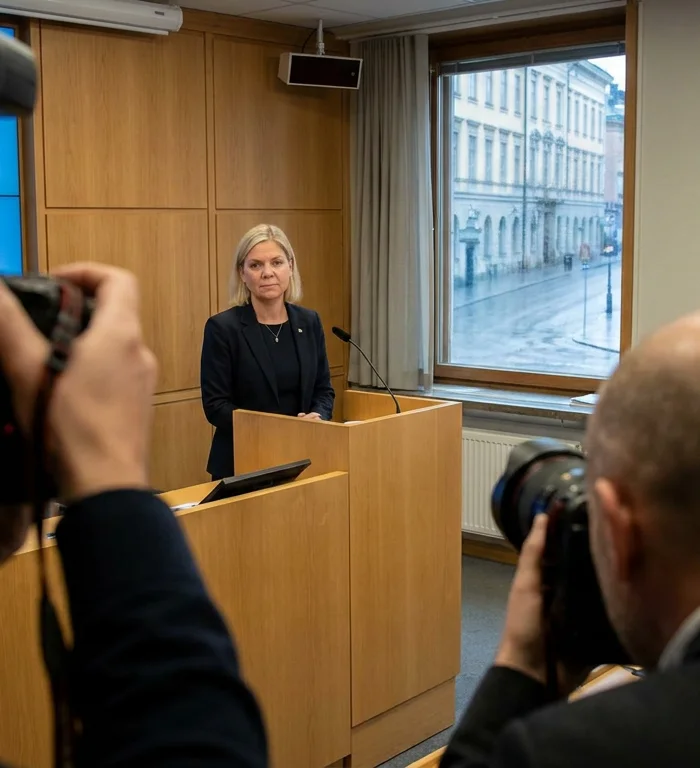
Magdalena Andersson said on Tuesday she failed to assemble a Swedish government after her centre-left bloc won 176 of 349 seats in the Sept. 13 election, a Euronews news article reported.
The deadlock matters because outgoing Prime Minister Ulf Kristersson’s right-wing bloc holds 173 seats, three fewer than Andersson’s side, yet Sweden’s fragmented parliament has not produced a viable governing formula.
Andersson, leader of the Social Democrats, reported back to parliament speaker Andreas Norlen after he asked her to test whether a cabinet could command enough support. She said the talks had advanced but had not resolved the central obstacle.
"My overall assessment is that progress has been made, but at the same time, the conditions are currently not in place to form a government that can be tolerated by the parliament," Andersson said at a press conference, according to Euronews.
Norlen said separately that parliament would still vote on Andersson as prime minister on Oct. 15. He said the process had from the outset been designed to end with a parliamentary vote, even if her exploratory talks did not produce a workable deal.
Under Sweden’s system, a nominee does not need an affirmative majority to take office. The candidate can become prime minister if a majority of lawmakers does not vote against them, making abstentions and tactical support decisive in close parliamentary arithmetic.
The 176-seat centre-left result gave Andersson’s bloc a narrow parliamentary edge after the Sept. 13 election. Atlas360 reported in September that Kristersson resigned after the results gave the opposition three more seats than his bloc in the 349-seat Riksdag.
The obstacle is inside Andersson’s own camp. Euronews reported that the Centre Party has said it would reject a cabinet that gives posts to the Left Party, while the Left Party has insisted it would support only a left-wing administration in which it participates.
That dispute makes the bloc’s numerical advantage insufficient on its own. It also shows the institutional difference between winning more seats as a bloc and forming a government that can survive a formal vote in parliament.
Norlen first gave Andersson the task of opening talks on Sept. 18. She ended that attempt on Sept.
28 after failing to bridge divisions among the other parties in her bloc, Euronews reported.
After Andersson’s renewed effort faltered, Norlen said he would consult party leaders again following the Oct. 15 vote to assess the next nominee. Euronews reported that he described Kristersson as a natural candidate while saying he would not decide too early and would "respect the process."
A Kristersson bid would also face arithmetic constraints. Euronews reported that he would need at least one opposition party either to support him or not vote against him.
The speaker has four attempts to put forward a prime minister for a parliamentary vote. If all four fail, Sweden must hold a snap election, according to Euronews.
On Oct. 15, Sweden’s parliament is scheduled to vote on whether Andersson can become prime minister. Norlen said she is likely to fall short, according to Euronews.
After the Oct. 15 vote, Norlen said he would speak again with party leaders before deciding who should be proposed next. Euronews reported that Kristersson is expected to receive the task after Andersson’s attempt.
The longer institutional test is whether any nominee can clear the Riksdag’s negative-parliamentarism rule. After four unsuccessful attempts by the speaker, a snap election must be called, according to Euronews.
Source: news article, Euronews, Oct. 13, 2026
More stories
- Citigroup profit beats estimates as bond trading hits decade high
- Marotta deepens submarine role with three-year Electric Boat deal
- Oil’s 2% drop steadies risk tone before US CPI
- AEye revenue grows ninefold as loss hits $10 million
- Dropbox AI tools draw 150,000 users as margin tops guidance
- Housing borrowing costs top 7% as US sales hit 12-year low
- SPK lifts cap, buybacks near 2 billion lira
- Hormuz closure forces Gulf exporters to reroute energy flows
Latest news
- Konya exports near $4 billion as leaders assess risks
- Sharjah Islamic Bank profit rises 9% as financing expands
- UAE green plans put Dh200 billion investment target in focus
- Binance shuts mining pool as trading business remains open
- Skydance's $110 billion deal tests US media oversight
- UK spy chief says Iran, Russia escalate campaigns
- Officials Report 11 Missing After Ships Hit Off Bulgaria