

Shenzhen trilateral brings Trump, Putin, Xi together at APEC
Trump, Xi and Putin met in Shenzhen for a trilateral focused on nuclear risk, Ukraine, trade and APEC economic diplomacy.
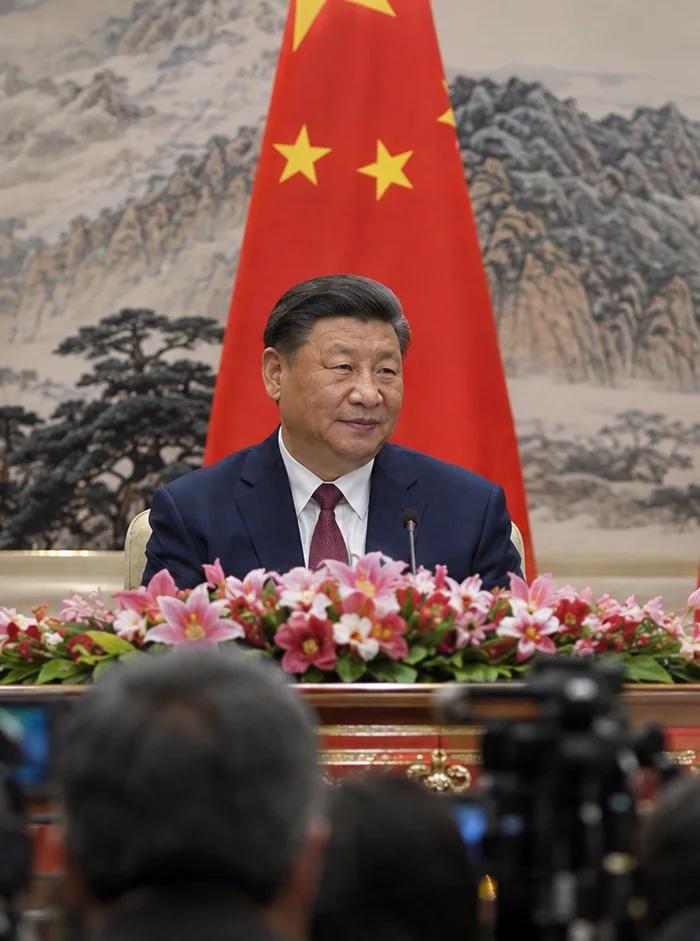
The Shenzhen trilateral put three leaders at one table Thursday for talks on nuclear risk, Ukraine, trade and regional conflicts.
President Trump, Chinese President Xi Jinping and Russian President Vladimir Putin opened the meeting in Shenzhen on the sidelines of the APEC Summit. The gathering placed Washington, Beijing and Moscow in the same room as all three governments signaled that strategic stability, economic ties and war diplomacy were on the agenda.
Three leaders in Shenzhen
Footage from the opening session showed Xi calling the talks "groundbreaking" before linking major-power relations to global stability. He said that "more than sixty regional conflicts around the world continue to drag on," framing cooperation among large states as a condition for peace.
Trump said there was a "great deal to discuss, and we've already discussed a lot." He described the United States, Russia and China as holding a "special responsibility" to keep dialogue open on issues affecting their populations and the wider world.
UN language and Ukraine
Putin used his opening remarks to connect the three countries' wartime history with their current role in the international system. He said the states were linked by their status as victorious countries in the Second World War and by a "shared responsibility for maintaining international peace and security."
The Russian president also said the talks would cover global and regional economic ties, food security and energy security. He added that the countries had common interests in resolving regional conflicts, including the conflict in Ukraine.
Trump put nuclear arms control near the center of the agenda, saying the three countries were "uniquely positioned" to discuss reducing the number of nuclear weapons and lowering the risk of their use. No agreement was announced in the opening remarks included in the footage.
APEC trade setting
The meeting took place during the APEC Summit, which brings together leaders and representatives from 21 economies. The forum's agenda includes trade, investment and regional economic cooperation, giving the trilateral a commercial setting as well as a security one.
The expected agenda extended beyond arms control to trade, technology, Iran and Ukraine, according to the meeting outline. That mix puts strategic competition and economic interdependence in the same conversation, with food and energy security adding pressure points for governments and markets.
For China, hosting the encounter placed Shenzhen at the center of a diplomatic moment tied to both regional commerce and great-power management. For Russia and the United States, the session offered a venue to state positions on Ukraine, nuclear risk and economic security in front of the other two powers.
Nuclear risk after Thursday
If the talks remain limited to opening positions, the global macro effect is likely to be diplomatic rather than economic: lower immediate expectations, no direct change in trade rules and continued uncertainty around energy and food security. For the three governments, that path would preserve contact while leaving unresolved conflicts and technology tensions to other channels.
If the leaders move the nuclear discussion into a working process, the mechanism would be clearer: officials could begin defining whether weapons reductions, risk-reduction measures or communication rules are within reach. That would matter for global security conditions, for each government's negotiating room, and for sectors exposed to defense policy, energy flows and sanctions risk.
If Ukraine, Iran or trade disputes dominate the follow-up, the economic consequences would depend on whether talks reduce friction or harden existing positions. The main open question after Shenzhen is whether Thursday's session produces a continuing process, a single diplomatic gesture, or competing public interpretations from the three capitals.
More stories
- Panetta says Italy inflation threatens purchasing power
- Elon Musk says MAGA spending left him foolish after losses
- Wisconsin Prosecutor Declines to Charge Officer in Fatal Shooting of Black Man
- South Korea’s Top Court Overturns Ex-PM Han Duck-soo’s Martial Law Conviction
- Putin seeks Ukraine peace talks positions from Europeans
- Summit nuclear pledge leaves arms reduction talks absent
- Malaysia tightens critical-sector security after Nov. 2 review
- Ukraine and Russia face fake nuclear alerts after app hacks