

Malaysia tightens critical-sector security after Nov. 2 review
Anwar Ibrahim cited foreign intelligence activity nearby and cyberattacks abroad as officials examine hybrid, cyber and nuclear-related risks.
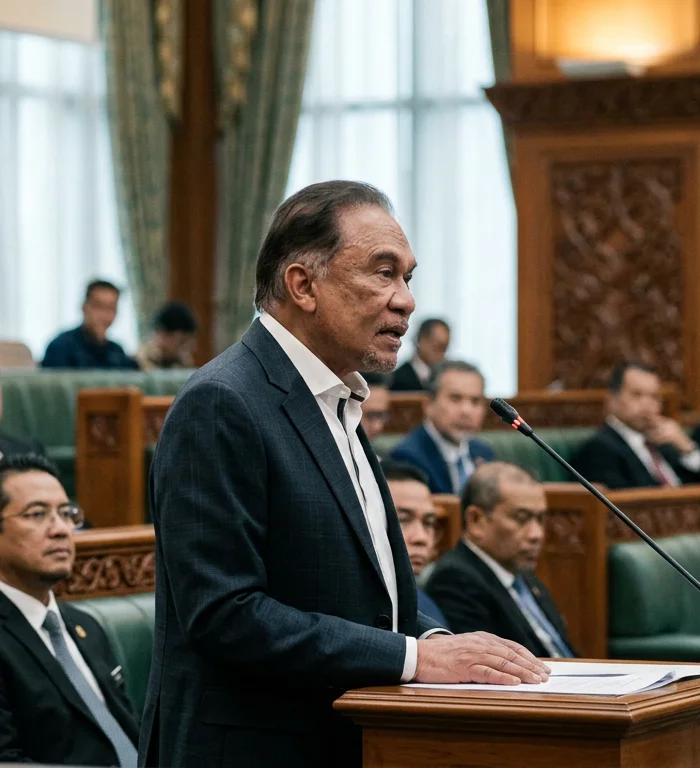
Malaysia Prime Minister Anwar Ibrahim on Nov. 3 said agencies were strengthening critical-sector protection, citing foreign guidance for citizens to keep 3 to 10 days of emergency food, a Straits Times news report said.
The warning puts overseas cyber incidents into Malaysia’s domestic security planning; the 10-day food-supply advice Anwar cited is more than three times the three-day lower end used by some countries.
“We must not think that these threats are far away from us because what has happened in Europe, the United States and Japan has caused considerable alarm in those countries,” Anwar told the Dewan Rakyat, Malaysia’s lower house of parliament.
Anwar said Malaysian intelligence agencies had identified possible risks tied to foreign intelligence activity in nearby countries. He referred to concerns about Israeli intelligence operations and settlements in Phuket and southern Thailand.
“This includes foreign intelligence agencies, including Israel, their operations in neighbouring countries, and Israeli settlements in Phuket and southern Thailand, which our intelligence agencies view as potential threats to the country,” he said.
The Nov. 2 National Security Council meeting considered hybrid threats, cyber risks, possible nuclear-related escalation involving Iran and the effects of political developments in Europe on administrative systems, according to Anwar. Hybrid threats generally refer to pressure that combines cyber, political, economic or security tools.
Anwar cited cyber incidents affecting government systems overseas, including Belgium’s national tax portal, Denmark’s central population registry and the United States Federal Election Commission’s filing system. He also referred to a reported intrusion in Japan that exposed personal records of more than 100,000 police personnel.
The remarks place critical infrastructure, meaning systems whose disruption can affect public services or economic activity, near the centre of Malaysia’s security agenda. Anwar said the government was strengthening protection for energy, transport, finance and food supplies, while improving preparedness and technological capabilities.
He said all ministries and agencies had been instructed to coordinate and maintain operational readiness, especially among security forces. Anwar also said he had received assurances on preparedness from the Chief of the Defence Force and the Inspector-General of Police.
The report did not provide independent verification of the foreign intelligence activity described by Anwar, nor did it include responses from Thailand or Israel. It also did not specify any immediate change to Malaysia’s public threat level.
On Nov. 3, the Chief Secretary to the Government was due to chair a meeting with relevant departments, according to Anwar. The checkable outcome is whether the meeting produces new coordination instructions for ministries, agencies or security forces.
On Nov. 3, the Bank Negara Malaysia governor was due to hold a special session with domestic financial institutions, Anwar said. The observable is whether banks receive guidance on cyber readiness, operational continuity or other security measures.
Source: news report, The Straits Times/The Star-Asia News Network, Nov. 3, 2026
More stories
- Ukraine and Russia face fake nuclear alerts after app hacks
- Iran faces renewed strikes after IRGC's 100% readiness claim
- Kallas urges UK to deepen EU defence ties before Nov. 20 summit
- Budi seeks WHO dues above 50% to steady funding
- Japan weighs defense plan worth up to $508bn, sources say
- Midvaal transformer failure leaves 116 homes without power
- PE and VC firms lift AI adoption to 71% in IFC survey
- Albania protests intensify as Rama rejects calls to resign
Latest news
- Bioventus cuts 2026 revenue view to $590m-$595m
- Cinaciguat cuts amyloid beta by half in aging rats
- Kimco buys Louisville retail centers for $295m
- GLP-1 drinkers report lower alcohol use in Harvard survey
- Adults losing 5% in midlife show slower heart-marker decline
- Researchers put alcohol mortality risk at 1 in 25 for 14 weekly drinks
- Kodiact raises $2.5m for raw-material sourcing software
- Tomb Raider creators describe 2-year push behind Lara Croft