

Budi seeks WHO dues above 50% to steady funding
Indonesia’s health minister says assessed contributions now cover 20% to 30% of the UN health agency’s budget, too little for financial resilience.
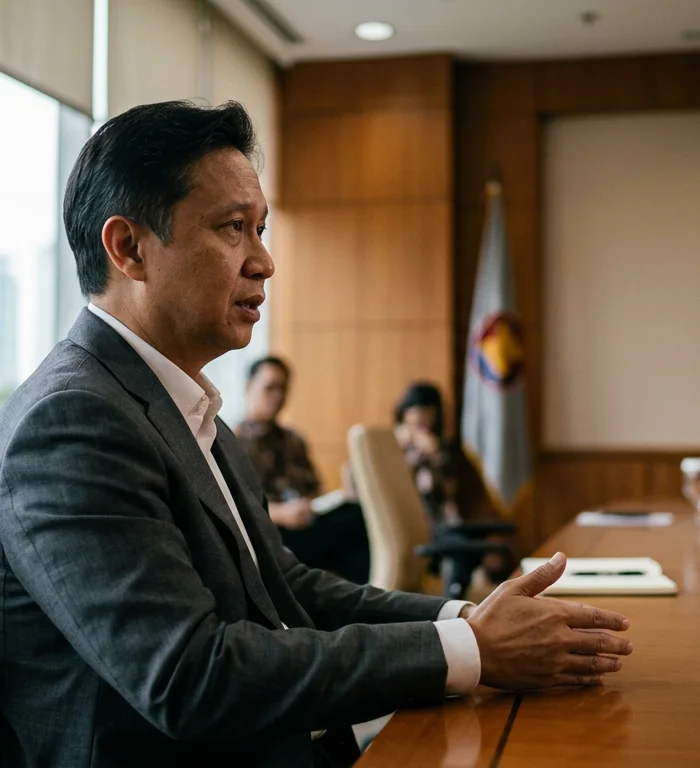
Indonesia’s Health Minister Budi Gunadi Sadikin said on Monday that World Health Organization members should lift mandatory contributions above 50% of its budget, in an AFP interview published by Channel NewsAsia.
The Nov. 2 interview puts financing at the centre of Budi’s campaign for WHO director-general, a race with seven candidates, after he said member dues now cover only 20% to 30% of the agency’s budget.
Budi said the WHO should first narrow its spending priorities, then seek more money from member governments. “The priority is to review the functions (of the WHO), get the agreement of the countries and then ... we look for the (new) money,” he said.
The minister said the organisation cannot rely on its current funding mix if it wants stable resources. “Every country says the WHO needs to be sustainable. You cannot be sustainable if your membership contribution is only 20 per cent or 30 per cent (of the total budget),” Budi said.
“If you want to be sustainable, then at least the regular funding ... should be more than 50 per cent,” he said.
WHO assessed contributions are mandatory payments by member countries, set every two years using income and population size. Voluntary contributions from governments and donors make up the rest of the budget and, under the structure Budi described, the larger share.
Budi said raising assessed contributions to more than 50% would not place a heavy burden on governments. He said the amount, split among the WHO’s more than 100 member countries, would be in the tens of thousands of U.S. dollars each, rather than “billions” or “even a hundred million.”
The funding debate has sharpened since the United States formally left the WHO in January under President Donald Trump. Budi said the departure was “not a total disaster” because the agency still had a budget comparable with its pre-COVID-19 level, but he said countries outside the WHO would be disadvantaged in a global health emergency.
“It is very clear that we need to bring them back,” Budi said of the United States, adding that he would open talks with Washington “right away” if elected. “Diplomacy, I believe, is the best weapon. If countries fight, I think the best thing to do is not sending missiles or sending arms.”
Budi also said he would press member states to adopt a global pandemic treaty backed by a fund. He said the aim would be equal access to vaccines, treatments and diagnostics during a future worldwide outbreak, after disparities in purchasing power during COVID-19.
He said the WHO was “not ready” for another global outbreak and was not doing enough on the Democratic Republic of Congo’s Ebola epidemic. “The problem with this type of outbreak, if it happens specifically in a low-income country, the attention is not as big as like with COVID-19, where it also hit the high income” countries, Budi said.
Election timetable
The WHO’s 34-member Executive Board is due in January to nominate as many as three candidates for consideration by the World Health Assembly. The assembly of member states is due to choose the next director-general in May 2027.
Budi is running against candidates from Botswana, Qatar, Saudi Arabia, Belgium, Spain and China.
Source: AFP interview via Channel NewsAsia, Nov. 2, 2026
More stories
- Japan weighs defense plan worth up to $508bn, sources say
- Midvaal transformer failure leaves 116 homes without power
- Canada seeks EU carbon-tax relief as energy ties deepen
- Johor-Singapore SEZ draws projects tied to 28,755 jobs
- Nigeria state police plan wins 30 assembly endorsements
- Nigerian banks lift prime rates in 8 sectors despite CBN cuts
- Macron keeps interior minister after 2,400 France protest arrests
- UAE tops MENA disaster-readiness trust at 87%