

Canada seeks EU carbon-tax relief as energy ties deepen
A December 2025 internal document seen by Euronews points to CBAM as a trade obstacle for Canadian exporters despite closer EU-Canada cooperation.
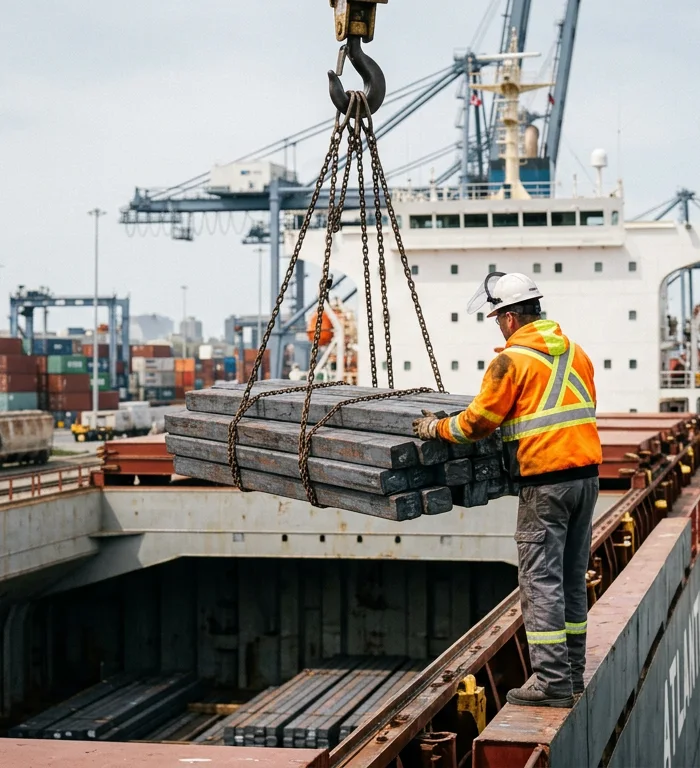
Canada is seeking relief from the EU’s carbon border tax on covered exports that averaged C$28 billion a year in 2021-2024, according to a Dec. 2025 internal document seen by Euronews.
The issue could complicate the energy alliance Brussels and Ottawa promoted at the Oct. 29-30 Montreal summit, because those goods represented 7.4% of Canadian exports to the bloc, the document said.
Julia Dabrusin, Canada’s climate and environment minister, backed carbon charges on industry but did not give a clear endorsement of the EU measure in an interview with Euronews.
“Industrial carbon pricing is important in a low-carbon economy, which is where the world is going. But these are conversations for us to have (...) those are conversations that are still to be had,” Dabrusin told Euronews.
The internal document, from Canada’s trade and foreign affairs ministries, said Ottawa wants an arrangement with Brussels to ease the burden for exporters. “Canada continues to seek a practical agreement with the EU to reduce CBAM's administrative burden for Canadian exporters, and the Prime Minister's Personal Representative to the European Union is fully engaged,” the document said.
The EU’s Carbon Border Adjustment Mechanism, or CBAM, came into force in January 2026. It places a carbon cost on certain imported goods, a system intended to protect European producers from competitors operating under weaker climate rules.
The Canadian document said Canada does not qualify for an exemption, despite its domestic carbon-pricing policies and its trade relationship with the EU under the Comprehensive Economic and Trade Agreement. Ottawa wants the EU to treat Canada’s carbon-pricing regime as comparable enough to reduce costs and paperwork for Canadian firms, Euronews reported.
The document identified aluminium, steel, critical minerals and hydrogen as areas where CBAM could hinder Canada’s ambitions to expand sales into Europe. “Canadian exports are not exempt from CBAM and exporters will face carbon charges and complex administrative requirements that could create market access risks and potential competitiveness challenges in the EU market,” it said.
Prime Minister Mark Carney said at an Oct. 30 closing press conference that Canada and the EU had discussed “a series of trade issues that had been bubbling along,” without giving details. “We are working together to find common solutions (on CBAM and other trade issues),” Carney told reporters.
Carney has been trying to reduce Canada’s trade dependence on Washington, according to Euronews, making the EU market more important for Ottawa. That push gives the CBAM dispute a broader strategic dimension as Canada and the EU seek closer energy ties.
Stephanie Kusie, the Canadian Conservatives’ shadow minister for international trade, criticised the government’s handling of the issue. “Canada is facing an EU carbon tariff in the coming months that could affect $3 billion in Canadian exports. Instead of fixing the issue, the PM has spent months distracting Canadians with talk of the EU,” Kusie said.
Euronews reported that the legal obligation under CBAM falls on EU importers. The article did not report any final EU decision on Canada’s request for relief.
Source: news report, Euronews, Nov. 2, 2026
More stories
- Budi seeks WHO dues above 50% to steady funding
- Japan weighs defense plan worth up to $508bn, sources say
- Midvaal transformer failure leaves 116 homes without power
- Johor-Singapore SEZ draws projects tied to 28,755 jobs
- Nigeria state police plan wins 30 assembly endorsements
- Nigerian banks lift prime rates in 8 sectors despite CBN cuts
- Albania lawmakers clash over policing of student protests
- Policy Alert seeks Nigeria hearing over $50bn offshore plan