

UAE tops MENA disaster-readiness trust at 87%
A Gallup poll for Lloyd’s Register Foundation shows Gulf states well above the global resilience average, while Lebanon, Iraq and Palestine trail.
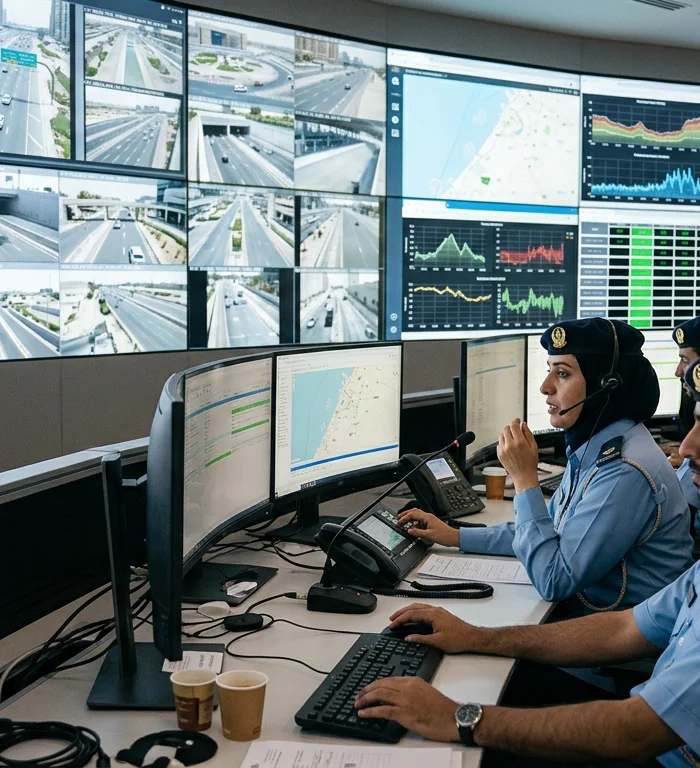
UAE residents reported 87% confidence in government disaster preparedness in a Gallup poll for Lloyd's Register Foundation published by Euronews on Oct. 19.
The finding highlights a regional divide: Kuwait scored 74 points on the resilience index in 2025, compared with a global average of 57, while Lebanon scored 48 and Iraq 49.
The poll was based on more than 143,000 interviews across 140 countries and territories in 2025. It measures how people, households and communities say they can withstand severe shocks and recover afterward.
Kuwait led the Middle East and North Africa countries included in the regional data, followed by Bahrain with 72 points. Oman and the UAE each scored 70 points, placing several Gulf states well above the worldwide benchmark.
Confidence in state capacity was strongest in the Gulf. The UAE's 87% share saying authorities were ready for disasters was the second-highest among 133 countries in the resilience index, while Bahrain reached 82%, according to the poll.
The lowest regional results were concentrated in the Levant and Iraq. Lebanon recorded 48 points, Iraq 49 and Palestine 52, all below the global average of 57.
Lebanon also showed weak public confidence in warnings and state readiness. Only 14% of Lebanese respondents said their government was prepared for disasters, and 39% of disaster-affected respondents said they received warning before an event, compared with 80% globally.
Trust in government care was also low in Iraq and Lebanon. Some 59% of Iraqi respondents and 56% of Lebanese respondents said their governments did not care about them at all, against a global average of 29%.
The poll pointed to financial vulnerability as another constraint on resilience. More than half of households in Iraq, Jordan and Palestine said they could not meet basic needs for one month if income stopped.
Lebanon ranked high on perceived everyday risks. Some 71% of respondents there said they worried drinking water could seriously harm their health, placing the country fifth globally on that measure, while 90% expressed concern about violent crime, ranking sixth worldwide.
North Africa moved in the opposite direction. The region's resilience score rose five points from 2023, the largest gain of any region in the study, with the report linking improvements in Algeria and Egypt to broader internet access, better household preparation and greater financial capacity.
The global figures underline the importance of early warning systems. About 1.1 billion adults experienced a disaster in the five years before the poll, and nearly 220 million of them had no warning beforehand.
Income levels shaped both exposure and response. Roughly one-third of adults in low-income countries said they had been affected by a disaster in the previous five years, compared with 16% in high-income countries.
Warnings also differed by income group. The poll found that 64% of affected people in low-income countries received advance notice, compared with 84% in high-income countries.
The number of alert channels appeared to matter. Among people who received one warning route, 37% took preventive action; that rose to 51% for two channels and 64% for three, including text messages, television and social media.
Mobile access did not guarantee alerts. Of the roughly 220 million adults who went through a disaster without advance warning, 77% owned a mobile phone, equivalent to more than 170 million people.
Source: poll coverage, Euronews, Oct. 19, 2026
More stories
- Rubio urges Ukraine peace as leaders' meeting stays open
- France unrest puts Macron's budget agenda under pressure
- Mnangagwa warns ZANU PF dissenters over 2030 rule bid
- Greece plans 15% homebuyer tax for non-EU investors
- Rama faces sixth day of Albania protests with 272 injured
- Japan's older workers make up 31.3% of serious workplace accidents
- Denmark puts Danish conscripts into Greenland's cold test
- Shein shares slide after $1.7 billion Hong Kong IPO debut