

Rubio urges Ukraine peace as leaders’ meeting stays open
US Secretary of State Marco Rubio urged an end to the Ukraine war while leaving a possible meeting of three leaders unconfirmed.
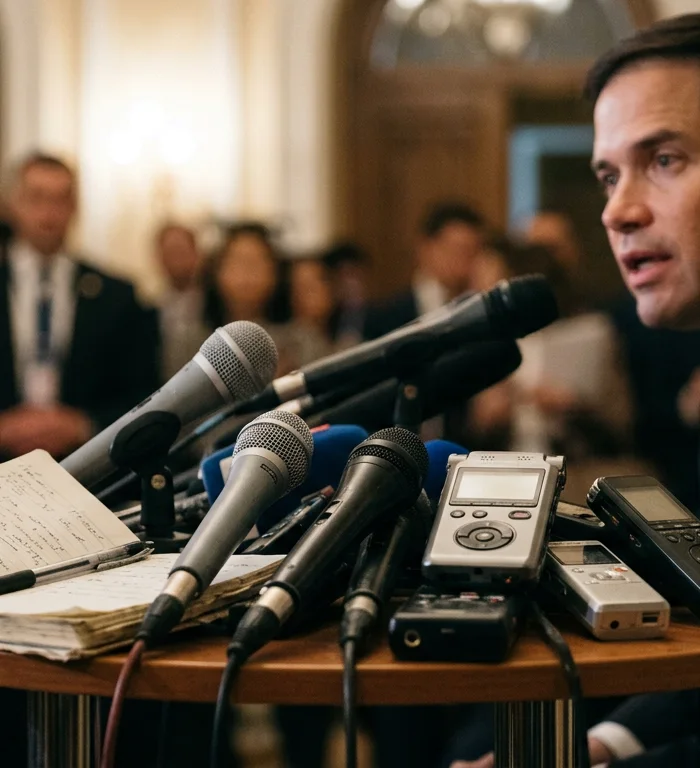
US Secretary of State Marco Rubio urged an end to the Ukraine war while leaving a possible meeting of three leaders unconfirmed.
Speaking in Samarkand, Uzbekistan, on October 19, Rubio said Russia and Ukraine should concentrate on bringing the fighting to a close. He also warned that incidents involving sabotage or drones could draw another country into the conflict, presenting escalation beyond the existing battlefield as a risk rather than a confirmed development.
Three-leader meeting remains unconfirmed
Rubio was responding to a question about whether US President Donald Trump, Russian President Vladimir Putin and Chinese leader Xi Jinping might meet to negotiate an end to the war. His answer acknowledged discussions about a gathering without confirming that arrangements had been completed.
Rubio, the US secretary of state, said: "There's been talks of a meeting. I don't know whether it's been finalized, but the president has been clear. He'd like the war in Ukraine and Russia to end." The distinction leaves Trump's stated objective separate from the unresolved question of whether the proposed gathering will happen.
The question put a potential negotiation involving the American, Russian and Chinese leaders at the center of the exchange. Rubio's response did not set out a date, venue or negotiating agenda, and it did not establish what role Ukraine would have in such a process.
Rubio directed his appeal to both countries fighting the war. His comments offered no terms for a settlement or account of concessions either government might accept, leaving the substance of any prospective negotiation undefined.
Rubio warns of cross-border escalation
The secretary identified the possibility of the conflict spreading as one reason the United States wants it to end. He cited a failed sabotage operation and drones diverted by electronic warfare into a neighboring country as examples of how that could happen.
Those examples were warnings about possible escalation, not announcements that another country had entered the war. Rubio did not identify a particular neighboring state in the remarks or attach a timetable to the danger he described.
Samarkand hosts Central Asian diplomacy
The Ukraine exchange took place during a visit focused on meetings with senior representatives of the C5+1 grouping. Rubio arrived in Samarkand on Sunday evening, ahead of his comments to reporters on Monday.
The grouping links Washington with Uzbekistan, Kazakhstan, Kyrgyzstan, Tajikistan and Turkmenistan. These five Muslim-majority countries were formerly part of the Soviet Union, providing the regional setting for Rubio's visit rather than a confirmed framework for Ukraine negotiations.
Trump received the five Central Asian leaders at the White House last November, an earlier presidential-level engagement with the group. In Samarkand, Rubio reaffirmed Trump's desire to end the war, but confirmation of the proposed leaders' meeting, its participants and its negotiating scope remained outstanding.
More stories
- UAE tops MENA disaster-readiness trust at 87%
- France unrest puts Macron's budget agenda under pressure
- Mnangagwa warns ZANU PF dissenters over 2030 rule bid
- Greece plans 15% homebuyer tax for non-EU investors
- Rama faces sixth day of Albania protests with 272 injured
- Japan's older workers make up 31.3% of serious workplace accidents
- US widens Strait of Hormuz strikes after tanker hits Tuesday
- South Africa bonds get Goldman upgrade case for 2028 rally