

France unrest puts Macron’s budget agenda under pressure
President Emmanuel Macron retained his interior minister after weekend unrest, ordering action against looting as France faces a budget test.
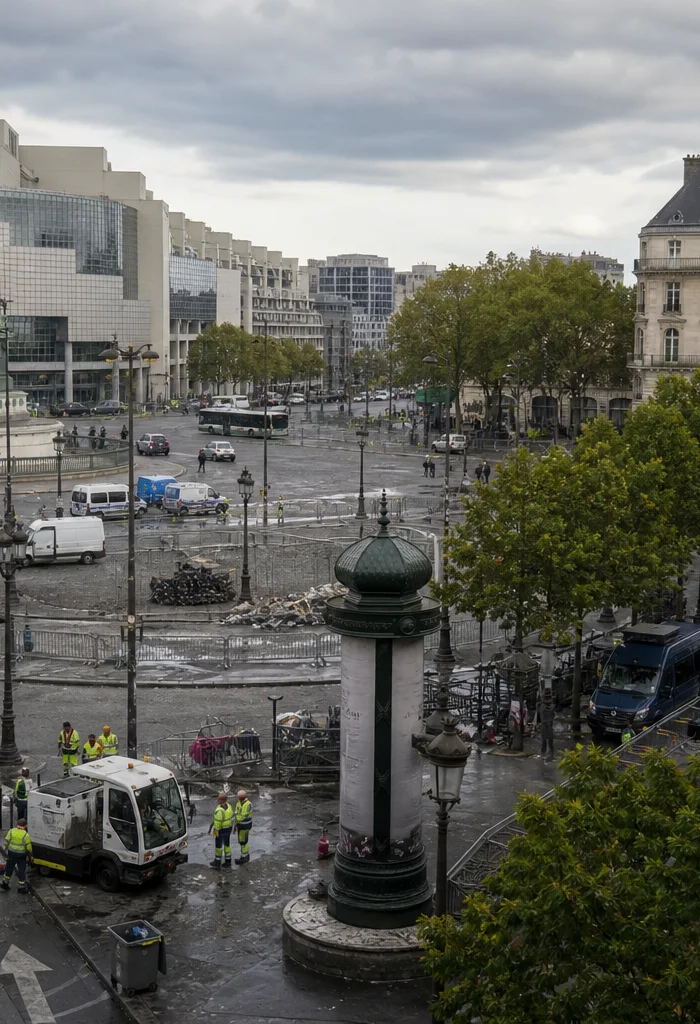
President Emmanuel Macron retained his interior minister after weekend unrest, ordering action against looting as France faces a budget test.
Macron rejected the minister's resignation offer on Monday, October 19, and instructed him to clear barricades. He also demanded openness about intelligence failures, putting responsibility for restoring order and explaining security shortcomings on the minister he chose to keep.
The decision comes with France's next presidential contest six months away and the government facing a budget bill intended to bring its finances under control. The unrest adds a public-order challenge to an agenda already complicated by economic weakness and rising debt.
Public services drive street protests
The weekend mobilization drew crowds reported to number in the hundreds of thousands. Demonstrators protested what they described as deteriorating public services and institutions that no longer provided adequate support while households faced pressure from living costs.
The gatherings followed several weeks of student-led demonstrations, some accompanied by street violence. That sequence places the weekend unrest within a longer period of protest rather than an isolated confrontation with the authorities.
Paris, Marseille and Lyon were among the cities where initially peaceful gatherings gave way to vandalism and disorder. The distinction between those demonstrating over services and those involved in destruction is important: the reported grievances concern public provision, while Macron's immediate instructions address barricades, looting and security.
Macron retains ministerial responsibility
Rejecting the resignation leaves the interior minister responsible for carrying out the president's instructions. It does not resolve the separate issue Macron identified: explaining the intelligence shortcomings surrounding the unrest.
The president's response therefore combines continuity in office with a demand for accountability. An explanation of the security failures and an end to street disorder are distinct tests; progress on one would not, by itself, establish progress on the other.
Budget negotiations face competing pressures
The government's budget task sits alongside protesters' complaints about public services. Bringing public finances under control and answering demands for better provision are separate objectives, but any spending decisions that connect them would place the government's priorities under closer scrutiny.
If efforts to contain expenditure affect services that demonstrators already consider inadequate, the budget debate could become another focus for protest. Conversely, if the government seeks to address those complaints through additional spending, it would need to reconcile that response with its stated fiscal objective.
For investors, the relevant uncertainty is whether the unrest and disputes over security complicate the government's ability to advance the budget. Political tension alone does not establish a financial-market reaction; the distinction is between a risk to the legislative agenda and evidence that financing conditions have changed.
The immediate tests are whether authorities restore order, what account emerges of the intelligence failures and how the budget proceeds. With the presidential election approaching, those developments would show whether retaining the minister provides administrative continuity or leaves the government managing an unresolved security dispute alongside its fiscal negotiations.
More stories
- UAE tops MENA disaster-readiness trust at 87%
- Rubio urges Ukraine peace as leaders' meeting stays open
- Mnangagwa warns ZANU PF dissenters over 2030 rule bid
- Greece plans 15% homebuyer tax for non-EU investors
- Rama faces sixth day of Albania protests with 272 injured
- Japan's older workers make up 31.3% of serious workplace accidents
- Houthis reach Perim as Red Sea oil route comes under strain
- Iran missile production resumes at underground sites again