Ukraine refinery attack hits Rosneft's Saratov plant again
Ukraine refinery attack claims hit Rosneft’s Saratov plant, extending Kyiv’s strikes on Russian energy assets after a short pause for diplomacy.
Jurgen Goldmeier ·
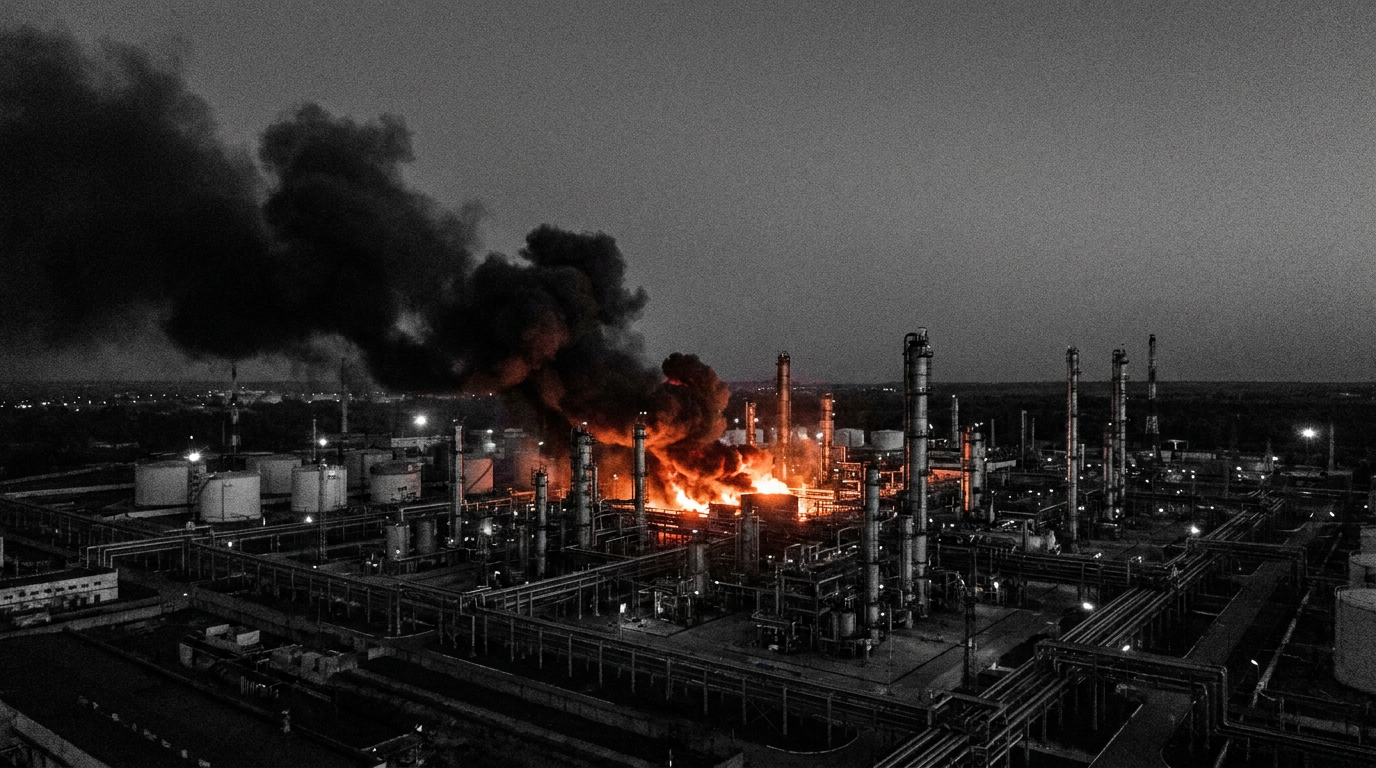
Ukraine refinery attack claims put Rosneft PJSC’s 140,000-barrel-a-day Saratov plant under pressure after Kyiv said it hit the Volga site.
Saratov fires under assessment
Ukraine’s General Staff said in a Telegram statement that fires were detected at the Saratov refinery and that the scale of damage was still being assessed. The statement identified the target as a major Rosneft facility in Russia’s Volga region, a position that places it inside the country’s core fuel-processing network.
Satellite data from NASA’s Fire Information for Resource Management System on Friday showed fresh heat anomalies at the site, a reading likely consistent with multiple fires. Roman Busargin, the Saratov governor, said separately on Telegram that unspecified "civil infrastructure" was damaged in an overnight drone attack.
Strikes resume after diplomacy
The reported hit followed a four-day pause in Ukraine’s attacks on Russian energy assets while US envoys visited Moscow and Kyiv for peace talks. Since Sunday, Ukrainian officials have confirmed strikes on three oil refineries, two Arctic gas-condensate processing plants and a fuel oil terminal on the Black Sea.
The Saratov plant can process about 140,000 barrels of crude a day and sits about 730 kilometers, or 453 miles, southeast of Moscow on the Volga River. It was designed to supply oil products to the European part of Russia and had previously been hit in early August.
Refineries are a narrower target than crude fields: they turn oil into gasoline, diesel and other fuels that move civilian transport and can support military logistics. Russia’s output of road fuels has fallen during the campaign, and the government has imposed temporary bans on most gasoline and diesel exports.
Fuel markets face pressure
The Saratov report adds a Volga-region refinery to a week of confirmed Ukrainian claims against Russian fuel infrastructure from the Arctic to the Black Sea. For Rosneft, any extended outage at Saratov would matter most through lost processing capacity, repair costs and the need to reroute crude or products within Russia.
For the wider refining sector, repeated drone strikes can raise operating risk even when individual attacks cause limited damage. Facilities may need more air defenses, extra inventories or slower restart plans, all of which can reduce efficiency without immediately appearing in headline production figures.
The global effect depends on whether Russian product exports remain restricted and whether domestic supply tightness forces Moscow to keep more fuel at home. If export bans stay narrow and temporary, the macro impact is likely to remain concentrated in regional fuel trade rather than crude supply.
If attacks continue at the current pace and disable larger units for longer periods, Russia could face more pressure to prioritize domestic fuel availability over export revenue. That path would affect Rosneft through lower refinery utilization, the industry through higher protection costs, and global markets through tighter flows of diesel and gasoline components.
A second path is limited physical damage at Saratov and faster repairs across targeted sites. Under that condition, macro effects would stay muted, Rosneft would absorb the disruption as a plant-level outage, and refiners would treat the week’s attacks as a security expense rather than a broad capacity shock.
The security picture is wider than refineries. Since late August, Russia has increased the frequency of its own air attacks on Ukraine, particularly Kyiv, using jet-powered drones that Ukrainian officials and air defenders say are harder to intercept and that increase risks to civilians and public services.