Houthis reach Perim as Red Sea oil route comes under strain
Houthis reached Perim in the Bab el-Mandeb Strait, Yemeni government sources said, adding pressure to a Red Sea route used by Saudi oil exports.
Omar Farouk ·
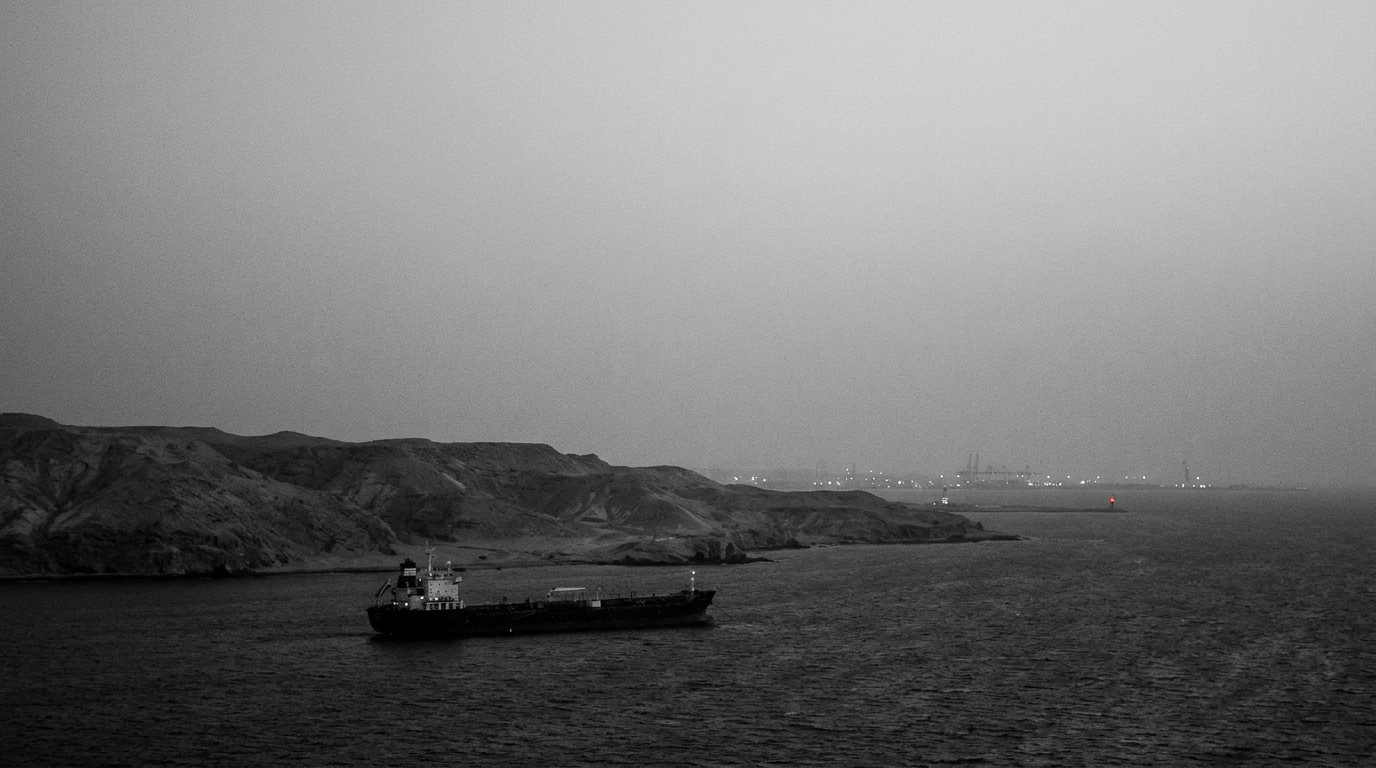
Houthis reached Perim in the Bab el-Mandeb Strait, four Yemeni government sources said, putting a second oil chokepoint under pressure. The island sits opposite Yemen’s Red Sea coast and near a route Saudi Arabia has relied on since the Strait of Hormuz was effectively closed.
Two officials from Yemen’s Saudi-backed, internationally recognized government said its forces had pulled out of Perim. They also said the Houthis had taken Dhubab, a coastal town facing the island, a claim that was not separately confirmed by the parties named in the account.
Perim narrows Red Sea options
Perim’s position gives it military and commercial weight beyond its size. The island lies in the Bab el-Mandeb, the passage connecting the Red Sea with the Gulf of Aden and the wider Indian Ocean.
If the Houthis turn a presence on Perim and in Dhubab into operational control, vessels using the route would face a narrower security margin. That would matter for oil, container traffic and naval planning after months in which shipping through the region has already required escorts, diversions or higher insurance cover.
The development also carries a regional layer. The Houthis are aligned with Iran, while the Yemeni government forces cited in the account are backed by Saudi Arabia, placing the island inside a wider contest over maritime pressure points around the Arabian Peninsula.
Saudi pipeline becomes central
Saudi Arabia has leaned more heavily on its Red Sea export route since the conflict with Iran disrupted Hormuz. The Strait of Hormuz previously handled about one-fifth of global oil flows, according to the account, making the Bab el-Mandeb a more important fallback corridor for Riyadh.
Satellite imagery from Thursday showed smoke near Saudi Arabia’s East-West oil pipeline, which carries crude from the kingdom’s eastern production areas toward the Red Sea. No Saudi confirmation of an incident had been issued, and neither the government media office nor state oil company Saudi Aramco had provided an immediate comment.
The East-West pipeline is central to Saudi Aramco’s ability to move crude away from Hormuz exposure. If that system remains intact, Aramco can keep using the Red Sea side of the kingdom to offset the loss of the Gulf route; if it is disrupted, the company’s export flexibility narrows.
The International Energy Agency said Saudi crude supply fell by 2.3 million barrels per day in August from the prior month to 6 million barrels per day. The agency said that was the lowest level in more than three decades and was partly linked to attacks on ships transiting the Bab el-Mandeb by groups connected to Yemen’s Houthis.
Oil prices were on course to finish the week above $100 a barrel for the first time since mid-May, though they were slightly lower on Friday. The price action followed reports of pressure on shipping lanes and uncertainty around how much crude can move through the region’s remaining open routes.
Three conditional paths
If Houthi control over Perim and Dhubab holds, the global macro effect would run through higher transport costs, tighter crude availability and renewed inflation pressure for oil-importing economies. For Aramco, the mechanism would be reduced confidence in Red Sea loadings; for shippers and refiners, it would mean longer routes and more expensive coverage.
If Saudi infrastructure proves unaffected and Bab el-Mandeb traffic remains manageable, the macro effect would be more contained. Aramco would retain a working alternative to Hormuz, while the wider energy and shipping sectors would still price in a risk premium rather than a full route closure.
If attacks spread from ships to fixed energy infrastructure, the shock would be larger. The macro channel would be crude supply uncertainty, Aramco’s exposure would center on pipeline reliability and export scheduling, and the wider sector would face tighter tanker availability, higher freight rates and more complicated insurance terms.
The main open questions are whether the Houthis can convert the reported landing into durable control, whether Saudi Arabia confirms any incident near the East-West pipeline, and whether oil flows through the Red Sea can be maintained without deeper military escalation. Each answer would change the balance between a costly disruption and a broader supply shock.