

Iran faces renewed strikes after IRGC’s 100% readiness claim
Iranian officials describe expanded missile and drone capabilities, while the report says shelters and public-warning systems remain lacking in major cities.
Iran’s Islamic Revolutionary Guard Corps said it was “100 percent ready” on Sunday for renewed US and Israeli attacks, an Al Jazeera report said on Nov. 2, citing spokesman Hossein Mohebbi.
The report said any new conflict would be the third major confrontation among Iran, the US and Israel since June 2025, while Iranian cities still lack shelters and broad public-alert systems.
Mohebbi described “maximum deterrence” as a near-term goal, the report said. President Donald Trump said on Sunday that the war with Iran would end “very soon one way or the other” and that Tehran should accept a deal or “the hammer” would come down.
Hossein Kanani Moghaddam, a former senior IRGC commander, told Al Jazeera that Iran had recovered operationally from earlier strikes. “In terms of offence, our target database has significantly expanded, the range, accuracy and warheads of our missiles have improved and our drone capabilities have increased,” he said.
Army spokesman Mohammad Akraminia said commanders would use “asymmetric warfare,” meaning irregular tactics intended to offset stronger conventional forces. He said “some weaponry was renovated and new equipment was added along with new tactics” during a brief ceasefire after a June memorandum of understanding between Iran and the US.
The report said commanders from Iran’s General Staff of Armed Forces, the IRGC and the regular army recently met Supreme Leader Mojtaba Khamenei to review responses to any new attack. It said those officials warned a response would be immediate and could extend outside West Asia.
Last month, Iranian state television showed an underground drone production line, the report said. Authorities also presented an upgraded Arash attack drone and said its warhead had doubled to 100 kilograms with improved guidance.
A Reuters investigation published last week, cited in the report, said military agencies linked to Iran’s defence establishment had evaded sanctions to import materials for missile and drone production. It said shipments from China, Russia and Germany between January 2025 and June 2026 included rocket propellants, explosives, detonators, titanium and heavy-duty trucks that could be used as launchers.
The extent of Iran’s readiness cannot be independently established from the report. The same article said many Iranian air-defence systems, radars and other equipment were struck during the war, leaving civilians and infrastructure exposed if hostilities resume.
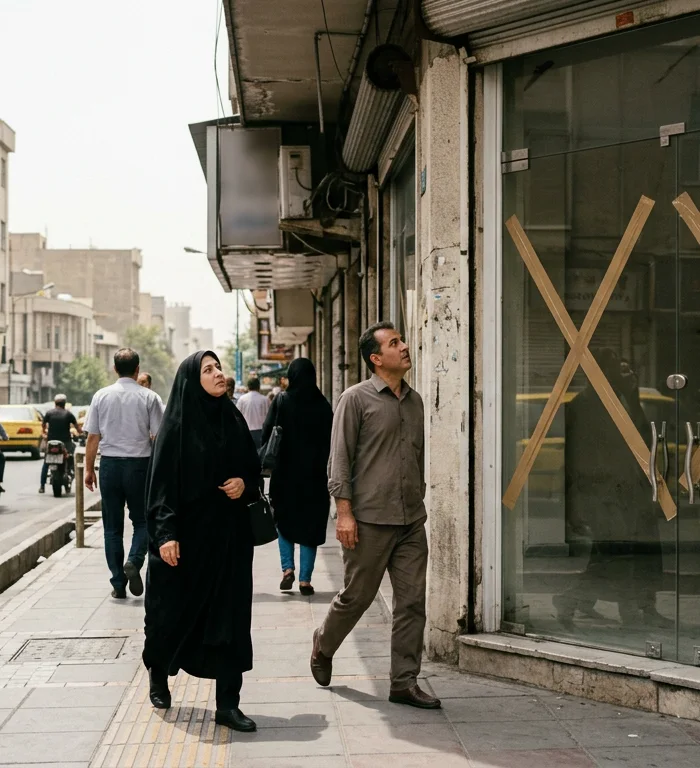
The report said Tehran and other cities still do not have shelters or comprehensive warning arrangements. It also said electricity, energy, petrochemical, steel and transport facilities could face renewed attacks.
Kanani Moghaddam said Iran could threaten maritime traffic in the Strait of Hormuz, saying, “we have shown that we can easily target supertankers.” He said US Navy vessels stopped entering Hormuz after Iranian attacks in September; the report also said the US naval blockade on southern Iranian ports has continued.
The report said Pakistan-facilitated talks have not produced a lasting settlement, with Iran’s nuclear capabilities and control of the Strait of Hormuz among unresolved issues.
More stories
- Malaysia tightens critical-sector security after Nov. 2 review
- Ukraine and Russia face fake nuclear alerts after app hacks
- Kallas urges UK to deepen EU defence ties before Nov. 20 summit
- Budi seeks WHO dues above 50% to steady funding
- Japan weighs defense plan worth up to $508bn, sources say
- Midvaal transformer failure leaves 116 homes without power
- Brazil rivals rally before debate as runoff nears finish
- France unrest brings 2,400 arrests as Macron appeals for calm
Latest news
- Bioventus cuts 2026 revenue view to $590m-$595m
- Cinaciguat cuts amyloid beta by half in aging rats
- Kimco buys Louisville retail centers for $295m
- GLP-1 drinkers report lower alcohol use in Harvard survey
- Adults losing 5% in midlife show slower heart-marker decline
- Researchers put alcohol mortality risk at 1 in 25 for 14 weekly drinks
- Kodiact raises $2.5m for raw-material sourcing software
- Tomb Raider creators describe 2-year push behind Lara Croft