

Cinaciguat cuts amyloid beta by half in aging rats
USC researchers reported that the experimental drug restored aging liver-cell function in rats and lowered LDL cholesterol to levels seen in young animals.
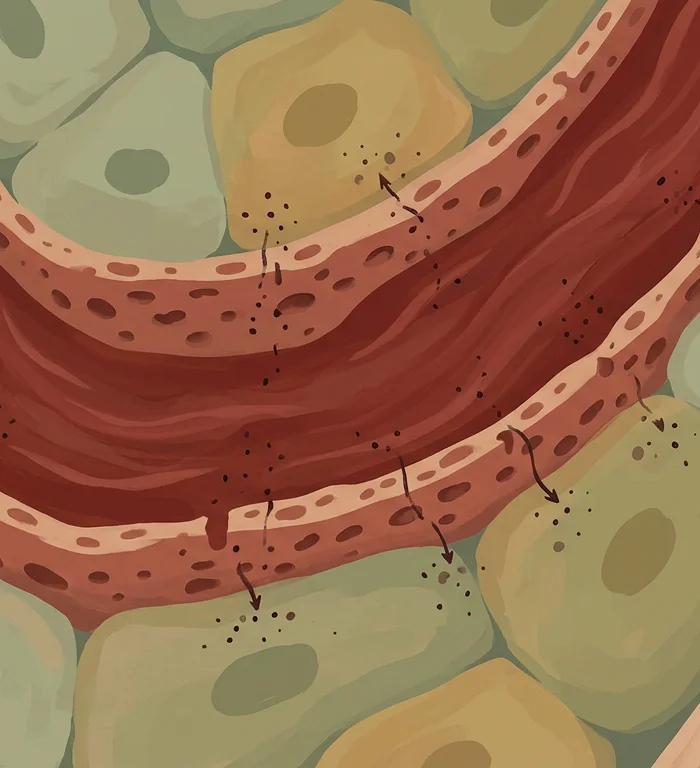
USC researchers said Nov. 2 that cinaciguat cut circulating amyloid beta by about 50% after two weeks in older rats, according to a ScienceDaily report on research published in the Journal of Biological Chemistry.
The finding matters because it links age-related liver changes to blood markers associated with Alzheimer’s disease and atherosclerosis, while LDL cholesterol fell to levels seen in young rats. The work remains animal research, not evidence of benefit in people.
The Keck School of Medicine of USC team studied liver sinusoidal endothelial cells, or LSECs, which line small blood vessels inside the liver. These cells contain microscopic openings that help larger molecules reach hepatocytes, the liver cells that process and remove substances from the bloodstream.
“We need to do further translational work to see whether our findings might point to new therapies,” corresponding author Laurie DeLeve, professor and vice chair for scientific affairs in the USC Department of Medicine, said in the ScienceDaily report. “We're hopeful, though, because the findings line up with a lot of epidemiological results showing age as a major risk factor for Alzheimer's and atherosclerosis, and liver damage as a risk factor for Alzheimer's.”
In aging, the openings in LSECs narrow or disappear, reducing the liver’s ability to clear some circulating molecules. The researchers gave cinaciguat to aged rats for two weeks and compared them with untreated older rats and untreated younger rats, according to the report.
Cinaciguat restored the structure and function of the aged LSECs, the researchers said. Circulating amyloid beta, a protein linked to Alzheimer’s disease, fell by about half and reached levels comparable with young rats; untreated older rats did not show the same improvement.
The LDL result was less expected. LDL particles are small enough that the researchers did not expect their clearance to depend on LSEC openings, yet LDL concentrations in treated older rats also returned to levels seen in young animals.
“We said, 'Wait, why did that go down? Clearly, there's more to this story,'” first author Sam de Leve, a USC lab technician, said in the report.
The team identified a signaling route between LSECs and hepatocytes. Cinaciguat activated soluble guanylate cyclase, an enzyme, inside LSECs; that led to release of HB-EGF, a growth factor, which signaled to nearby hepatocytes and helped them capture more LDL and amyloid beta from blood.
The study cannot show that lowering amyloid beta in the bloodstream reduces amyloid plaques in the brain, slows cognitive decline or is associated with lower Alzheimer’s disease risk. It also cannot show that the same liver-cell effects will occur in humans, because the evidence comes from rats.
The researchers plan to keep studying cinaciguat in rats to see whether the amyloid beta changes are linked to measurable protection against Alzheimer’s disease. The work received federal funding from the National Institutes of Health grants R56AG071480 and 5R01DK100580.
Source: ScienceDaily Health report, Nov. 3; Keck School of Medicine of USC summary dated Nov. 2; Journal of Biological Chemistry article.
Atlas360 reports health research and does not provide medical advice.
More stories
- GLP-1 drinkers report lower alcohol use in Harvard survey
- Adults losing 5% in midlife show slower heart-marker decline
- Researchers put alcohol mortality risk at 1 in 25 for 14 weekly drinks
- Diabetes implant controls mouse glucose over six weeks
- Robert Greene frames sublime access as attention practice on Huberman Lab
- Cavaliere warns lifters in their 40s and 50s against junk volume
Latest news
- Bioventus cuts 2026 revenue view to $590m-$595m
- Malaysia tightens critical-sector security after Nov. 2 review
- Kimco buys Louisville retail centers for $295m
- Ukraine and Russia face fake nuclear alerts after app hacks
- Iran faces renewed strikes after IRGC's 100% readiness claim
- Kodiact raises $2.5m for raw-material sourcing software
- Tomb Raider creators describe 2-year push behind Lara Croft