

Ukraine and Russia face fake nuclear alerts after app hacks
Officials in both countries said warning apps were compromised; neither government identified a culprit or confirmed whether the incidents were linked.
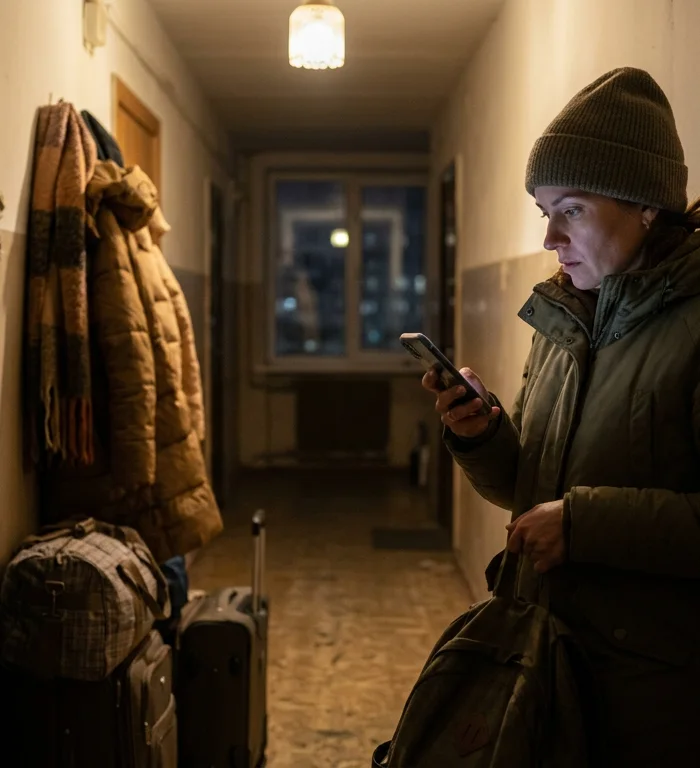
Ukraine and Russia said two air-alert apps were hacked on Sunday night, sending fake warnings including nuclear, radiation and chemical attack alerts, BBC News reported on Nov. 2.
Compared with Ukraine’s almost nightly alerts over four and a half years of war, the Sunday breaches turned emergency-warning tools into hoax channels in two countries within hours, the BBC report said.
Ukraine’s widely used app issued red-level air-raid warnings nationwide. Some users, including residents in Kyiv, also received false messages about radiation, chemical attacks and street fighting.
Ukraine’s air force urged people to use other official channels after the breach. In a Telegram post, it said: "The Air Alarm application has probably been subjected to hostile interference. There is no radiation threat!
Stay calm and follow our updates on our [Telegram] channel."
Ukraine’s government said the app had been temporarily disabled for maintenance after it had "apparently been compromised", according to the BBC. Some of the false alerts were written in Russian, which made them appear suspicious to some Ukrainian users.
Hours later, Russian authorities said one of Russia’s air-raid alert apps had been hit by "a massive cyberattack" that sent "fake information to the public". A purported screenshot shared on Telegram by Atesh, a partisan Ukrainian group operating inside Russian-held territory, showed a false alert referring to nuclear warheads aimed at all Russian regions.
Russia’s emergencies ministry said on Monday that the hack had not affected the wider alert system. It said the app’s "full functionality will be restored by the end of the day". Confirmation of restoration, or any delay, will show whether the compromise was confined to the app as the ministry said.
Neither government confirmed who was responsible for the attacks, and it was unclear whether the Ukrainian and Russian incidents were connected. Asked about the breach, Kremlin spokesman Dmitry Peskov did not address it directly, but said Russian government internet resources were "one way or another... under constant cyberattacks".
Olena, a Kyiv resident, told BBC Radio 4’s Today programme that the first alert alarmed her. "The first thought was 'oh my god, I'm not prepared for this'," she said. "I'm prepared for blackouts, for a cut in central heating and water supply, but not for nuclear attack."
Oleksander Merezhko, chair of the foreign affairs committee in Ukraine’s parliament, told the BBC the episode did not trigger panic or extreme reactions. He said the Russian-language wording "immediately aroused suspicions" among Ukrainians used to receiving official alerts in Ukrainian.
Herbert Lin, a senior research scholar for cyber policy and security at Stanford University, told BBC World Service’s Newsday programme: "I think it's the first time [a hack of this kind] happened to an official Ukrainian information app, but I suspect it won't be the last."
The BBC reported that the informal language in the hoax alerts pointed to so-called hacktivist groups, which may align with Moscow or Kyiv without formal government direction. Cyber experts told the BBC that those responsible for the attack on Russia’s system had probably had the capability for some time and waited until Ukraine’s app was compromised.
The fake alerts in Ukraine were sent minutes before the end of a local ceasefire in the Kherson region, which began last Tuesday and was brokered in part by US First Lady Melania Trump to allow civilians to leave Russian-occupied Oleshky. Fighting continued elsewhere during the pause; 15 people were killed in an attack on a train platform in Dnipro on Thursday, according to the BBC.
After the Sunday-night end of the Kherson ceasefire, any official account of disruptions to evacuation or emergency messaging would be the next check on whether the fake alerts affected civilian communications beyond the apps themselves.
Source: News report, BBC News Europe, Nov. 2, 2026
More stories
- Malaysia tightens critical-sector security after Nov. 2 review
- Iran faces renewed strikes after IRGC's 100% readiness claim
- Kallas urges UK to deepen EU defence ties before Nov. 20 summit
- Budi seeks WHO dues above 50% to steady funding
- Japan weighs defense plan worth up to $508bn, sources say
- Midvaal transformer failure leaves 116 homes without power
- Lovejoy links Bonetta to 700,000-person indenture system
- Six Black Sea ship attacks reach Romanian waters
Latest news
- Bioventus cuts 2026 revenue view to $590m-$595m
- Cinaciguat cuts amyloid beta by half in aging rats
- Kimco buys Louisville retail centers for $295m
- GLP-1 drinkers report lower alcohol use in Harvard survey
- Adults losing 5% in midlife show slower heart-marker decline
- Researchers put alcohol mortality risk at 1 in 25 for 14 weekly drinks
- Kodiact raises $2.5m for raw-material sourcing software
- Tomb Raider creators describe 2-year push behind Lara Croft