

Cavaliere warns lifters in their 40s and 50s against junk volume
The Nov. 2 podcast episode centers on exercise selection, reps in reserve and training to failure as ways to manage fatigue and joint stress.
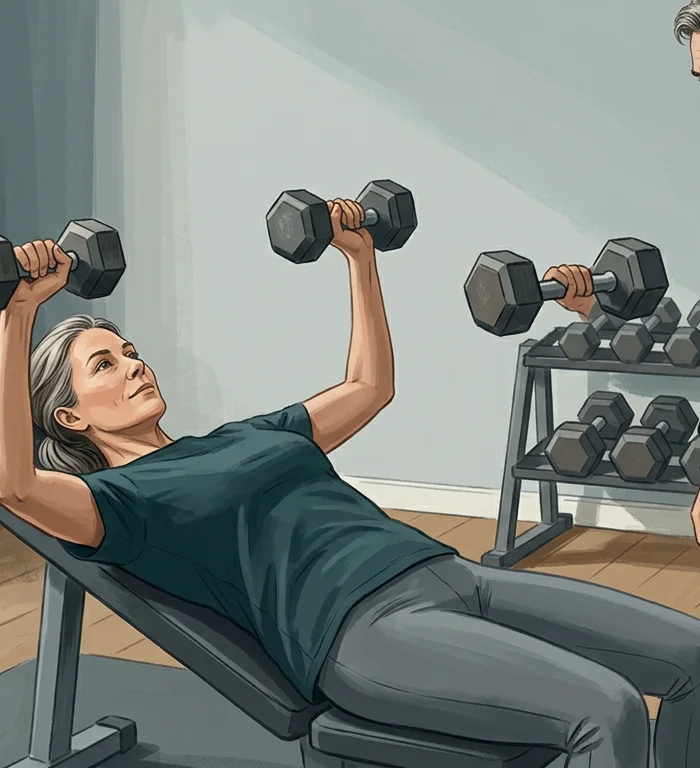
Jeff Cavaliere used a 97-minute Nov. 2 episode of The Peter Attia Drive podcast to argue that resistance training in midlife should balance muscle growth, function and injury-risk management.
The podcast is expert discussion, not a clinical study, but it targets adults in their 40s, 50s and beyond who want strength gains without unnecessary joint strain.
Cavaliere, a physical therapist, strength coach and founder of ATHLEAN-X, framed excessive training volume as a problem for older trainees. The episode describes “junk volume” as work that adds fatigue without enough productive stimulus.
Peter Attia, host of The Peter Attia Drive, asked Cavaliere in the episode, “What do you think is the most prudent strategy for reducing risk?” The discussion then turned to reps in reserve, training to failure and exercise modifications.
Reps in reserve means stopping a set while estimating how many more repetitions remain possible. Training to failure means continuing until another repetition cannot be completed as intended. Cavaliere discussed using both concepts to manage fatigue and injury risk.
The episode also presents Cavaliere’s view that pain or injury should change exercise selection rather than automatically stop all training. “Any injury you're dealing with is not a mandate to completely rest. It's not.
It's a mandate to choose safer, more appropriately loaded and progressed exercises,” Cavaliere said.
Cavaliere’s return to Attia’s show follows his earlier appearance on a strength roundtable last year. This episode moves from broad strength principles into a muscle-by-muscle discussion of shoulders, triceps, biceps, forearms, chest, abs, back, legs and calves.
The shoulder section covers alternatives beyond the overhead press. Other segments discuss compound triceps movements, exercises for the long head of the triceps, pressing and crossover movements for the chest, and work for the gastrocnemius and soleus, the two major calf muscles named in the episode.
Cavaliere also discussed aesthetics and functional performance as overlapping goals rather than opposing ones. He argues that training for appearance and training for function are not necessarily in conflict.
The episode’s most practical theme is exercise substitution. Cavaliere said, “There's tips that you can give them to increase the stimulus that you're feeling, and that might work for almost everybody, but there's still gonna be people who don't have that effect with the exercise they're doing, so you need to find exercise number two or three.”
Cavaliere’s “exercise graveyard” identifies popular movements he considers to carry injury risk that may not justify their benefits. He offers alternatives intended to deliver similar training effects with less risk.
The limits are important. The episode gives no randomized trial, sample size, injury-rate comparison or measured strength outcome. It is a podcast interview with a practitioner, so readers should treat it as expert guidance and not as proof that specific exercises are safer or more effective for everyone.
The episode most directly applies to people already doing or considering resistance training in middle age and later life. It does not establish individualized exercise choices for people with medical conditions, acute injuries or rehabilitation needs.
Source: podcast, The Peter Attia Drive, Nov. 2, 2026.
Atlas360 reports health research and does not provide medical advice.
More stories
- Robert Greene frames sublime access as attention practice on Huberman Lab
- p-tau217 blood test flags 38% five-year Alzheimer’s impairment risk
- FDA removes black-box warnings from 3 menopause patches
- Intensive diet and exercise put diabetes in remission for 54%
- Rhabdomyosarcoma tumors may hide aggressive cells
- Brainstem nerve cells may curb blood-pressure swings
Latest news
- Kallas urges UK to deepen EU defence ties before Nov. 20 summit
- Major Drilling adds 8 dewatering rigs with Bunbury deal
- CD&R and GTCR seek $40bn Global Payments buyout
- Budi seeks WHO dues above 50% to steady funding
- PPHC buys Reevemark for up to $80m
- Japan weighs defense plan worth up to $508bn, sources say
- The week ahead for the markets
- The week ahead for the markets