

Rhabdomyosarcoma tumors may hide aggressive cells
A small Cancer Research study of 16 children suggests some rhabdomyosarcoma tumors without the usual high-risk genetic marker may still carry aggressive cell…
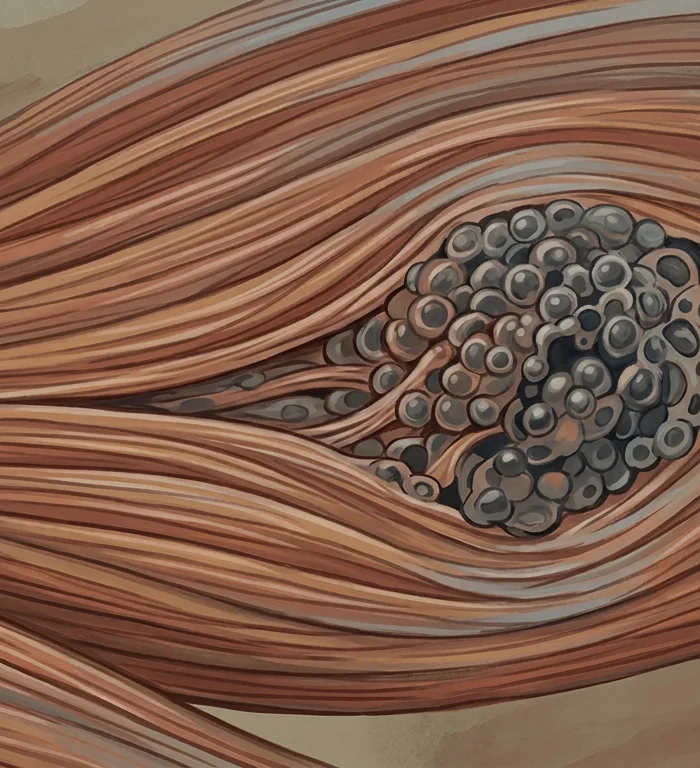
Wellcome Sanger Institute researchers reported on Oct. 30 that 16 children's rhabdomyosarcoma tumors contained aggressive cell states sometimes absent from standard genetic risk categories, according to a ScienceDaily Health research summary.
For families and clinicians, the immediate point is limited but important: the Cancer Research paper suggests current fusion-marker grouping can miss biology linked to fatal disease, in a sample that included four fusion-negative fatal cases.
Rhabdomyosarcoma is an aggressive cancer arising from muscle tissue and is among the most common soft tissue cancers in children younger than 15. About 55 children are diagnosed with it in the U.K. each year, according to the source summary.
Doctors commonly sort rhabdomyosarcoma by whether a tumor carries a gene-fusion marker, in which two normally separate genes combine. The summary said children with fusion-positive tumors have substantially lower survival rates than children whose tumors lack that marker, even after intensive treatment.
The research team compared tumors from four children with fusion-negative disease that proved fatal, four children with fusion-positive tumors, and eight children with fusion-negative disease who remained alive. The institutions involved included the Wellcome Sanger Institute, University of Cambridge, Great Ormond Street Hospital, University College London and collaborators.
Karin Straathof, co-senior author at UCL Cancer Institute and GOSH, said in the release: "By studying tumors one cell at a time, we uncovered hidden populations of aggressive cancer cells that conventional methods miss. Although these tumors carry different genetic changes, many converge on the same aggressive pathways. This helps explain why some children who appear to have lower-risk disease can still have a devastating outcome."
The scientists used single-cell RNA sequencing, which measures gene activity cell by cell, rather than averaging signals across a tumor. They also used spatial transcriptomics, which maps gene activity to locations inside tissue.
Those methods showed that some tumors categorized as outside the highest-risk group had cell-activity patterns resembling those in high-risk tumors, according to the summary. The researchers also identified rare genetic changes affecting many of the same cellular pathways seen in more dangerous disease.
The study cannot show that these findings are ready to guide treatment decisions. It analyzed tumor samples from 16 children and did not test whether changing therapy based on the cell-state signatures improves survival or reduces treatment harms.
The findings apply to pediatric rhabdomyosarcoma tumor biology, not to childhood cancers broadly. They also do not mean every fusion-negative tumor is dangerous, or that any child’s treatment should change based on this report alone.
The authors said the work could support future efforts to identify higher-risk tumors earlier and spare lower-risk patients from unnecessary chemotherapy intensity. They also pointed to future therapy development, including CAR-T cell therapy, an immunotherapy approach that modifies immune cells to recognize cancer cells, but said such treatments would need further development and testing for rhabdomyosarcoma.
The research was supported by a Cancer Research UK–Children with Cancer UK Innovation Award, with co-funding from Alice's Arc and funding from Wellcome. Scientists are expanding the work to hundreds of additional tumor samples, according to the summary, but no dated clinical milestone was provided.
Source: ScienceDaily Health summary of Wellcome Trust Sanger Institute research, Oct. 30, 2026; Cancer Research.
Atlas360 reports health research and does not provide medical advice.
More stories
- Intensive diet and exercise put diabetes in remission for 54%
- Brainstem nerve cells may curb blood-pressure swings
- Inulin cuts knee arthritis pain in six-week trial
- British surgeons question rib remodelling after 3.7% complications
- Three weekly wall-squat sessions cut systolic blood pressure 13.73 mmHg in small trial
- Jared Feather says knee fracture reshaped training for 18 months
Latest news
- Singapore caps private-hire car loans at 60% to 70%
- Japan faces ASEAN doctrine test after Fukuda dies at 90
- Flow Games raises $49m as platform control tightens
- Palm oil buyers face EU deforestation risk from Dec. 30
- Undocumented learners face South Africa matric barriers
- Trump administration escalates election suits before vote
- Trump holds back on Bolsonaro claim to Brazil leadership
- CIR places 25 Sudan commanders at reported sexual-violence sites