

Japan faces ASEAN doctrine test after Fukuda dies at 90
China’s tribute to the former prime minister underscores Tokyo’s struggle to preserve diplomatic channels while managing sharper rivalry with Beijing and…
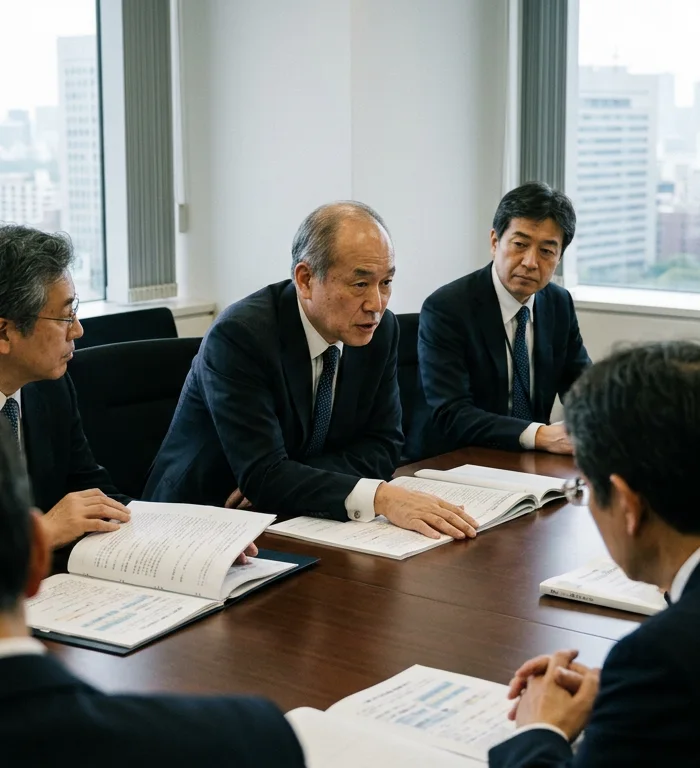
Japan faces a foreign-policy test after former Prime Minister Yasuo Fukuda died at 90 on Oct. 22, The Straits Times reported on Oct. 30.
The debate matters because Tokyo is discussing how to revise the Fukuda Doctrine, a 1977 framework for relations with the Association of Southeast Asian Nations, before its 50th anniversary in 2027, the report said.
Fukuda, prime minister from 2007 to 2008, made engagement with Beijing a central part of his short administration. His son Tatsuo Fukuda, a six-term Liberal Democratic Party lawmaker, announced the death four days after it occurred, according to the report.
Beijing marked his death by calling him an “old friend of the Chinese people”. The description carried political weight because Japan and China remain in a diplomatic stand-off after Prime Minister Sanae Takaichi’s parliamentary remarks in November 2025 on a possible Taiwan contingency.
Tatsuo Fukuda told ASEAN journalists in Tokyo shortly before his father’s death that the doctrine should retain its core ideas but be adapted to current demands. “The focus should shift towards sharing expertise on building stable societies and cooperating on shared challenges like food security, energy supply, demographics, and the environment,” he said.
The doctrine was created by Yasuo Fukuda’s father, Takeo Fukuda, who served as prime minister from 1976 to 1978. It committed Japan to reject militarism, pursue equal partnership with ASEAN and build “heart-to-heart” ties, according to The Straits Times.
Takeo Fukuda also signed the Japan-China Treaty of Peace and Friendship in 1978. The treaty committed both countries to settle disputes peacefully and not seek regional hegemony, the report said.
The regional setting has changed sharply since the Fukudas shaped Japan’s Asia policy. The Straits Times reported that China has eclipsed Japan in both economic scale and defence spending, while expanding its strategic influence beyond the region.
China’s response to Yasuo Fukuda’s death came with a pointed message for Tokyo. Chinese President Xi Jinping praised Fukuda as a “statesman known for his integrity and sense of responsibility … (who) upheld a correct view of history”, according to The Straits Times.
Chinese Foreign Ministry spokesman Guo Jiakun also cited Fukuda’s 2018 visit to the Memorial Hall of the Victims in the Nanjing Massacre and his work as prime minister on bilateral agreements. Guo said Fukuda’s principles “should evoke self-reflection and soul-searching among those currently running the Japanese government”.
Rumi Aoyama, director of the Waseda Institute of Contemporary Chinese Studies, told The Straits Times that Beijing’s wording was deliberate. “By praising Fukuda’s historical understanding and his commitment to foundational principles, Beijing is signalling what it considers a more appropriate course for Japan,” Aoyama said.
Fukuda himself argued in a July 2025 interview with TV Asahi that diplomacy, rather than military planning, should lead relations with China. “Diplomacy is crucial. It’s not really about whether to go to war; it’s about ensuring that diplomacy is carried out effectively,” he said.
Analysts cited by The Straits Times cautioned that Fukuda-era diplomacy cannot simply be restored. Shin Kawashima, a University of Tokyo expert on Sino-Japanese relations, argued that Beijing now views the US-Japan alliance more as containment, especially over Taiwan.
Kei Koga, head of the Public Policy and Global Affairs Programme at Nanyang Technological University, said the older principle of sustained contact still matters. “Fukuda’s fundamental principle of deepening mutual understanding through continuous dialogue remains relevant, particularly in reducing the risks of accidents, misunderstandings, unnecessary tensions, and unintended escalation,” he told the newspaper.
In 2027, the Fukuda Doctrine reaches its 50th anniversary, giving Tokyo a dated test of whether it updates the framework while preserving its pledges against militarism and for equal partnership with ASEAN.
In 2027, ASEAN governments will be able to assess whether any Japanese update answers the concerns identified in the report, including pressure on Southeast Asian states to choose sides in a multipolar contest.
Source: news report, The Straits Times, Oct. 30, 2026
More stories
- Singapore caps private-hire car loans at 60% to 70%
- Palm oil buyers face EU deforestation risk from Dec. 30
- Undocumented learners face South Africa matric barriers
- CIR places 25 Sudan commanders at reported sexual-violence sites
- Brent heads for fourth monthly gain as Middle East risk persists
- European coffin makers seek EU case with ranks down to 90
- Thai police arrest 39 in Cambodia-linked laundering probe
- Fire in Limoges leaves heritage loss and service disruption