

Singapore caps private-hire car loans at 60% to 70%
The change closes a financing route officials said some buyers may have used without intending to offer ride-hailing services.
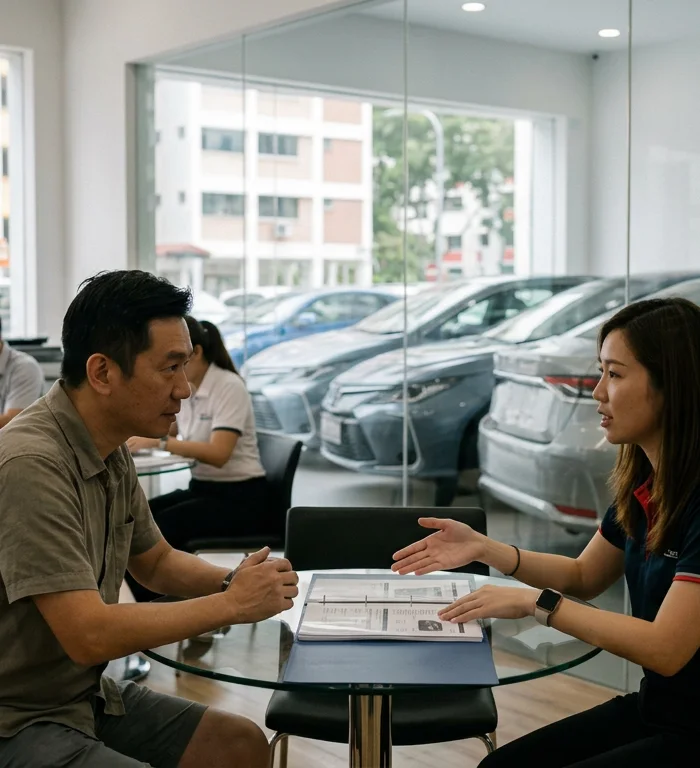
Singapore tightened financing rules for individually owned private-hire cars from Friday, limiting loans to 60% or 70% of the purchase price, versus 100% previously, Channel NewsAsia reported on Oct. 30.
The policy matters for Singapore's Certificate of Entitlement market, the auction-based permit system for owning a vehicle. Officials cited about 500 monthly registrations of individually owned self-drive private-hire cars, against about 5,000 monthly car quotas in recent auctions, according to Channel NewsAsia's Oct. 30 article.
The new limits apply to individuals who buy cars designated as private-hire vehicles, whether or not they plan to provide ride-hailing services. Loan tenures will also be capped at seven years, CNA reported.
Authorities said on Thursday that some buyers may have used private-hire registration mainly to obtain easier financing, rather than to offer ride-hailing. The rules vary with the car's open market value, a valuation measure used in Singapore's vehicle tax and financing framework.
NTUC Assistant Secretary-General Yeo Wan Ling said the financing change will affect genuine private-hire drivers' ability to make a living. Yeo, adviser to the National Private Hire Vehicles Association, said the association would monitor whether the rule makes vehicle ownership harder for drivers, increases reliance on rental fleets or raises operating costs.
Carro's Singapore country head Kyran Wong said most of the firm's customers either take standard loans or pay cash. "It is not common for car buyers to register their car as a PHV just to take on a 100 per cent loan," he said, using the abbreviation for private-hire vehicle.
Singapore had 98,621 private-hire cars as of September, according to Land Transport Authority figures cited by CNA. Vincent Ng, business consultant at Vincar Group, said his company has customers who own vehicles and provide ride-hailing part time, though their numbers are not significant.
The impact on Certificate of Entitlement premiums is not clear. Assistant Professor Lee Kwok Hao of the National University of Singapore Business School said removing the financing edge should cut demand from buyers who used private-hire registration to obtain larger or longer loans.
Lee also said some affected buyers may still buy private cars under conventional financing, use company ownership or seek other financing. He said the net effect depends on how many buyers exit the market rather than switch registration or ownership structures.
Singapore University of Social Sciences economist Walter Theseira made a similar point. "It depends on the marginal decision taken by the prospective buyer," he said.
Theseira said some buyers may still afford the same car under a regular loan, while others may choose cheaper vehicles to meet downpayment requirements. Some may no longer be able to buy a car after the removal of 100% financing.
He cautioned against treating the roughly 500 monthly registrations as demand that will simply vanish. "It is unlikely that all of them will get priced out of the market. Hence, this move is not equivalent to just removing 10 per cent of demand," he said.
Lee also declined to estimate a specific reduction in premiums from the registration figure. "We do not know how many of these buyers relied on financing exceeding the new limits, nor how many will switch to other purchasing arrangements," he said.
More stories
- RSA Facts chatbot generates false R1,500 grant notice
- Nigeria says troops repel two attacks, kill 48 insurgents
- Randrianirina faces power-consolidation claims after 1 year
- Refinery attacks put Russia's diesel export plans in focus
- Spain faces high-speed rail trust crisis after 69-death crash
- Japan faces ASEAN doctrine test after Fukuda dies at 90
- Palm oil buyers face EU deforestation risk from Dec. 30
- Malaysia faces calls to tighten haze rules for 1.8 million workers
- Dubai asking prices hold as 56,600 homes near market