

Three weekly wall-squat sessions cut systolic blood pressure 13.73 mmHg in small trial
A 100-adult randomized trial found one or two weekly wall-squat sessions preserved smaller short-term gains, while stopping training erased the benefit.
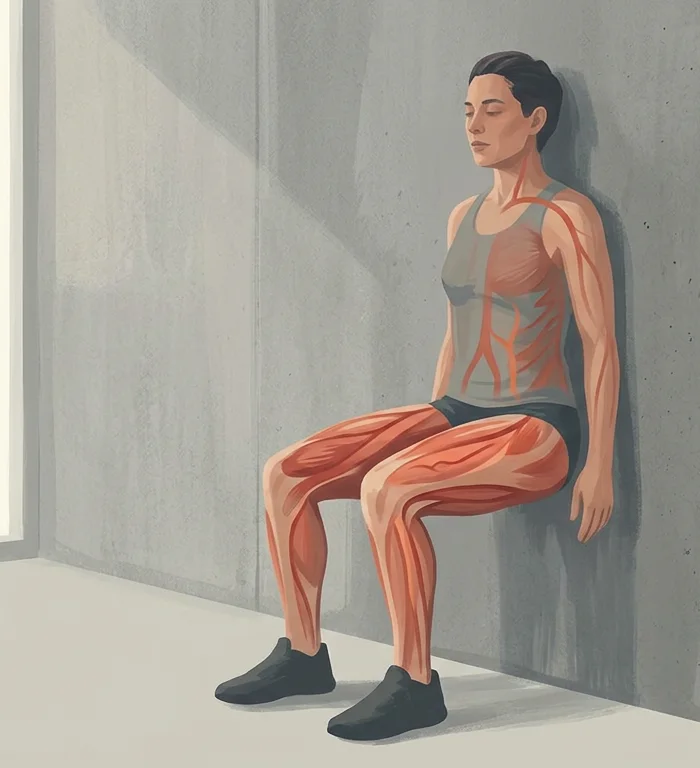
Wall-squat training cut systolic blood pressure by 13.73 mmHg over eight weeks in a 100-adult randomized trial published in BMJ Open Sport & Exercise Medicine on Oct. 26.
The finding is relevant for adults unable to exercise often: once-weekly training maintained a 6.56 mmHg systolic reduction, while twice-weekly training maintained 6.95 mmHg over the same period.
The trial enrolled adults with an average age of 37.4 years whose systolic blood pressure was 120-140 mmHg, ranging from normal to high-normal. None had diagnosed hypertension, used blood-pressure medication or regularly took part in structured exercise programs, according to the BMJ Group summary.
Isometric exercise means contracting muscles while holding a fixed position, such as a wall squat, plank or handgrip hold. In this study, participants in the exercise arms performed four wall-squat holds per session, with two minutes of seated recovery between holds.
Participants were assigned to five groups. One group served as a control, while four groups completed the same home-based wall-squat program three times weekly for the first four weeks.
After that initial training period, the exercise groups split into different four-week schedules: three sessions weekly, two sessions weekly, one session weekly or no further training. Researchers measured blood pressure, heart rate and other cardiovascular markers at the start, after four weeks and after eight weeks.
After the first four weeks, all exercise groups improved compared with the control group. Systolic blood pressure, diastolic blood pressure and mean arterial pressure, which reflects average pressure across the heart cycle, all fell significantly.
By eight weeks, the once- and twice-weekly groups still had significant reductions in systolic blood pressure and mean arterial pressure compared with the control group. They did not maintain a statistically significant improvement in diastolic blood pressure, the pressure when the heart relaxes.
The largest changes appeared in the group that continued three weekly sessions. That group also maintained improvements in total peripheral resistance, a measure related to narrowing of blood vessels, and heart rate variability.
Participants who stopped wall squats after four weeks lost the earlier benefit. By the end of the study, their blood-pressure readings were no longer statistically different from the control group.
"The study demonstrates that while lower frequency isometric exercise training may be sufficient to maintain blood pressure reductions over the short term, higher frequencies are required to preserve these benefits and the associated vascular and cardiac autonomic adaptations," the researchers wrote.
The study cannot show whether the same pattern lasts for months or years, because the maintenance phase ran for only four weeks. It also does not establish effects in people with diagnosed hypertension, older adults, smokers, people taking blood-pressure medication or those with injuries or illnesses that would have excluded them from the trial.
The ScienceDaily report did not provide funding or conflict-of-interest details. The result applies most directly to relatively young adults with normal to high-normal systolic blood pressure who were not doing structured exercise at the start of the trial.
Source: peer-reviewed randomized controlled trial, BMJ Open Sport & Exercise Medicine, Oct. 26; BMJ Group summary via ScienceDaily, Oct. 26.
Atlas360 reports health research and does not provide medical advice.
More stories
- Inulin cuts knee arthritis pain in six-week trial
- British surgeons question rib remodelling after 3.7% complications
- Jared Feather says knee fracture reshaped training for 18 months
- Silver diamine fluoride stops decay in over half of baby teeth
- B vitamins can turn urine fluorescent yellow
- Australians receive all GP care bulk-billed at 63% rate
- RJ Mitte’s death puts cerebral palsy mental health risks in focus
- Viola Davis describes shingles pain as 9 out of 10
Latest news
- GE Vernova lifts 2026 free-cash-flow outlook to $16bn-$17bn
- South African parties split over Cape Town's 30,000-home annual gap
- Kinross Gold faces Q3 test after 2%-3% output cut
- Ruto seeks Russian investment in Kenya's $380m trade push
- Sudan teachers seek 20% budget share with 8m children outside school
- Spain rail network faces scrutiny after 64 killed near Toledo
- Private equity firms face scrutiny over third of methadone clinics
- Spain reports at least 30 dead in high-speed train crash