Nidal Hasan set to be executed by firing squad after Trump approval
The Pentagon says President Trump has approved Nidal Hasan's execution, setting up the first US military execution in over 60 years.
Lauren Collins ·
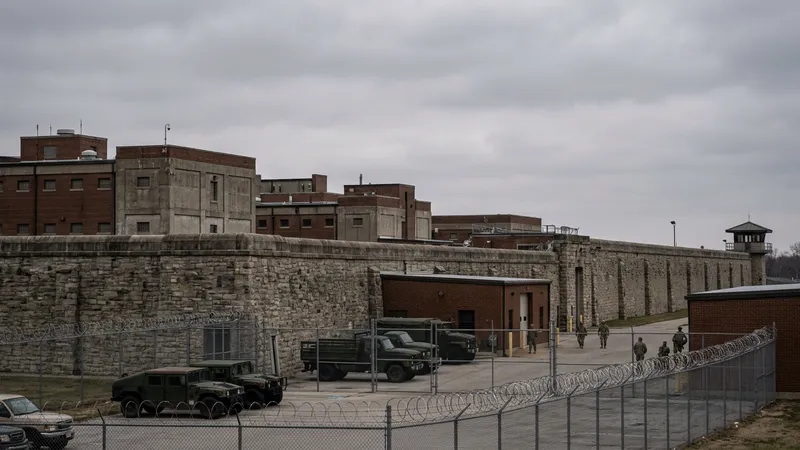
The Pentagon says President Trump has approved Nidal Hasan's execution, setting up the first US military execution in over 60 years.
Pentagon spokesperson Sean Parnell said Monday that President Donald Trump accepted a recommendation from Defense Secretary Pete Hegseth to execute Hasan by firing squad. The secretary of the US Army subsequently announced that the execution would take place on December 3 at Fort Hood, Texas.
The authorization places the military justice system alongside Trump's broader effort to expand the use of capital punishment. Military executions nevertheless operate under a separate legal framework, with presidential approval required alongside appellate review and a final determination of legality.
Hasan admitted carrying out the attack
Hasan, a Virginia-born Army psychiatrist who held the rank of major, admitted during his 2013 court-martial that he carried out the Fort Hood shooting. The November 5, 2009, attack killed 13 unarmed US soldiers and left another 32 people injured.
The shooting occurred inside a medical building as soldiers prepared for deployment, waiting for examinations and vaccinations. During his court-martial, Hasan said he believed his actions would protect Muslims and the Taliban in Afghanistan; that was his stated justification, not an established explanation of the attack.
Hasan is among four prisoners under a military death sentence. His case connects a prosecution arising from an attack inside an Army installation with the rarely used machinery for carrying out a military execution.
Approval and legal review remain distinct
Under military law, the president must authorize an execution before it can proceed. That requirement gives the White House a direct role in the process, but it does not replace the separate requirements for appellate review and a final legal judgment.
The status of those requirements in Hasan's case is not established by the announcement described here. The distinction matters for the December 3 schedule: presidential approval and a scheduled date are not, by themselves, a complete account of the legal process.
The announced execution would end a gap exceeding six decades for the US military. The use of a firing squad would mark a separate historical break, with no military execution by that method since World War II ended.
Trump reverses federal execution policy
Trump's support for Hasan's execution follows his January 2025 executive order restoring the federal government's pursuit of capital punishment. During President Joe Biden's administration, the Justice Department had imposed a moratorium on federal executions.
Trump's order characterized the death penalty as a means of deterrence and punishment for the gravest crimes. That policy position does not make federal civilian executions, state executions and military executions interchangeable; each operates through a distinct institutional process.
Firing squads are also permitted in several states, including Idaho, Mississippi, Oklahoma and Utah. Their availability under state law does not determine the military's authority to carry out Hasan's sentence.
If the required legal conditions are satisfied and the execution proceeds as announced, Hasan's case would become the first military execution in more than 60 years. The immediate issue is whether the legal process supports carrying out the sentence on the announced date.