Kansas puts Senate control within Democrats' wider reach
Democrats need four Senate gains for a majority, with Kansas now a tossup, according to ratings from the Cook Political Report.
Lauren Collins ·
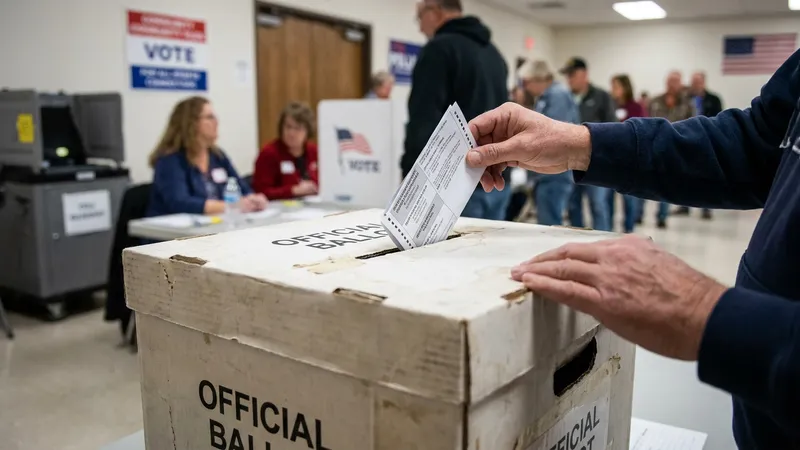
Democrats need four Senate gains for a majority, with Kansas now a tossup, according to ratings from the Cook Political Report.
The election assessment published Tuesday puts the party’s potential net gains between two and six seats in the November 3 midterms. That range straddles the four-seat threshold: its lower end would leave Democrats short, while its upper end would deliver control.
Kansas is not the only change favoring Democrats. The ratings organization also revised its assessments of New Hampshire and North Carolina, giving Democrats a more favorable position in both contests four weeks before voting concludes.
Kansas expands the competitive map
Democratic candidate Adam Hamilton, a megachurch pastor, is challenging Republican Senator Roger Marshall in a state where Democrats have gone 94 years without winning a Senate election. The new tossup designation puts an ordinarily Republican stronghold among the races without a clear favorite.
A Siena survey released over the weekend placed Hamilton and Marshall level among likely voters. That finding supports the assessment of a competitive contest, but neither a tied poll nor a tossup rating establishes which candidate will win.
Jessica Taylor, who oversees Senate and gubernatorial coverage at the Cook Political Report, attributed Republican difficulties to dissatisfaction with President Donald Trump and household expenses. Her assessment cited higher fuel costs and an elevated cost of living as burdens for Republican candidates, including those competing in traditionally conservative states.
The supplied account also identifies unease over Trump’s tariffs and the Iran war as factors in agricultural Kansas. Those are explanations offered for the changing race, rather than a measured breakdown of what is driving individual voters.
Open seats shift toward Democrats
New Hampshire offers Republicans an opportunity to capture the seat being vacated by Democratic Senator Jeanne Shaheen. After previously moving its assessment in the Republicans’ direction, the ratings organization returned the contest to its category favoring Democrats narrowly.
North Carolina moved further toward Democrats in the same update. With Republican Senator Thom Tillis retiring, Democrat Roy Cooper faces Republican Michael Whatley; the assessment changed from a narrow Democratic advantage to a stronger likelihood of a Democratic victory.
Those changes affect different parts of the majority calculation. Holding New Hampshire would protect an existing Democratic seat, while winning North Carolina would add a seat currently held by Republicans.
Michigan and Maine complicate the arithmetic
Republicans still see an opening to capture a Democratic seat in Michigan and retain Susan Collins’ seat in Maine. They also hold a fundraising advantage, according to the supplied account, although it provides no totals or reporting period for that comparison.
If Republicans win Michigan, Democrats would need an additional gain elsewhere to offset that loss. If Collins wins reelection, Maine would not contribute to the Democratic gains needed for control, making other competitive contests more consequential.
Nebraska and South Carolina have also become more competitive, according to the election assessment, but greater competition is not equivalent to a projected Democratic victory. The immediate test is whether Democrats can convert a broader field of opportunities into enough wins while defending their own seats.