Noncitizen voting law faces fresh test after Cox ruling
A Miami judge dismissed Chelsea Cox's case after finding the federal noncitizen voting law unconstitutional, limiting one prosecution in President Trump's…
Lauren Collins ·
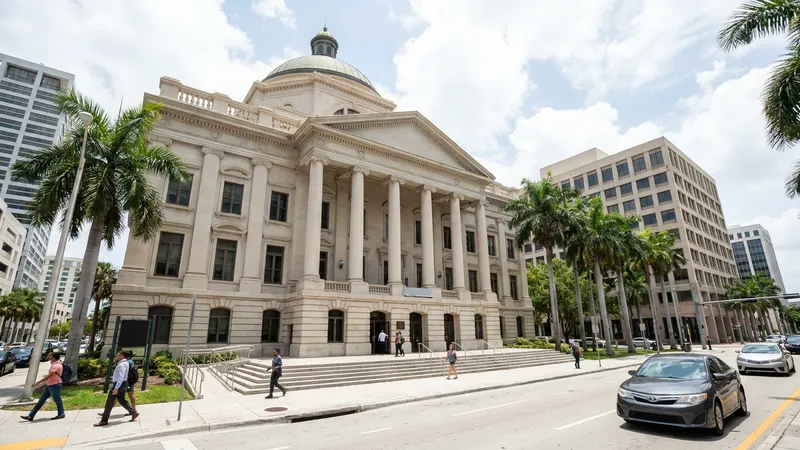
A federal judge invalidated the noncitizen voting law in Chelsea Cox's Florida case, narrowing President Trump's administration election-fraud prosecution.
US District Judge David Leibowitz in Miami dismissed the federal charge against Cox on Thursday, ruling that Congress exceeded its constitutional role. The order covers only Cox, a Florida resident charged in October 2025 over a ballot cast in the 2020 election, and does not control other courts.
Leibowitz draws a state line
Leibowitz wrote that the Constitution leaves voter qualifications to states, not Congress. Florida requires citizenship to vote, as every state does, but the judge said the state government, rather than the Justice Department, held the power to pursue Cox for that conduct.
The judge framed the ruling as a boundary between state election authority and federal criminal law. "Can the State of Florida prohibit and punish the exact conduct Defendant Cox allegedly engaged in here? This has already been decided elsewhere and is not addressed here: Florida can and does," Leibowitz wrote.
Federal prosecutors had argued in a court filing that Congress had a stronger claim than the states in matters involving immigration and foreign affairs. "Foreign interference in elections is clearly within the purview of Congress," prosecutors wrote, according to the filing.
Cox case narrows prosecution
The government said in a filing that Cox entered the US as a tourist in 1999 and stayed after her visa expired the following year. Prosecutors said she used a fraudulent US Virgin Islands birth certificate to obtain a Florida driver's license and then used those records to register to vote in 2012.
Records cited in the case showed Cox voted in federal elections from 2012 through 2020. Prosecutors charged only the 2020 vote, which remained within the statute of limitations.
Cox's lawyer, Bruce Udolf, urged the government not to pursue further action after the dismissal. "This is a situation that cries out for discretion by government officials and they'd be well-advised to walk away from this without further reprisal against her," he said.
The criminal case also carries an immigration shadow. Illegal voting can be grounds for deportation, and Udolf said he hoped the government would not seek to remove Cox, citing her declining health.
Forty-five cases remain pending
The Justice Department has charged at least 60 people with noncitizen voting since President Trump returned to office in January 2025. About 45 cases remain pending across the country, and at least four other defendants have challenged the same federal law on grounds similar to Cox's.
Leibowitz's decision may be cited by those defendants, but other judges do not have to follow it. The ruling therefore weakens one prosecution without rewriting the national legal landscape on its own.
The case sits inside President Trump's broader campaign against alleged election fraud before November's midterm elections, when Republicans are trying to keep control of both chambers of Congress. Trump has said stricter proof of citizenship is needed to protect elections; critics say the crackdown elevates an uncommon offense and can erode trust in results.
Miami ruling tests federal reach
If an appeals court reverses Leibowitz, the Justice Department would regain a federal tool for cases involving alleged noncitizen voting. That path would strengthen Washington's role in election enforcement, expose Cox to renewed federal prosecution and give prosecutors in pending cases a clearer route forward.
If other courts adopt the Miami judge's reasoning, states would remain able to punish noncitizen voting, but federal prosecutors would lose part of their election-crime playbook. That outcome would shift pressure toward state attorneys general, election offices and local prosecutors, while forcing Congress to defend the reach of a 1996 statute in constitutional terms.
The immediate open question is whether the Justice Department appeals and whether pending defendants can use the order before their own judges. Until then, the ruling is a local dismissal with national political force: it leaves Cox's federal charge erased, while the administration's wider enforcement effort continues under legal challenge.