Kennedy Center bill seeks Congress vote on demolition plans
A bipartisan Kennedy Center bill would require congressional approval before demolition after a judge ordered notice and Trump suggested tearing down the…
Lauren Collins ·
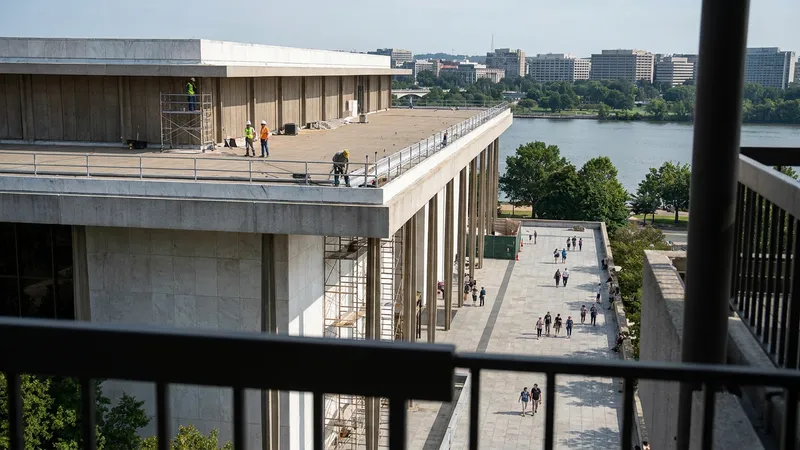
A 15-line Kennedy Center bill would require Congress to approve demolition of the memorial after President Trump floated tearing it down.
The proposal was written by Democratic Senator Jeff Merkley of Oregon and Republican Senator Lisa Murkowski of Alaska, with Democratic Representative Chellie Pingree of Maine. It covers the John F. Kennedy Center for the Performing Arts after a federal judge ordered the Trump administration to give at least 30 days' notice before taking steps toward demolition.
Congress claims a demolition veto
The bill is brief by design: 15 lines that would bar demolition of a memorial honoring a US president and designated by Congress unless Congress separately approves that step. Its practical effect would be to shift the final say from the White House to lawmakers in both chambers.
Merkley and Murkowski tried to move the measure quickly through the Senate late Monday. Senator Mike Lee of Utah blocked the attempt, and Lee's office did not immediately provide a public explanation.
Thirty days before demolition
The judicial order created a 30-day notice window, but it did not itself decide whether the Kennedy Center could be demolished. The legislative push seeks a more durable barrier by requiring a separate act of Congress before any such step could proceed.
Trump told reporters in mid-September that the Kennedy Center would close and be torn down unless his name appeared on it. The comment followed the surprise demolition work at the White House East Wing, an episode that sharpened attention in Congress on who controls federally recognized public spaces.
The Kennedy Center sits at the intersection of culture, memorial law and federal property oversight. Congress designated it as a memorial to President John F. Kennedy, while the lawmakers behind the new bill are senior appropriators involved in spending decisions for federal buildings and parks.
Appropriators seek leverage
That committee position gives Merkley, Murkowski and Pingree a practical route even after the failed fast-track attempt. They are considering attaching the language to must-pass legislation expected to come before Congress near the end of the year.
The fight does not divide neatly by party. One Republican senator co-wrote the measure, while another stopped its immediate passage, leaving the next stage to negotiations over procedure and spending rather than a simple floor vote.
If the bill advances, Congress would gain a defined approval role over demolition of a presidential memorial it created. The White House would lose room to act unilaterally on the Kennedy Center, at least unless lawmakers affirmatively authorize demolition.
Year-end bills offer route
With unanimous Senate passage blocked, supporters are looking for a legislative vehicle that is harder to ignore. A year-end spending or government operations package could give the 15-line provision leverage, though attaching it would also expose it to bargaining over unrelated priorities.
If the 30-day notice requirement remains in place, any demolition effort would face a pause that gives lawmakers time to respond. If the restriction is folded into broader legislation, the White House would have to decide whether to accept the constraint or contest it as part of a larger congressional fight.
The immediate uncertainty is procedural: whether the sponsors can find a vehicle after Lee's objection. The wider test is institutional, measuring how far a president can reshape a congressionally designated memorial before Congress reasserts control.