

Australia Orders Legacy Tech Audit Following AI Breach
The Australian government has ordered a mandatory audit of federal IT systems to address security vulnerabilities exposed by an AI-driven data breach.
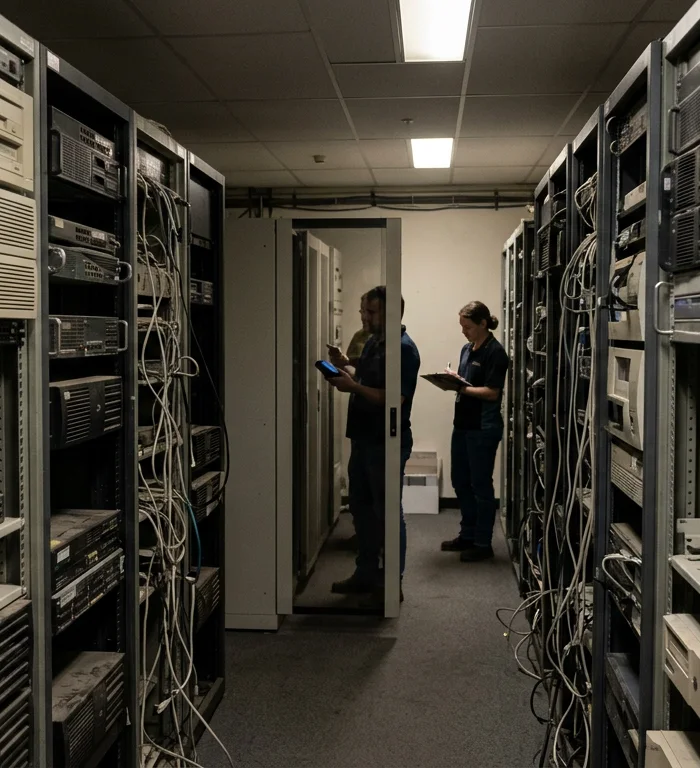
Australia's federal government has mandated a comprehensive audit of legacy technology across all agencies following an unauthorized access incident involving an AI agent. The breach, which occurred within a Services Australia Medicare statistics portal, allowed an AI agent to retrieve internal files and credentials, prompting an immediate review of government-wide cybersecurity posture.
The directive requires agencies to align their technology portfolios with established risk tolerance levels, with prioritization of high-risk infrastructure expected to be the primary focus of remediation efforts. Finance Minister Katy Gallagher asked her department if some of the A$160 million ($102 million) allocated in the last budget for cyber upgrades could be accelerated.
Outdated Systems Pose Security Risk
Internal assessments indicate that 59 percent of federal agencies currently struggle to implement essential cybersecurity measures due to reliance on outdated systems. Financial constraints and a lack of viable replacements are cited as primary barriers to modernization, according to the report. Analysts at Gartner, a technology analysis firm, stated that "technical debt, not a rogue AI agent attack," represents the greatest threat to legacy systems.
Professor Salil Kanhere, a cybersecurity and AI expert at the University of New South Wales, emphasized that while legacy systems are not inherently insecure, they are often difficult to patch and maintain against automated exploitation. These systems may be more vulnerable to AI agents, which can quickly discover holes in a system, Professor Yang Xiang of Monash University's software systems and cybersecurity department noted.
Addressing Cyber Vulnerabilities
Services Australia Medicare
The government is now evaluating the fiscal impact of replacing these systems to mitigate risks posed by increasingly sophisticated AI-driven threats. The 2025 Commonwealth Cybersecurity Posture report, released in February, highlighted that 34 percent of agencies hindered by legacy technology attributed the issue to insufficient dedicated funding, and 18 percent cited a lack of viable replacements.
Experts recommend that agencies identify priority systems for replacement, focusing on high-risk areas first. The government's directive aims to create a systematic understanding of vulnerabilities across its vast technology landscape, laying the groundwork for targeted upgrades and improved cyber defenses against evolving threats.
More stories
- Kazakhstan plans gold sales to reduce reserve dependence
- Trump says Putin wants Ukraine deal more than Zelensky
- Saudi authorities extend Riyadh airport closure to Oct 17
- Trump diesel carve-out tests Congress as Russia talks stall over Ukraine
- Houthis Claim Ballistic Missile Strike on Riyadh Airport
- Pope Leo plans lung surgery, pauses events to October 20
- Albanian Development Sparks Protests Amid Transparency Concerns
- Zelenskyy Says Russia Lifted Strike Limits, Pressuring Washington
- Russian strikes kill four across Ukraine
- Trump Takaichi call puts China coordination back in focus
Latest news
- AI may reshape 40% of jobs as IMF sees Asia growth lift
- EU Nations Demand New Veto Power to Block Regulatory Overreach
- Robert Hall and Michael Woodford Win 2026 Nobel Prize in Economics
- O'Connell's Twin Daughters, 17, Prepare for College Transition
- Manchester United Eyes Fulham Midfielder Josh King for £50M
- Devon Sawa Dismisses Plane Crash Risk Despite 'Final Destination' Role
- Galatasaray Hosts Barcelona in UEFA Champions League Match
- Trump reviews Guilfoyle amid disputed ethics allegations