Byron Donalds faces tighter Florida contest over Trump ties
Byron Donalds is trying to hold Trump's backing while Florida costs, immigration politics and a tighter governor's race complicate the GOP's midterm map.
Lauren Collins ·
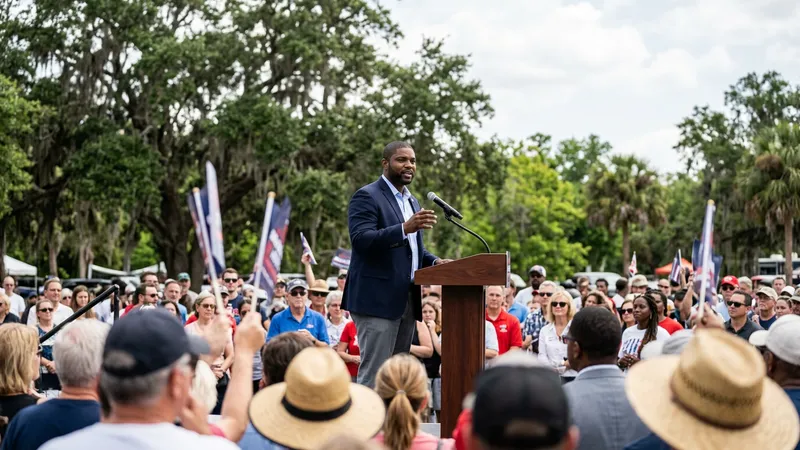
Byron Donalds is recalibrating his 2026 Florida governor campaign around President Trump as a race Republicans expected to control narrows.
Trump tie becomes test
The Florida congressman remains the Republican favorite against Democrat David Jolly, but the contest has moved from comfortable to competitive, according to people involved in the campaign. That shift has made Trump both an asset for turnout and a liability with voters uneasy about prices, immigration enforcement and the direction of the state.
The tension surfaced after Trump learned that Donalds's campaign had reduced prominent references to him on its website, according to people familiar with the episode. Aides later showed Trump a social-media post in which Donalds downplayed the change and appeared with him in the Oval Office, which people familiar with the matter said eased the president's concern.
Campaign advisers had discussed creating some room between Donalds and Trump after the Republican primary, according to people familiar with those talks. Donalds later said the website reflected a sharper emphasis on Florida issues, while also saying Trump's presence would energize the final stretch.
Florida costs narrow margin
The political pressure is rooted in a state that has changed quickly. Florida's population has grown by 1.67 million people since the pandemic, a surge the source material says has helped push inflation above the national average in some areas.
Voters are also weighing housing costs, gasoline, groceries, health care and the threat of job disruption tied to artificial intelligence. In South Florida, Trump's immigration crackdown has drawn criticism from some Hispanic voters, adding a regional complication for a Republican ticket that has relied on gains among nonwhite voters.
At a private donor retreat at Miami Beach's Fontainebleau hotel last month, Donalds told supporters over dinner that the race had become a fight, according to several attendees. His pollster, Tony Fabrizio, later cautioned the group that Trump drives turnout for both parties, the attendees said.
DeSantis endorsement gains value
Donalds has leaned more visibly on Gov. Ron DeSantis, who is term-limited and remains a central conservative figure in Florida. He also did not mention Trump in his Republican primary victory speech, has said AI regulation should be handled by states and expressed concern about Trump's proposal to give adults $5,000 if Republicans win the midterms.
The balancing act is delicate because Trump's endorsement effectively cleared much of the Republican field. Trump backed Donalds shortly after returning to the White House, and allies say the president still calls him about once a month.
Donalds, 47, is a three-term congressman whose campaign narrative centers on his move from Brooklyn to Florida, early financial hardship and a later rise through conservative politics. He has described arriving by Greyhound bus, donating plasma for money and working at a Cracker Barrel before earning a business degree and entering public office.
His record also includes arrests at ages 18 and 20, including a misdemeanor marijuana charge and a felony bribery charge whose details were expunged with the record. Donalds stayed in Florida, joined the Naples tea party after the 2008 financial crisis and later won a state House seat, where he worked on school choice legislation.
A coalition still frays
Republicans are looking to Donalds to rebuild parts of the multiracial coalition that helped Trump win office but has shown signs of drift. If elected, Donalds would be Florida's first Black governor and would follow three other Black governors elected since Reconstruction, all of them Democrats.
His rise inside Trump-aligned politics was not immediate. Donalds criticized Trump in earlier social-media posts, then embraced him as the party changed and ran for Congress in 2020 as a pro-Trump conservative; after winning, he gained national attention when the Congressional Black Caucus rejected his bid for membership following his votes on policing legislation and certification of President Biden's 2020 victory.
Jolly is trying to turn Florida's affordability problem into a broader argument for change. Donalds's answer has been to argue that opportunity still exists in the state, telling voters that frustration over prices should not push them toward left-wing economic politics.
If Trump's late appearance lifts Republican turnout without hardening opposition in the suburbs and South Florida, Donalds's campaign gains a cleaner path through base mobilization. If prices, housing and immigration enforcement remain the dominant issues, Jolly's opening is to make the race less about party loyalty and more about whether Republican control has left Florida affordable.