Voters await Andy Burnham economic detail after Starmer exit
Andy Burnham will outline plans for Britain on Monday as the leading contender for prime minister after Keir Starmer resigned on June 22.
Lauren Collins ·
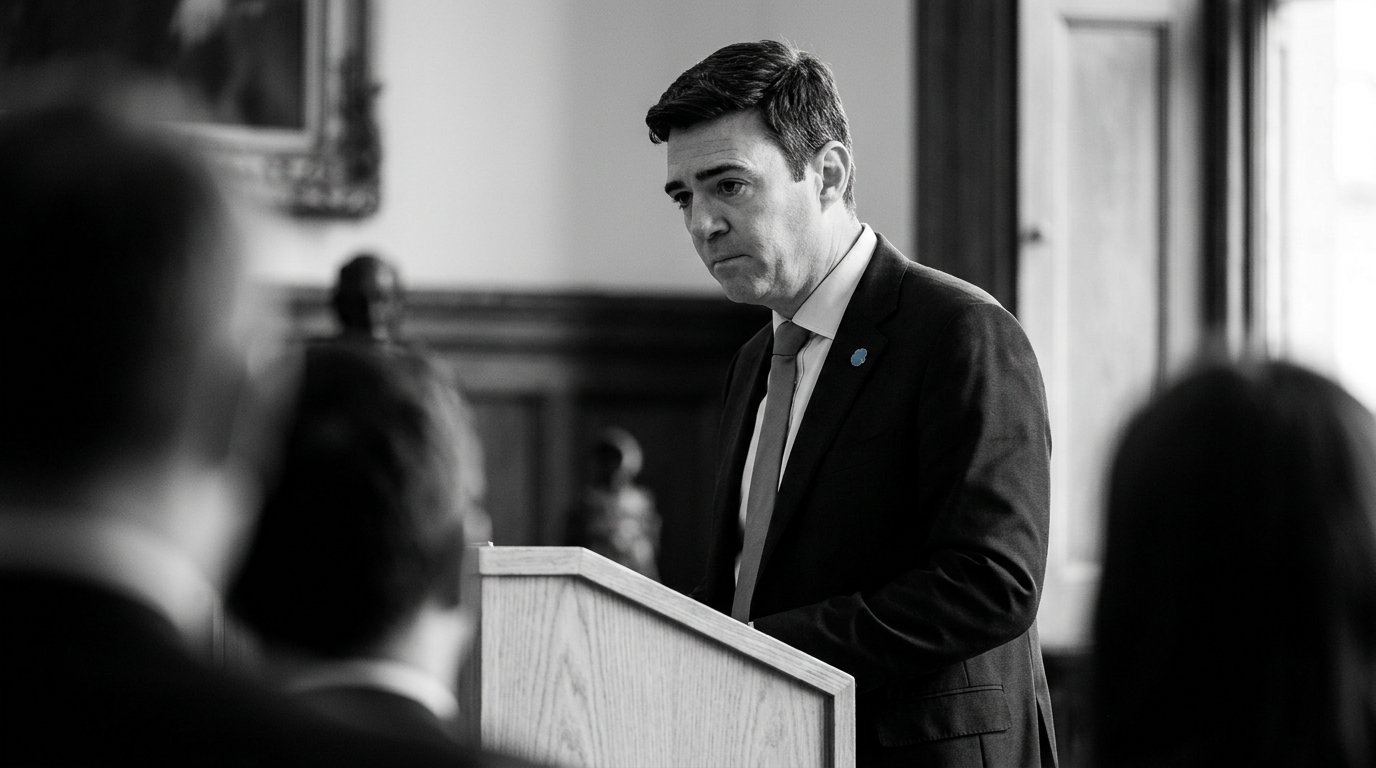
Andy Burnham will use a speech on Monday to set out his plans for Britain as he moves into pole position to become the country’s next prime minister.
The former mayor of Greater Manchester has emerged as the clear frontrunner after Sir Keir Starmer resigned on June 22. Burnham’s immediate task is to show both voters and financial markets that his programme is credible.
Monday speech becomes early test of credibility
Burnham’s address is expected to be his most substantial statement yet on how he would govern at the national level. With the leadership vacuum created by Starmer’s departure, the next few days are likely to shape early perceptions of Burnham’s readiness for Downing Street.
So far, Burnham’s economic direction has been described by critics as light on specifics. That lack of detail matters because a prospective prime minister is judged not only on ambition, but on how policies would be financed and delivered.
For political leaders who look close to power, market scrutiny can intensify quickly. Bond investors, in particular, tend to focus on whether proposals imply higher borrowing, increased spending without offsets, or uncertainty about fiscal rules.
Balancing affordability with a sense of change
Burnham faces a familiar dilemma for incoming leaders: appearing bold enough to signal a break from the status quo while avoiding the impression that promises are unfunded. The gap between rhetoric and a costed plan can become a liability when opponents frame it as risk to public finances.
The bond market angle is not merely technical. Higher perceived fiscal risk can translate into higher yields on government debt, raising borrowing costs and narrowing room for manoeuvre on budgets.
At the same time, electoral politics rewards clarity about priorities. Voters often look for tangible commitments—what will change first, what will be protected, and what trade-offs will be required—especially in the early moments of a leadership transition.
What to look for in Burnham’s economic pitch
Monday’s speech will be assessed for concrete signals on affordability, including whether Burnham commits to explicit fiscal constraints or outlines a framework for funding any new initiatives. Even without publishing a full manifesto, leaders can reduce uncertainty by stating principles on taxation, borrowing, and spending discipline.
Observers will also watch for delivery mechanisms. Beyond headline goals, the credibility of an agenda often rests on timelines, institutional reforms, and the practical steps needed to move from national pledges to measurable outcomes.
Politically, Burnham’s advantage is momentum: he is “almost certain” to become prime minister, according to expectations surrounding the post-Starmer landscape. That position also raises the bar, because frontrunners are treated as decision-makers rather than candidates, and ambiguity can be interpreted as avoidance.
The near-term implications are straightforward. If Burnham offers more detail and reassurance on costs, he may stabilise both public and market expectations as the transition unfolds.
If the speech fails to answer questions about funding and feasibility, critics are likely to argue that the programme is all aspiration and no plan. Either way, Monday will be an early signal of whether Burnham can pair a promise of change with a case for affordability.