

Ukraine claims Libya strike sinks Russian naval corvette
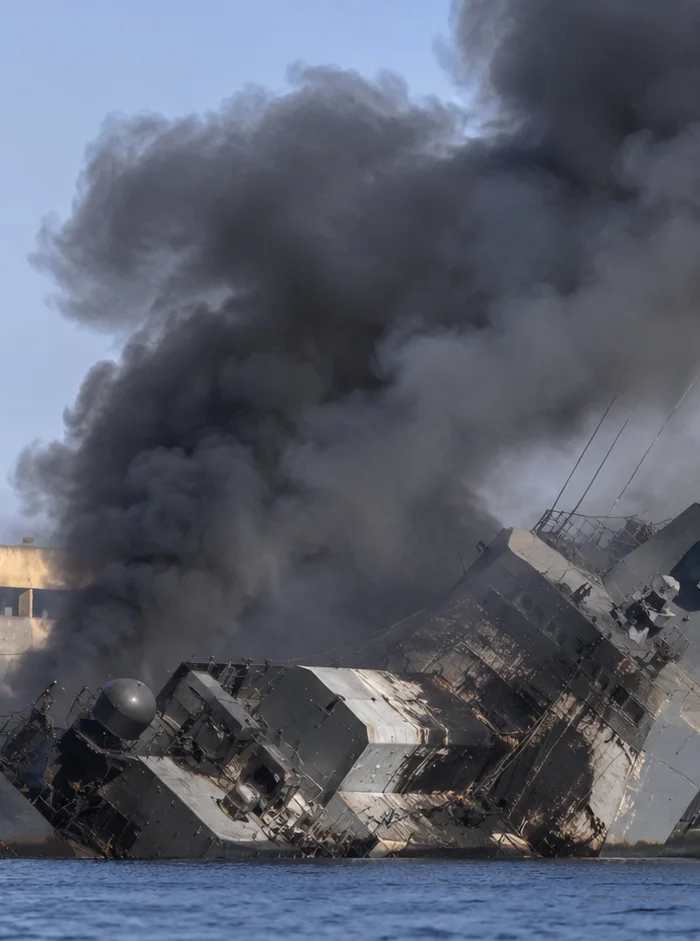
Libya's rival governments challenged a Ukrainian naval operation after President Volodymyr Zelenskiy claimed a Russian corvette was sunk there.
Zelenskiy said Ukrainian maritime drones sank the Merkury on November 22, while eastern Libyan authorities confirmed that the vessel had been berthed at Benghazi's naval base. His announcement marked Kyiv's first official acknowledgment of conducting an attack in Libya, extending its declared operations beyond the Black Sea, where both countries have repeatedly targeted shipping.
Kyiv identifies targets near Benghazi
On November 23, Zelenskiy released footage supplied by Ukraine's SBU security service that he said depicted the corvette attack and a separate strike near Libya on the cargo vessel MV Angara. He alleged that Russia had employed the Angara to move weapons and said a Ka-27 military helicopter was also destroyed.
The SBU said a supporting vessel in the region had deployed the drones used on November 22. Russia's Defence Ministry offered no immediate response; Zelenskiy's claims about the sinking and helicopter loss therefore remain Ukrainian accounts rather than findings acknowledged by both sides.
The Institute for the Study of War said the Merkury had spent several days replenishing fuel and supplies under a cooperation arrangement. According to the institute, the corvette was accompanying cargo vessels capable of transporting military supplies toward Russia, placing its Benghazi stop within a wider naval logistics mission.
Libyan authorities contest military use
Osama Hamad, prime minister of the eastern-based government, requested a UN investigation into suspicions that western Libya served as the drones' departure point. He also sought an inquiry into the alleged presence of Ukrainian military specialists there; neither allegation was established in the supplied account.
Libya's political division complicates the dispute. Military commander Khalifa Haftar controls the east, where his Libyan National Army maintains Russian ties, while the internationally recognized Government of National Unity operates from Tripoli in the west.
The Tripoli administration condemned the attack and rejected Libya's involvement in the conflict. Its Foreign Ministry said neither belligerent was entitled to operate militarily within Libyan territory or waters, and that overseas forces would not be permitted to use the country's ports or infrastructure for military activity.
An earlier maritime incident had already brought competing accounts to the region. Russia alleged in March that Ukrainian sea drones operating from Libya struck the liquefied natural gas carrier Arctic Metagaz; Libya's maritime agency reported that it sank between Malta and Libya following a fire, but Kyiv did not acknowledge responsibility.
Baltic incident widens maritime stakes
A separate drone attack on November 21 set the Russian freighter Sparta II ablaze in international waters in the Gulf of Finland. The vessel's operator is Russian military logistics company Oboronlogistika, and Finland's military assessed Ukrainian involvement as probable, without an immediate acknowledgment from Kyiv.
Rescuers transferred all 16 crew members to a Russian vessel; one sustained a minor injury. Ships from Finland, Estonia and Russia tackled the blaze after the freighter entered Finnish waters, before a Russian vessel started towing it on November 22.
Kremlin spokesman Dmitry Peskov urged neighboring countries to discourage Ukrainian operations in the Baltic, characterizing the incident as terrorism. The attacks accompanied renewed US-backed negotiations this month following a nine-month interruption, with limited progress reported; responsibility for the Baltic strike, the Libya launch location and the extent of Russian losses remain unresolved.
More stories
- Germans oppose Ukraine aid as poll shows support slipping
- Kim Jong-un receives 10 envoys after constitutional shift
- COP31 climate talks collapse over fossil fuels and funds
- Russian military faces 1,087 recorded suicides in Ukraine war
- US faces China, Russia in Africa minerals contest
- Russian war deaths top 460,000, Guardian says