

Iraq orders federal control over Kurdish-area oilfields
Iraq orders federal management of oilfields across four provinces, extending Baghdad’s challenge to Kurdish authority over energy exports and border crossings.
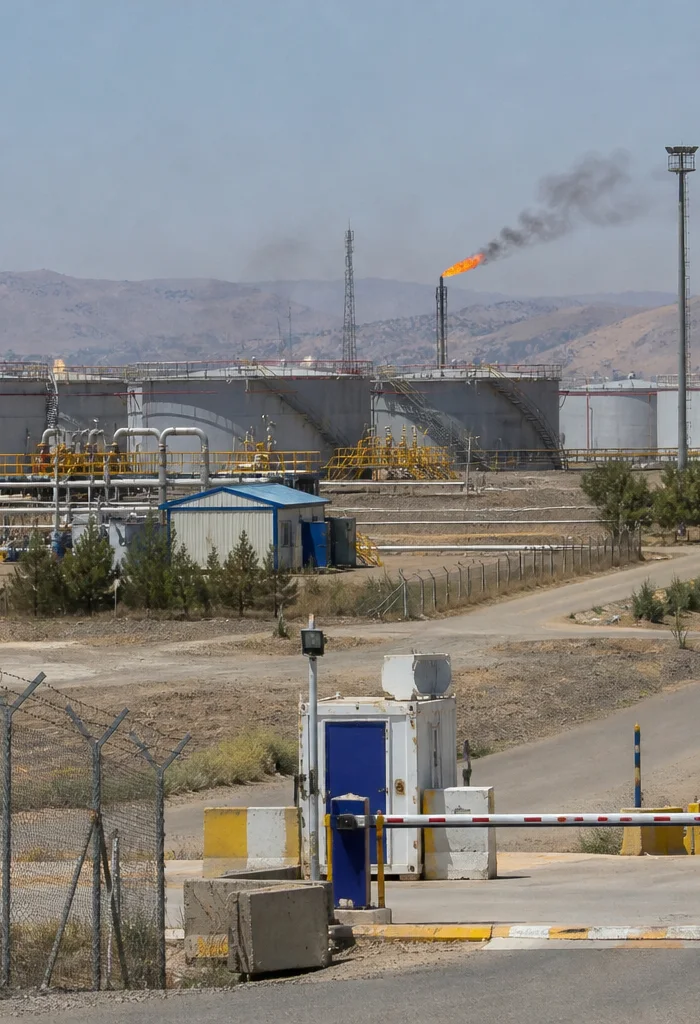
Iraq has ordered federal management of oilfields across four provinces, challenging Kurdish authority over energy resources, the prime minister’s office said.
The directive announced on November 24 by Prime Minister Ali al-Zaidi’s office covers Diyala, Kirkuk, Salahuddin and Nineveh. It puts oilfield management alongside border administration and export approvals in a broader assertion of federal authority over areas controlled by Kurdish authorities.
The announcement follows an investigation into alleged oil theft involving North Oil Company, the state enterprise responsible for northern oil and gas operations. The dispute now involves both the administration of energy assets and accountability for their use.
Baghdad extends control to Kurdish crossings
Zaidi also instructed the federal border authority to assume responsibility for every crossing in the Kurdistan region, which adjoins Turkey, Iran and Syria. He directed the Kurdistan Regional Government to authorize crude and petroleum-product exports exclusively through the federal oil ministry.
The orders address separate stages of the energy trade: managing production sites, approving exports and administering border crossings. Their announcement establishes Baghdad’s position, but does not establish that Kurdish authorities have transferred those responsibilities.
The prime minister’s office presented the measures as a defense of national sovereignty and public resources. That is the federal government’s rationale; the supplied material contains no formal Kurdish response accepting or rejecting the directives.
Oil investigation reaches militia and officials
The investigation alleged that Kataib Hezbollah, an Iran-aligned militia with political influence, and senior officials participated in a prolonged scheme involving stolen oil. Kataib Hezbollah rejected the inquiry’s conclusions, leaving the allegations contested rather than established findings of criminal guilt.
Zaidi dismissed the border authority’s chief and placed North Oil Company’s director general and deputies on suspension while investigators continue their work. Those personnel decisions are distinct from any eventual determination of individual responsibility.
For North Oil Company, the immediate developments combine management disruption with scrutiny of its operations. The material provides no production figures, quantified operational losses or timetable for completing the investigation, so the commercial consequences cannot yet be measured.
Kirkuk history complicates federal orders
Control over oil sits within a longstanding dispute between Baghdad and Kurdish authorities over regional autonomy. After the Kurdish independence referendum in 2017, Baghdad responded with military and economic measures and recovered Kirkuk, an important oil-producing city, along with other territory.
A separate disagreement over oil sales conducted without federal authorization interrupted pipeline exports through Turkey for longer than two years. An agreement reached in September 2025 provided for their resumption, making export arrangements another part of the relationship now facing a test.
Political analyst Hamza Mustafa identified the absence of an oil and gas law as a possible basis for Kurdish resistance. He said a refusal to surrender control of wells would turn implementation into a dispute over politics and constitutional authority.
If federal and Kurdish authorities agree on implementation, the directives could proceed without another interruption to exports. If they contest operational control, uncertainty over authorizations could complicate North Oil Company’s administration and planning by other energy businesses; effects on international supply would depend on whether physical shipments are disrupted.
The immediate tests are whether Kurdish authorities accept the border and export instructions, how oilfield responsibilities change in practice, and what the investigation establishes. None of those outcomes is settled by the announcement alone.
More stories
- Banks face ECB reserve debate over liquidity and profits
- Investors see Anthropic debut gains fade below $83 a share
- Nvidia shares retreat as AI rally cools before PCE data
- Nvidia board gets Trump input on Jensen Huang return as CEO
- Rwanda faces budget strain from 85% electricity access push
- AI doubts leave Asian stocks facing a new investment test
- Goldman cuts Schwab target to $117 after deposit decline
- EU develops 348-satellite IRIS² network for secure links
Latest news
- Germans oppose Ukraine aid as poll shows support slipping
- Kim Jong-un receives 10 envoys after constitutional shift
- Ukraine claims Libya strike sinks Russian naval corvette
- Macy’s parade faces balloon limits as storm winds approach
- COP31 climate talks collapse over fossil fuels and funds
- Highly diversified investors report 91% confidence in retirement
- Russian military faces 1,087 recorded suicides in Ukraine war