Iran wedding strike draws U.S. probe after deaths hit five
The Iran wedding strike killed five people, Iranian officials said, as JD Vance said Washington is investigating whether U.S. fire caused civilian deaths.
Atlas Newsdesk ·
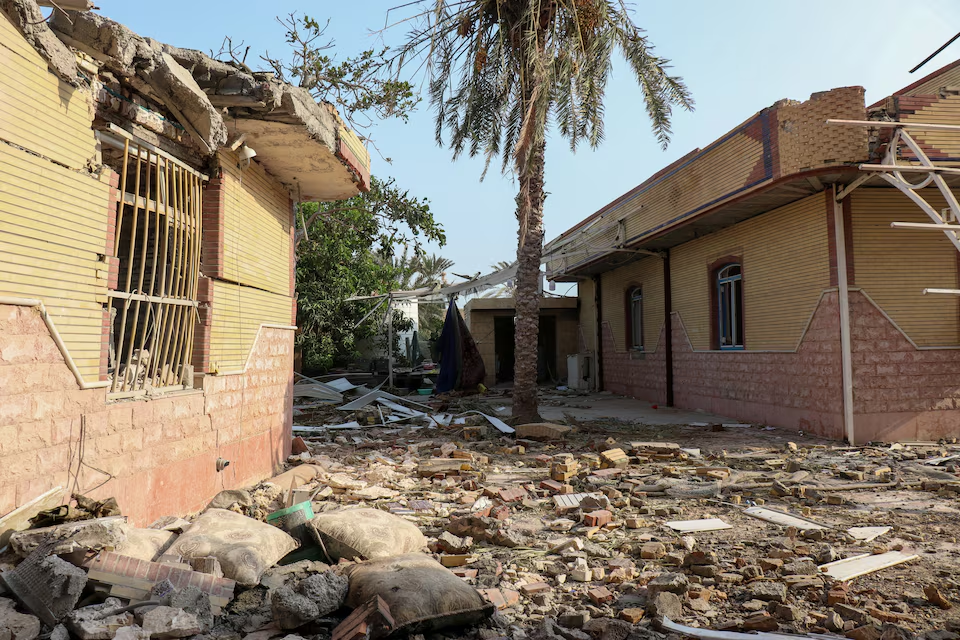
The Iran wedding strike killed five people and put Washington under pressure as Vice President JD Vance said the U.S. is investigating.
Iranian officials said nearly 70 people were wounded when an explosion hit a home during a wedding in southern Iran on Tuesday. The incident occurred near Kuhestak in Sirik County, on Iran’s Strait of Hormuz coast, after U.S. airstrikes along the area.
Vance told reporters Thursday that Washington was examining the incident. "We're investigating it because obviously we care. We want to know," he said, adding that the U.S. military seeks to learn from mistakes when they occur.
Kuhestak funerals follow Tuesday strike
The U.S. military said it was aware of Iranian reports and said it "never targets civilians." A U.S. official who was not identified said investigators were reviewing whether the deaths came from a U.S. strike, an Iranian air defense missile ricochet or an errant interceptor.
Iranian state television reported Thursday that a 22-year-old woman had died in hospital after the blast, lifting the reported toll to five from four. Funeral-goers gathered later Thursday outside Kuhestak to mourn four victims from the wedding.
Video from an Iranian state-linked news service showed a pickup truck carrying a flag-draped coffin beneath palm fronds. A semi-official Iranian news service quoted a local man saying, "If it was a military location, it wouldn’t be so painful. This was a wedding ceremony, but they turned people's joy into mourning."
Weapons review points to direct hit
Four military weapons specialists who reviewed images and video from the scene said the damage was consistent with a direct hit, rather than secondary damage from a munition deflecting off another target. Three of them said the munition was likely U.S.-made, not an Iranian air defense missile.
One expert said the weapon may have missed its intended objective, a conclusion that would differ from an intentional strike on civilians. The United States has not accepted responsibility, and the expert assessment does not establish who ordered the strike or what target was selected.
The episode follows a school strike about six months earlier that Iranian officials said killed more than 175 children and teachers. The Pentagon has not publicly released findings from its investigation into that incident, leaving another unresolved civilian-casualty case in the war.
Hormuz escalation sends Brent above $96
Washington said Tuesday’s airstrikes hit military targets along the Iranian coast in retaliation for Iranian attacks on shipping in the Strait of Hormuz. Iran reported 18 deaths in that U.S. assault, separate from the wedding toll reported by Iranian officials.
Iran said it responded Wednesday with attacks on U.S. bases in Iraq, Jordan, Qatar, Kuwait and Bahrain, and then carried out another attack early Thursday targeting a U.S. base in Kuwait. Kuwait’s military said its air defenses intercepted missiles and drones.
Brent crude futures rose above $96 a barrel Thursday, their highest level since July, after a fourth consecutive daily gain. The move followed attacks around the Strait of Hormuz, a shipping corridor closely watched by oil traders, insurers and governments that depend on Gulf energy flows.
Direct hit finding would widen pressure
If the U.S. investigation finds a direct U.S. hit caused the wedding deaths, the White House would face a clearer accountability test over targeting, compensation and disclosure. The global macro channel would run through oil risk premiums and shipping costs; the military and defense sector would face closer scrutiny of strike procedures and munition use.
If investigators instead attribute the casualties to an Iranian interceptor or ricochet, the legal burden on Washington would narrow, though the civilian toll would still weigh on President Trump’s war policy before November’s midterm elections. For energy markets, a sustained pause in attacks would reduce immediate pressure on Brent, while renewed strikes on bases or shipping would keep Hormuz risk in focus.
The main open question is how much evidence Washington will release and whether Iran treats the wedding deaths as grounds for another round of retaliation. By later Thursday, neither side had announced further major attacks, leaving the next phase tied to the U.S. review and Tehran’s response.