Crypto contract suit targets $95 million DHS award to TRM
The Department of Homeland Security's $95 million crypto contract with TRM Labs faces a Chainalysis lawsuit as no-bid awards reach $263 billion.
Atlas Newsdesk ·
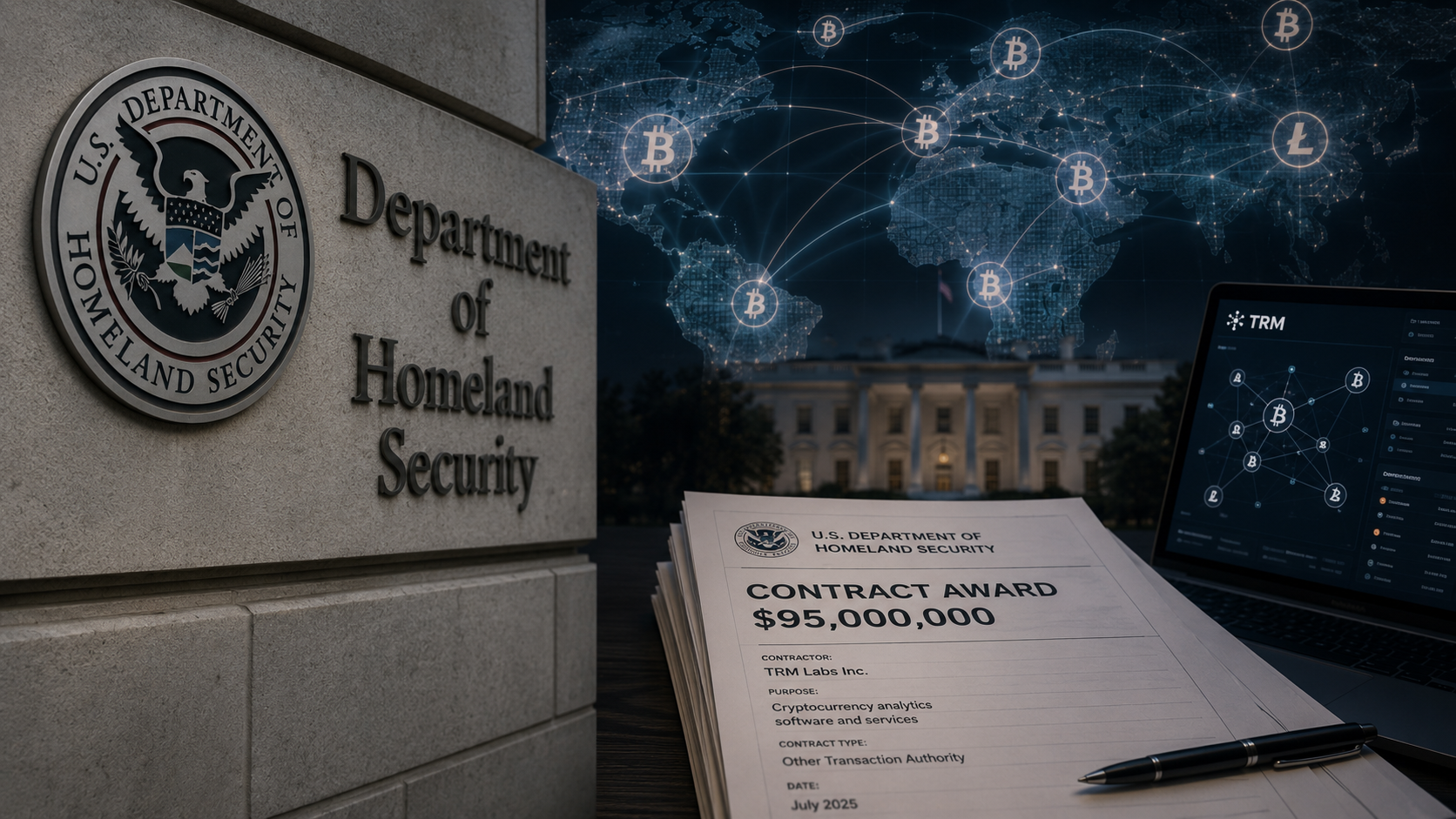
The Department of Homeland Security awarded TRM Labs a $95 million crypto contract, drawing a lawsuit over the no-bid process.
$95 million DHS award
The July agreement runs for one year and covers software that traces cryptocurrency transactions, along with personnel to examine the resulting data. A document posted on a government website identifies TRM Labs Inc. as the contractor and puts the award at $95 million, a large order for a specialized crypto analytics firm.
The contract fits within the White House's stated push to confront cryptocurrency scams targeting Americans. The award gives TRM a central role in a federal effort that depends on following wallet flows, linking transactions to suspected networks and supporting cybercrime investigations.
Chainalysis takes fight to court
Chainalysis, a rival crypto analytics company, sued the Trump administration after the award. Its complaint alleges that the contracting process was arbitrary, capricious and unreasonable, making the legal challenge a direct test of how DHS justified bypassing a broader competition.
TRM has been described as distinct from competitors in areas including how it obtains data. Rivals contend they also offer specialized capabilities, and publicly listed contracts show federal anti-fraud and cybercrime agencies already use tools from competitors including Chainalysis and Mitre.
TRM Labs and Chainalysis declined to comment on the dispute. The White House did not address questions about the TRM award directly in its statement, instead pointing to initiatives aimed at cyber theft.
White House spokeswoman Lauren Bis said the administration is trying to disrupt criminal groups behind illicit crypto activity. The Trump administration is mounting an aggressive campaign to disrupt these illicit syndicates and dismantle them at the source, Bis said.
No-bid awards reach $263 billion
The TRM case lands inside a broader fight over federal contracting under President Trump. No-bid federal awards rose to $263 billion in 2025, the highest level in more than a decade, according to a public database of federal awards.
Other contracts cited in records and public reports include work tied to the Reflecting Pool on the National Mall, where renovation and later repairs ultimately cost about $16 million. The White House's East Wing ballroom project is expected to cost as much as $600 million, while legal services for migrant children cost $158 million.
Critics, including government watchdogs and some US senators, say the pattern risks steering public funds to contractors without a full test of price or qualifications. The administration is spending money without following best practices, and that will cost taxpayers for years to come, said Scott Amey, general counsel at the nonprofit Project On Government Oversight.
Crypto enforcement stakes
For DHS, the dispute comes as crypto tracing has become a standard part of cybercrime and fraud investigations. Agencies use blockchain analytics to map transactions across wallets, exchanges and mixers, but the effectiveness of those tools depends on data coverage, attribution methods and analyst support.
If the court pauses or narrows the TRM award, DHS could face a delay in adding capacity for crypto-scam investigations, while TRM would lose or defer a contract that could expand its federal footprint. Competitors would gain an opening to argue that procurement rules should require side-by-side testing of analytics platforms before agencies commit major sums.
If the award stands, the immediate effect would be continuity for DHS and a stronger government position for TRM in a market where federal contracts can shape private-sector credibility. The wider industry would still face pressure to document how its data is sourced, how its tools differ from rivals and how agencies measure value in no-bid awards.
The main open question is whether the legal challenge turns on TRM's specific capabilities or on the administration's broader use of sole-source contracting. At the policy level, the case ties a narrow software award to a larger debate over how fast governments can buy cyber tools without weakening competition controls.