

Apple AI budgets fall as engineers face lower daily caps
Apple has cut daily AI budgets for some engineers from $300 to $200, people familiar with the change say, while pursuing wider adoption.
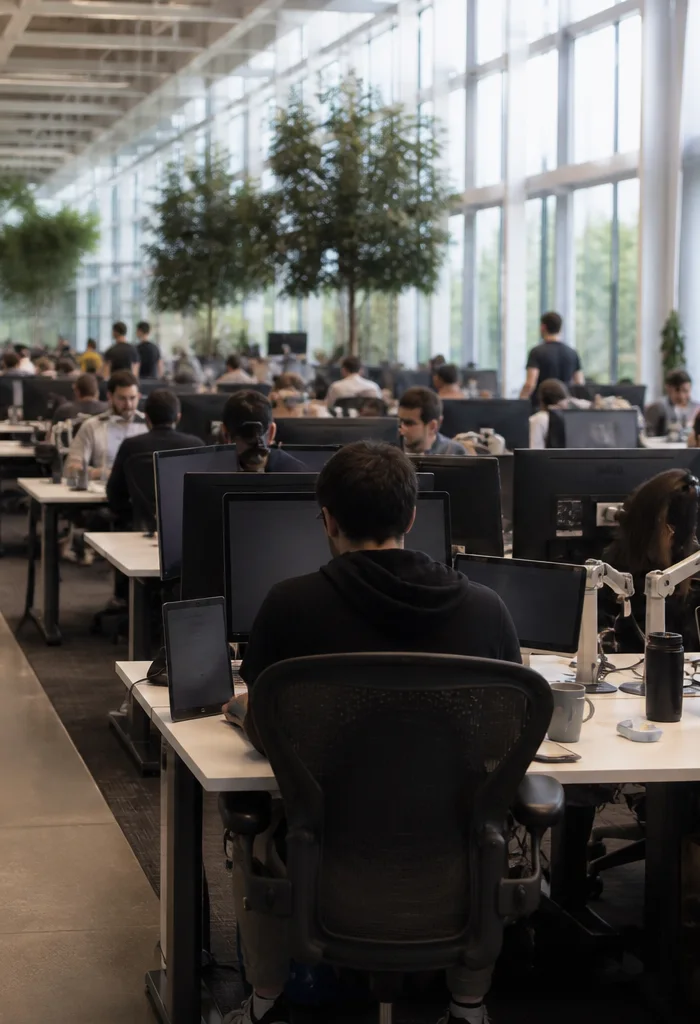
Apple has cut daily AI budgets for some engineers from $300 to $200, people familiar with the change say, while pursuing wider adoption.
The reduction is part of an effort to contain expenses while expanding employees’ use of artificial intelligence, according to people knowledgeable about the measures. Additional reductions under discussion would bring certain engineering groups’ allowances down to $100 a day, half the newly lowered ceiling.
The people described the initial adjustment as having taken place last month, but the account does not establish a calendar date. They requested anonymity because the internal deliberations are confidential; an Apple spokesperson declined to provide a comment.
Engineering allowances face another reduction
The restrictions sit alongside Apple’s push to update software development and other internal work through AI, according to the people. That places spending controls directly within the workflows the company wants employees to change, rather than treating wider adoption and budget discipline as separate initiatives.
Engineering is not the only area affected. Numerous groups elsewhere in the business already operate with daily allowances of $100, and Apple has weighed limits of $25 for certain teams, the people said. That would leave those employees with one-quarter of their current spending capacity.
The proposed ceilings are not uniform across the workforce, and the account distinguishes changes already implemented from reductions still being considered. It does not establish how many employees fall under each limit or whether the engineering and nonengineering proposals would take effect together.
Employees whose responsibilities require additional spending would have a route to request approval from senior executives, according to the people. The account does not specify the criteria for those exceptions, how quickly requests would be handled or whether approvals would be temporary.
Token costs shape the trade-off
The allowances pay for tokens: portions of text and other information that models process during a request. Providers generally bill according to token consumption, and more sophisticated models tend to carry higher prices. A dollar ceiling therefore does not translate into a fixed number of tasks.
Software development illustrates the distinction. Generating code and finding faults in it can require considerable token consumption, meaning that the amount of work an allowance supports depends on both the model selected and the demands of the assignment. The account provides no comparison of costs or performance across Apple’s available models.
If teams can complete the same assignments within smaller allowances, Apple could expand internal AI use while limiting the expense associated with each employee. If demanding coding tasks instead exceed the ceilings, the exception process could become important to maintaining those workflows. Neither outcome is established by the reported budget changes.
The next concrete developments are whether Apple implements the additional reductions and how broadly it grants exceptions. Without figures for actual spending, employee usage or work completed, the lower ceilings alone cannot establish companywide savings or a change in productivity.
More stories
- Shoals-ARRAY merger targets up to $2.4bn 2027 revenue
- Townsquare suspends dividend after $4m Q3 net loss
- RELX targets faster STM growth at $4bn Elsevier unit
- Meta gains 2.15% despite weaker credit outlook
- Progressive posts 4% premium growth with AI shopping tests
- Tata Motors buys 89.42% of Iveco in $4.32bn deal
- Bumble nears reported $1 billion sale to Ithaca Holdings
- Oil rises on tensions, pares gain on 3.5 million tons diesel talk
Latest news
- Israel coalition talks loom as rivals fall short of power
- AI stocks split as Democrats win Congress and tech gains
- US Treasury expands Iran sanctions on maritime operators
- Energy drinks show 11-fold cardiac-arrest reporting signal
- Serbia, Georgia and Turkey face EU accession limits over alignment
- British Airways restores daily Dubai-Heathrow flights
- Türkiye Desk: e2vc opens $150m growth fund for games and tech
- Data centers face backlash after Democratic midterm wins