

Supreme Court Reviews Transgender Rights in Prison and Military Service Cases
The Supreme Court is re-evaluating transgender rights in prison housing and military service, following recent rulings that narrowed the scope of equal…
The U.S. Supreme Court has vacated a lower court judgment in Roybal v. Griffith , remanding the case to the 10th U.S. Circuit Court of Appeals for further consideration. The case concerns the equal protection rights of a transgender woman incarcerated in a Colorado prison, specifically regarding housing assignments and search protocols. This action follows recent Supreme Court rulings in West Virginia v. B.P.J. and United States v. Skrmetti , which established precedents regarding sex-based classifications and gender-affirming care restrictions.
The administration has argued that constitutional standards allow for sex-based distinctions in state facilities, asserting that authorities are not required to grant individualized exemptions based on gender identity. Conversely, legal counsel for the plaintiff maintains that existing judicial deference to prison administration is sufficient to address security concerns without violating equal protection rights. The outcome of this remand will likely clarify the extent to which state institutions may categorize individuals based on sex assigned at birth.
Supreme Court
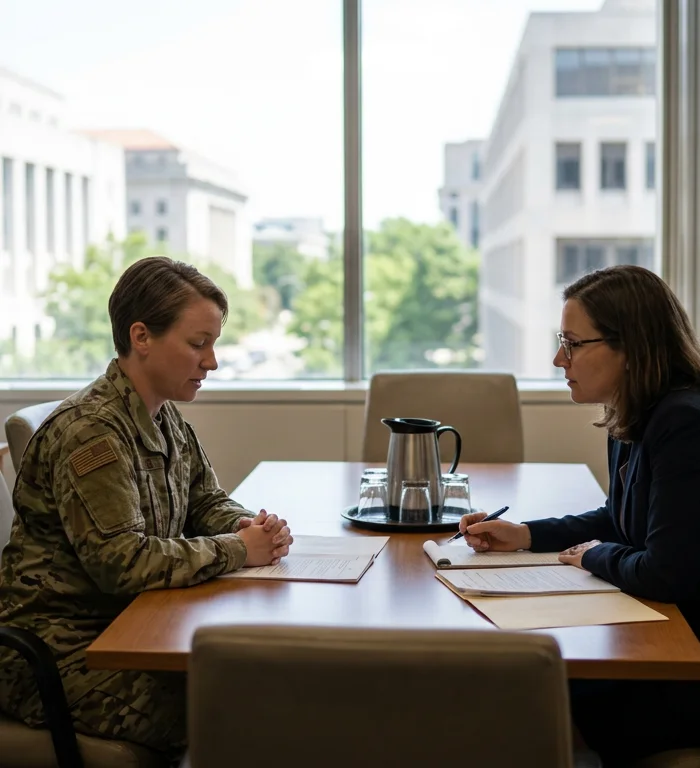
Simultaneously, the Supreme Court faces a petition in Talbott v. USA , which challenges a categorical prohibition on transgender military service. This policy, enacted via Executive Order 14183, mandates the discharge of transgender, nonbinary, and gender-nonconforming personnel, citing concerns regarding military readiness and medical constraints. The administration contends that these individuals are inherently less qualified to meet the standards of military service.
The U.S. Court of Appeals for the D.C. Circuit recently denied the administration’s request to stay a preliminary injunction that currently prevents the discharge of 27 transgender service members involved in the litigation. This ruling maintains the status quo for the plaintiffs while the administration seeks Supreme Court intervention. The pending high court review of this case carries significant implications for federal employment policy and the legal definition of protected classes within the armed forces.
More stories
- FCC approves prison cellphone jamming despite 2.5-mile warning
- Congress tests Black Democrats' growing policy influence
- Cotton faults Lutnick over AI chips allegedly sent to China
- Vance declines to back Iran strikes as Trump defends war
- Paul seeks 20%-30% federal credit for U.S. film shoots
- Trump targets data centers abroad with tax threat to firms
- Cao faces Senate scrutiny over $32.5m-a-day Iran blockade estimate
- Nvidia forms security panel as chip controls tighten again
- Supreme Court lets Trump ballroom work continue for now
- El-Sayed distances Michigan Senate bid from Piker furor
Latest news
- Trump prepares tariffs on China and other major exporters
- New-car buyers pay record average $50,087 in October
- Banks face ECB reserve debate over liquidity and profits
- Investors see Anthropic debut gains fade below $83 a share
- Iraq orders federal control over Kurdish-area oilfields
- Germans oppose Ukraine aid as poll shows support slipping
- Kim Jong-un receives 10 envoys after constitutional shift
- Ukraine claims Libya strike sinks Russian naval corvette