El-Sayed distances Michigan Senate bid from Piker furor
Abdul El-Sayed said his Michigan Senate campaign will focus on groceries and healthcare, not a dispute over streamer Hasan Piker.
Lauren Collins ·
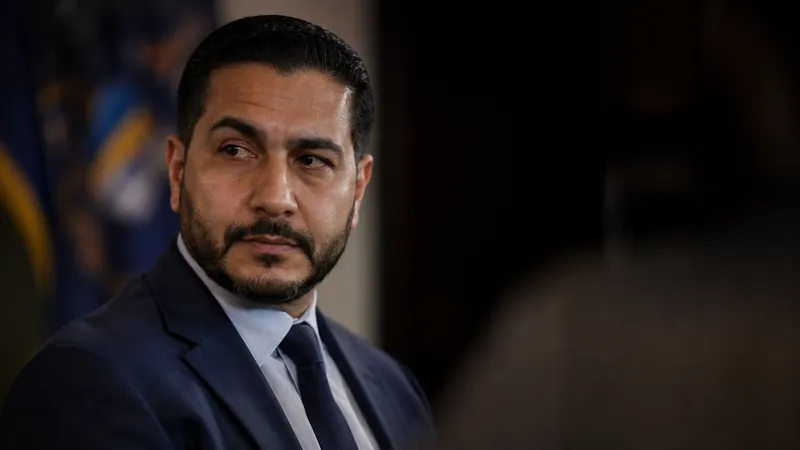
Abdul El-Sayed said his Michigan Senate campaign will not include Hasan Piker. He cast the dispute as remote from voters' grocery and healthcare concerns.
The Democratic nominee made the comments during an appearance in Detroit's suburbs, where he said he had "no plans" to campaign with Piker. The answer was an effort to separate his Senate bid from a left-wing streamer whose recent remarks about American Jews have drawn criticism from some Democrats.
Detroit suburbs answer Piker question
El-Sayed did not deny the political attention around the association, but he argued that it had little bearing on the race he wants to run. His message was that household costs and healthcare access, not online political personalities, should define the contest.
"Most people are a lot more worried about things like, what are you going to do about my groceries? What are you going to do about my healthcare?" El-Sayed said, according to the interview account. He added that "the effort to make this race about a streamer in LA is actually kind of laughable."
The line reflects a familiar defensive move in Democratic primaries and general elections: move from cultural controversy to material costs. For El-Sayed, groceries and healthcare are not abstract policy categories; they are the terrain on which he is asking voters to judge him.
Democratic criticism meets cost message
The criticism inside the party centers on El-Sayed's association with Piker, whose political audience sits on the online left. Critics have focused on Piker's comments about American Jews, a sensitive fault line for Democratic candidates already navigating divisions over Israel, antisemitism and progressive organizing.
El-Sayed's response leaves two claims standing at once. He is not presenting Piker as a campaign surrogate, and he is not accepting the premise that Piker should become a central figure in the Michigan Senate race.
He also said he had not discussed Piker with Senate Democratic leadership. That detail matters because party leaders can shape funding, endorsements and pressure campaigns, even when they do not directly control a nominee's schedule or coalition.
The immediate political risk is that the dispute gives opponents a way to talk about El-Sayed through someone else's words. The countervailing risk for his critics is that repeated focus on Piker may help El-Sayed argue that establishment Democrats are avoiding the economic questions he wants at the center of the campaign.
Groceries and healthcare frame race
The substance of El-Sayed's answer points to the voters he is trying to reach. Grocery prices and healthcare costs are direct household issues, and candidates often use them to connect national politics to monthly budgets.
That does not make the Piker issue disappear. In a Senate race, outside associations can become shorthand for ideology, judgment and coalition discipline, especially when the party is trying to hold together voters who disagree sharply on foreign policy and speech around identity.
If El-Sayed keeps the campaign focused on costs, the effect could be to narrow the dispute into a media-cycle story rather than a defining feature of his candidacy. That path would favor a campaign built around economic grievance and healthcare policy, while limiting the opening for rivals to frame him through online allies.
If the controversy instead follows him into debates, endorsements or donor conversations, it could force the campaign to spend time clarifying what it rejects rather than explaining what it would do. For the broader Democratic field, the mechanism is straightforward: every day spent on Piker is a day not spent drawing contrasts on prices, insurance or legislation.
The main open question is whether party critics continue to press the association or let El-Sayed's answer stand. For now, his position is explicit: Piker is not on his campaign calendar, and the campaign wants voters looking at grocery aisles and doctor bills rather than a streamer in Los Angeles.