Mitch McConnell returns to Senate after three-month absence
Mitch McConnell returned to the Senate after a three-month absence, putting his health and voting role back in public view.
Atlas Newsdesk ·
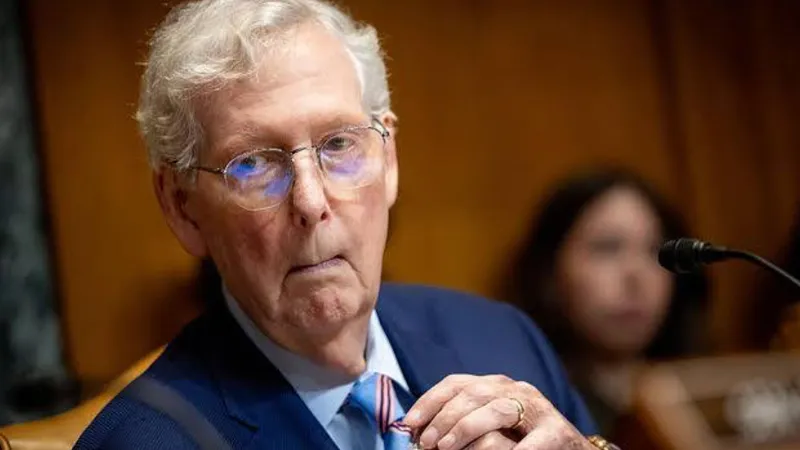
Mitch McConnell returned to Senate voting Monday after a three-month absence, putting his health and legislative role back in public view.
The Kentucky Republican, 84, had not voted since he was hospitalized after a fall at his home in June. His return matters for a chamber where attendance can shape the timing of votes, committee work and party strategy.
A June fall kept him away
McConnell's absence lasted about three months, a long gap for one of the Senate's most experienced Republicans. He initially gave little public detail about his condition, and the silence drew criticism as well as online speculation about his health.
About a month after the fall, McConnell disclosed that he had been "briefly unconscious" and had also received hospital treatment for mild pneumonia. Those details came from McConnell himself, making his account the central public explanation for the length of the absence.
He returned in a wheelchair outside the Senate chamber and spoke briefly with reporters. He smiled during the exchange but spoke slowly and with some difficulty, according to the public remarks described from the scene.
Reporters meet a slower McConnell
McConnell used the moment to acknowledge the attention around his return. He joked that he was unsure how many reporters would gather after he had avoided questions so often during nearly two decades as a Senate Republican leader.
The appearance put two facts side by side: McConnell was back for votes, but his health remains under close public scrutiny. For senators, physical presence is not only symbolic; it affects whether leadership can count on a member when votes are scheduled on short notice.
His return also comes as Congress faces work on a pending farm bill, a measure that affects agriculture policy across rural states including Kentucky. McConnell said that legislation was one reason he came back to the Senate.
Farm bill and NATO priorities
McConnell also pointed to foreign policy, citing his continuing interest in NATO and support for Ukraine as it fights Russia. He said he wanted to keep "backing up our good friends who are totally in the fight against the Russians."
That emphasis fits a long-running split inside the Republican Party over US support for Ukraine and the role of American power in Europe. McConnell has been one of the Senate Republicans most closely associated with a traditional internationalist approach, while some party figures have pressed for limits on overseas commitments.
The immediate institutional effect is narrower: his vote adds one more Republican presence on the Senate floor after a prolonged absence. The political effect is broader, because every appearance by an 84-year-old senator recovering from hospitalization will be read against questions about stamina, succession and influence.
If McConnell resumes a regular voting schedule, Senate Republicans gain a steadier hand for procedural fights and policy negotiations. That path would support work on the farm bill, keep his voice in NATO and Ukraine debates, and reduce uncertainty for agriculture and defense-policy groups watching congressional timing.
If his attendance remains limited, the mechanism shifts from policy leadership to vote management. Senate Republicans would have to plan around his availability, farm-bill negotiations could face another constraint, and advocates for sustained NATO and Ukraine support would have one less reliably present senior Republican in the room.
The main open question is whether Monday's return marks a durable resumption of Senate work or a limited appearance after a serious health episode. McConnell's own remarks identified the agenda; his future attendance will show how much leverage he can still bring to it.