Gavin Newsom vows to stand aside if Harris runs in 2028
Gavin Newsom said he would not seek the 2028 Democratic nomination if Kamala Harris runs, tightening the politics around two California Democrats.
Lauren Collins ·
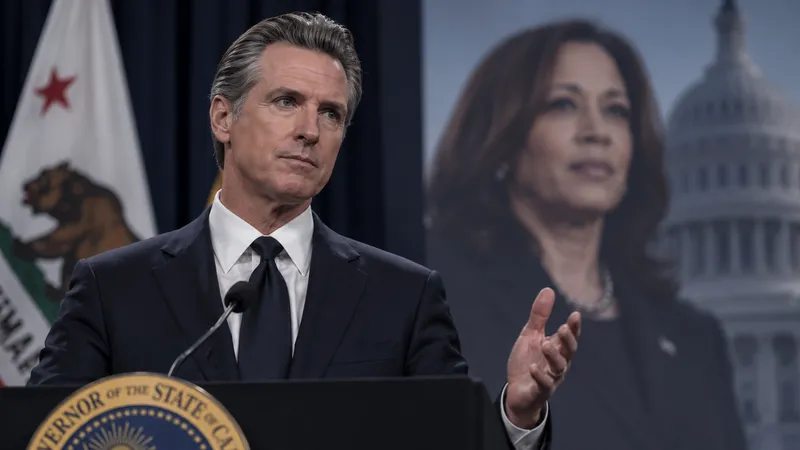
Gavin Newsom said he would skip the 2028 race if Kamala Harris runs, narrowing the early calculus for two California Democrats.
The California governor made the commitment in an interview published Monday and recorded during a fly-fishing outing in Montana. Asked about the former vice president, Newsom said, "I wouldn’t run if she ran," adding, "I wouldn’t waste everyone’s time. Who needs that?"
Newsom’s Harris condition
The statement matters because Newsom has spent years building the profile of a politician who could compete nationally, including before Harris lost the 2024 election. A public promise to defer to Harris, if treated as binding, would give donors, activists and rivals a clear standard against which to measure him.
Newsom’s office did not immediately explain whether the pledge would apply in every sequence of events. Bob Salladay, a spokesman for the governor, said, "They’ve been friends long enough that they wouldn’t play cat-and-mouse games on something this important."
The comment leaves Newsom with two visible paths if Harris enters the race. He could honor the pledge and stay out, or he could run anyway and invite criticism that he reversed himself against a fellow California Democrat.
Two Californians, one lane
Harris and Newsom share more than geography. Both emerged from California politics, both are familiar to national Democratic audiences, and both would likely draw from overlapping donor and activist networks if they pursued the 2028 nomination.
The party’s next presidential contest is expected to begin in earnest as soon as late this year, after the midterm elections. That timing gives potential candidates an incentive to keep themselves visible without making a formal commitment before the field takes shape.
Newsom has already taken steps consistent with that posture. This year, he made two trips to South Carolina, the first state on the Democratic Party’s presidential nominating calendar.
He also started a podcast shortly after President Trump began his second term. The guest list has included Charlie Kirk before his assassination, Hunter Biden and several Democratic governors, giving Newsom a platform beyond Sacramento and the regular cable circuit.
South Carolina signals ambition
South Carolina’s place at the front of the Democratic calendar gives its voters and local officials unusual leverage over early presidential positioning. For a governor from the West Coast, repeat visits there serve a practical function: they test relationships in a state that many Democratic hopefuls cannot ignore.
Harris, by contrast, would enter any 2028 conversation with the name recognition of a former vice president and recent nominee. If she runs, Newsom’s pledge could reduce one source of California competition, at least on paper, while strengthening her claim to party loyalty among figures who want a less crowded race.
If Harris stays out, Newsom’s remark becomes less a constraint than a loyalty marker. It would allow him to argue that he respected a longtime political relationship while preserving room to seek the nomination himself.
The harder scenario is a delayed Harris decision. If Newsom moves first, the political cost would depend on whether Democratic voters view his words as a blanket commitment or only as a promise not to challenge a Harris campaign already underway.
For the Democratic field, the episode shows how the 2028 contest is beginning before anyone formally declares. The immediate question is not only whether Harris runs, but how long Newsom can maintain national momentum while tying part of his future to her choice.