

House Democrats Nominate Hakeem Jeffries for Speaker Amid Internal Dissent
House Democrats nominated Hakeem Jeffries for Speaker with 251 votes, though 11 members opposed the bid over disagreements on healthcare, immigration, and…
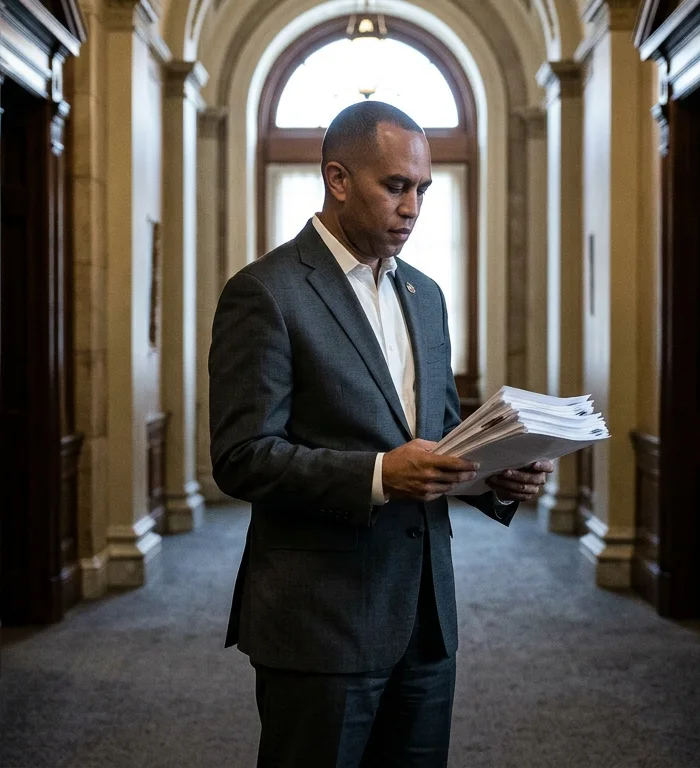
House Democrats have formally nominated Hakeem Jeffries for Speaker of the House, securing 251 votes in favor against 11 votes in opposition. The nomination process, conducted via secret ballot, positions Jeffries as the party’s candidate for the upcoming congressional session. While the majority of the caucus supports his leadership, the internal opposition highlights emerging ideological friction within the party ranks.
A group of incoming representatives and members-elect has publicly confirmed their opposition to the nomination. These dissenters have cited specific policy demands as the basis for their stance, including the implementation of Medicare for All, changes to immigration enforcement policies, campaign finance reform, and shifts in foreign policy regarding the conflict in Gaza. The opposition group has indicated that while they have engaged in negotiations with leadership, they remain dissatisfied with current commitments.
House Democrats
The dissenters have characterized their "no" votes as a strategic effort to leverage their support in exchange for policy concessions. Although the caucus vote was held behind closed doors, several members have identified themselves as part of this dissenting bloc. The leadership is now tasked with managing these internal pressures while preparing for the full House election scheduled for January.
Despite the vocal opposition, the overwhelming support from the broader caucus suggests that Jeffries maintains a strong mandate heading into the next Congress. Supporters within the party have emphasized the historic nature of the nomination and the importance of maintaining caucus unity to advance the party's legislative agenda. The ability of leadership to reconcile these competing ideological factions will be a critical factor in the party's operational cohesion during the upcoming term.
More stories
- FCC approves prison cellphone jamming despite 2.5-mile warning
- Congress tests Black Democrats' growing policy influence
- Cotton faults Lutnick over AI chips allegedly sent to China
- Vance declines to back Iran strikes as Trump defends war
- Paul seeks 20%-30% federal credit for U.S. film shoots
- Trump targets data centers abroad with tax threat to firms
- Cao faces Senate scrutiny over $32.5m-a-day Iran blockade estimate
- Nvidia forms security panel as chip controls tighten again
- Trump Targets China Over 2020 Vote, Adding Risk to Xi Summit
- Trump tightens Chinese journalist visas in DHS proposal
Latest news
- Trump prepares tariffs on China and other major exporters
- New-car buyers pay record average $50,087 in October
- Banks face ECB reserve debate over liquidity and profits
- Investors see Anthropic debut gains fade below $83 a share
- Iraq orders federal control over Kurdish-area oilfields
- Germans oppose Ukraine aid as poll shows support slipping
- Kim Jong-un receives 10 envoys after constitutional shift
- Ukraine claims Libya strike sinks Russian naval corvette