Kazakhstan fires defense minister after 14 drill deaths
Kazakhstan replaced its defense minister after 14 service members died during Caspian Sea military exercises disrupted by severe weather.
Omar Farouk ·
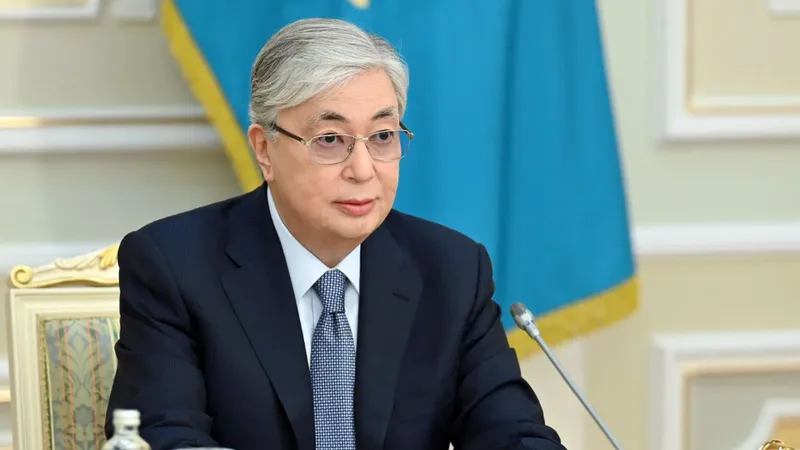
Kazakhstan President Kassym-Jomart Tokayev fired Defense Minister Dauren Kosanov after 14 service members died in a Caspian Sea drill, triggering a command change.
Aidos Myrzakhmetov was appointed to replace Kosanov, according to two presidential decrees issued after the deaths. Myrzakhmetov had been commander of Kazakhstan's special operations forces before taking the defense post.
Tokayev changes defense command
The personnel changes put immediate political responsibility on the Defense Ministry after a training accident that ended with 14 fatalities among 17 personnel affected. The decrees named both the dismissal and the appointment, making the command shift formal rather than provisional.
Kosanov's removal followed the Defense Ministry's account of exercises held on September 24 in the Caspian Sea. The ministry said weather conditions deteriorated suddenly and severely during the drill, leaving service members in the water.
Seventeen personnel caught at sea
Three personnel were rescued, while 14 died, the Defense Ministry said after search operations were completed the following day. The death toll made the exercise one of the most serious publicly reported military accidents in Kazakhstan in recent years based on the ministry's account.
The government declared Friday a national day of mourning, a step that moved the episode beyond an internal military matter. For Tokayev, the dismissal signals that the presidency is treating the deaths as a state-level failure with consequences for the chain of command.
The ministry's public explanation centered on the abrupt change in weather, not on misconduct, equipment failure or planning errors. Those distinctions matter because each would point to a different response: tighter operational rules, changes in procurement or a broader review of training standards.
Caspian drill exposes safety gap
The Caspian Sea setting adds operational complexity because drills there require coordination between weather monitoring, maritime safety and military command. The available official account does not specify the type of exercise, the units involved beyond military personnel, or the equipment used during the September 24 operation.
The immediate effect falls on Kazakhstan's Defense Ministry, which now has a new civilian-military leadership figure responsible for explaining how training resumes after the deaths. Myrzakhmetov's background in special operations may draw attention to whether the ministry emphasizes readiness, safety controls, or both.
The wider defense sector will read the dismissal as a warning that training accidents can carry career consequences at ministerial level. If the official review, or later ministry statements, keep the cause centered on weather, the likely institutional response would be stricter risk thresholds for exercises in exposed conditions.
If authorities identify failures in planning, equipment or command decisions, the consequences would be broader. The ministry would face pressure to revise procedures, suppliers could face closer checks, and other security services may reassess how they authorize high-risk drills.
Myrzakhmetov inherits the review
For the global macro picture, the direct economic effect is limited on the facts available. The larger channel would be state spending if Kazakhstan shifts resources toward maritime safety, rescue capacity or training oversight after the accident.
For the defense establishment, the central open question is how much of the failure is assigned to weather and how much to human systems built to manage weather risk. The answer will shape whether Kosanov's dismissal closes the matter politically or becomes the start of a wider military safety review.