Saudi F-35 deal push tests Washington timing before vote
Saudi Arabia is accelerating its F-35 lobbying as Prince Khalid bin Salman presses President Trump's team before the U.S. midterm calendar tightens.
Omar Farouk ·
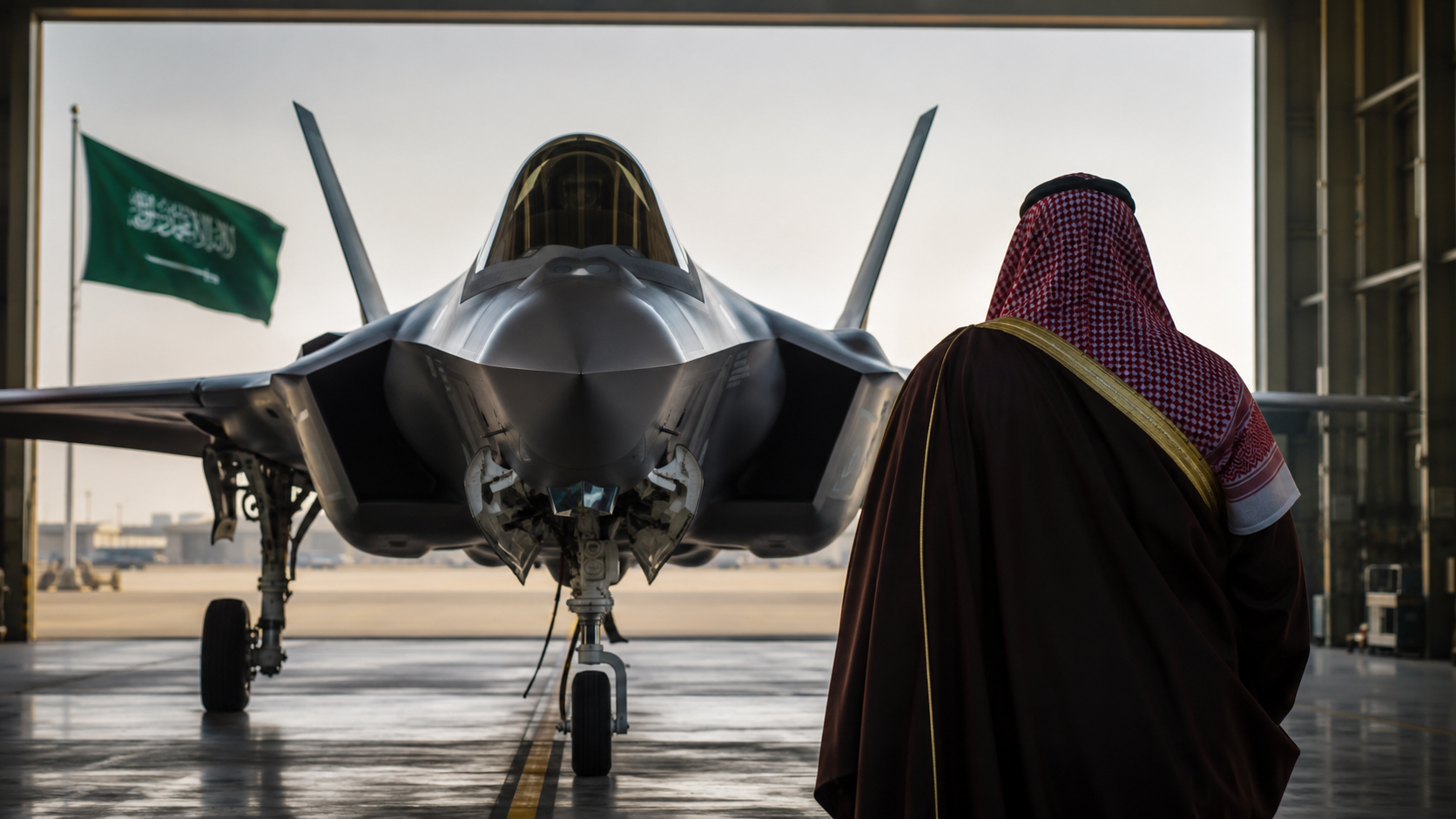
Saudi Arabia is pressing Washington for F-35 jets as Prince Khalid bin Salman seeks traction with President Trump's team. Timing is tight.
The Saudi defense minister held talks in Washington this week with senior administration officials, according to people briefed on his schedule. They said potential F-35 sales and broader security cooperation were included in the discussions.
Khalid brings request to Washington
The visit puts one of Riyadh's most sensitive defense ambitions back before the White House at a politically narrow moment. Saudi officials see a limited window to convert recent diplomatic momentum into progress on a fighter-jet purchase before U.S. midterm politics complicate the agenda.
One person briefed on the minister's plans said Prince Khalid also met Vice President JD Vance. The prince also met President Trump on Wednesday and told him Saudi Arabia "favors de-escalation with Iran," according to the account provided in the source material.
The message links two priorities that Washington often treats together: arms sales to Gulf partners and the regional balance with Iran. For Riyadh, emphasizing de-escalation could help frame the F-35 request as part of a wider security arrangement rather than a standalone weapons deal.
Nuclear accord adds urgency
The current push follows a nuclear agreement between Saudi Arabia and the United States reached last week, according to people familiar with the matter. Saudi officials want to use that agreement as evidence that security and technology cooperation with Washington is already moving.
The F-35 request is important because the aircraft is not a routine defense purchase. Any sale would sit inside U.S. political, military and diplomatic review, with questions likely to center on regional security, technology protection and the effect on Washington's alliances.
Riyadh's timing reflects the U.S. election calendar as much as the defense calendar. Once midterm campaigns dominate Washington, large foreign-policy decisions can become harder to advance, especially when they involve advanced weapons and Middle East security.
The immediate party affected is Saudi Arabia, which wants deeper access to U.S. military technology and stronger security guarantees. For the Trump administration, the talks test whether recent progress on nuclear cooperation can be extended into defense sales without widening regional tensions.
Defense sector tracks the signal
The wider defense industry will read the talks as a signal about whether Gulf demand for advanced aircraft can translate into approved U.S. sales. A deal would not only affect the aircraft itself; it would also shape expectations for training, maintenance, software support and long-term defense relationships.
The uncertainty is whether lobbying becomes a formal, actionable sale process or remains a diplomatic objective. The source material does not include a public U.S. decision, a proposed delivery schedule, a contract value or a detailed Saudi procurement plan.
If the discussions move toward a formal agreement, the global macro effect would come through stronger U.S.-Saudi security alignment at a time of regional tension. Saudi Arabia would gain a clearer path toward its defense goal, while the aerospace and defense sector would prepare for a larger support and services opportunity around any eventual fleet.
If the talks slow after the Washington visit, the macro impact would be a softer signal on U.S. Gulf security commitments. Saudi Arabia would need to decide whether to keep lobbying through the election cycle, while defense suppliers would treat the opportunity as politically live but commercially unresolved.
If Iran de-escalation becomes the main diplomatic frame, the F-35 debate could shift from a weapons-sales question to a broader regional-security bargain. That path would tie any progress to behavior in the Gulf, U.S. congressional tolerance and the White House's willingness to spend political capital before midterms.
The next concrete markers are whether U.S. officials publicly acknowledge a sales process, whether Saudi officials link the request to the nuclear agreement, and whether President Trump's team signals support beyond private meetings. Until then, the strongest verified fact is the lobbying push itself, not an approved fighter-jet deal.