Iran war exposes Tehran's China-Russia support channels
China and Russia are shaping the Iran war from outside the battlefield, with Washington scrutinizing alleged support tied to Tehran’s military reach.
Mei Lin ·
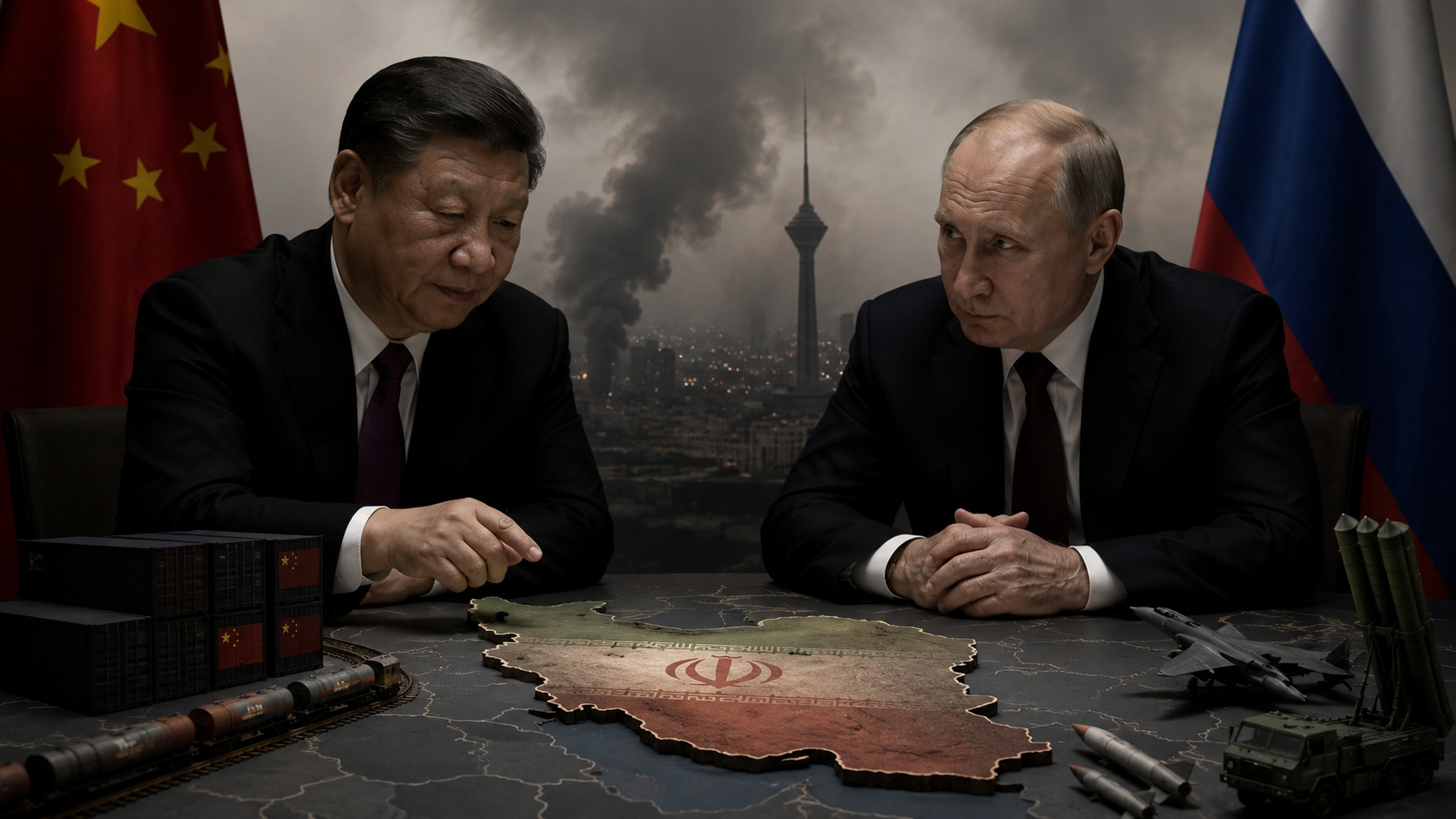
Iran war pressure is drawing China and Russia into sharper focus as Washington examines their military and economic links to Tehran.
Neither Beijing nor Moscow is described as a combatant in the conflict. The central issue is influence: how two powers with long ties to Iran may be helping Tehran, or choosing not to restrain it, while complicating US operations in the region.
Russia's alleged targeting role
Washington suspects Moscow has supplied targeting information that could help Iran strike US military assets in the Gulf, according to the source account. The same account says US officials believe CIA facilities may also be at risk from intelligence-enabled attacks.
Russia is also suspected of helping Iran improve the performance of its drones through a more advanced satellite navigation system. If accurate, that would matter because navigation and targeting support can raise the precision of weapons without requiring a foreign state to enter the war openly.
The allegation fits a broader pattern in which military technology, battlefield intelligence and satellite-enabled systems blur the line between indirect assistance and operational involvement. It also gives Washington a more complicated adversary set than Iran alone, especially if Russian support is tied to systems used against US positions.
China's quieter reported channel
China’s role is described differently. Beijing signed a 25-year cooperation agreement with Iran in 2021, and the source account says China is reportedly providing satellite imagery and shoulder-fired air-defense systems.
At the same time, China has kept more distance from the visible conflict and from diplomatic efforts to end it. That posture lets Beijing preserve relations with Tehran while avoiding the same level of exposure that would come with open crisis diplomacy or direct military alignment.
The 2021 cooperation deal gives context to why Iran can look east for strategic depth. It formalized a long-term relationship with China at a time when Tehran was seeking ways to offset pressure from the US and other Western governments.
For Iran, support from China and Russia is valuable even when it falls short of direct intervention. Satellite imagery, air-defense equipment, drone navigation and targeting information can all affect the cost of military action against Tehran and the risks faced by US forces in the region.
Gulf risk and scenario paths
The immediate exposure is concentrated around the Gulf, where US military assets and intelligence facilities could become targets if the suspected support is real and operationally useful. The named uncertainty is verification: the source account reports Washington’s suspicions, but the details have not been independently confirmed here.
If the allegations remain limited and unproven, the global macro effect is likely to be contained to risk perception rather than a broader shock. Iran would still benefit from the idea that it has powerful partners, while the defense and satellite-services sectors would face scrutiny over possible dual-use channels.
If stronger evidence emerges that Russia supplied targeting data or navigation upgrades, the mechanism changes. Global markets would have to price a wider US-Russia confrontation risk around the Gulf, Iran could gain tactical capability at the cost of deeper isolation, and drone, satellite and air-defense supply chains would face tighter enforcement pressure.
If China stays mostly behind the conflict while Russia absorbs more attention, Beijing may protect its economic position with Iran without taking the diplomatic heat. Under that path, the global macro impact would depend less on China’s trade ties and more on whether the reported military support changes battlefield outcomes.
The wider sector implication is that conflicts increasingly turn on data, navigation and imagery as much as on conventional arms. The next test is whether Washington can substantiate its claims and whether reported assistance to Tehran translates into measurable attacks on US assets or a broader escalation around Iran.