US Iran attacks kill third troop as Gulf tensions rise again
US Iran attacks killed a third American service member in two days as strikes spread to Gulf infrastructure and bases, threatening last month's ceasefire.
Lauren Collins ·
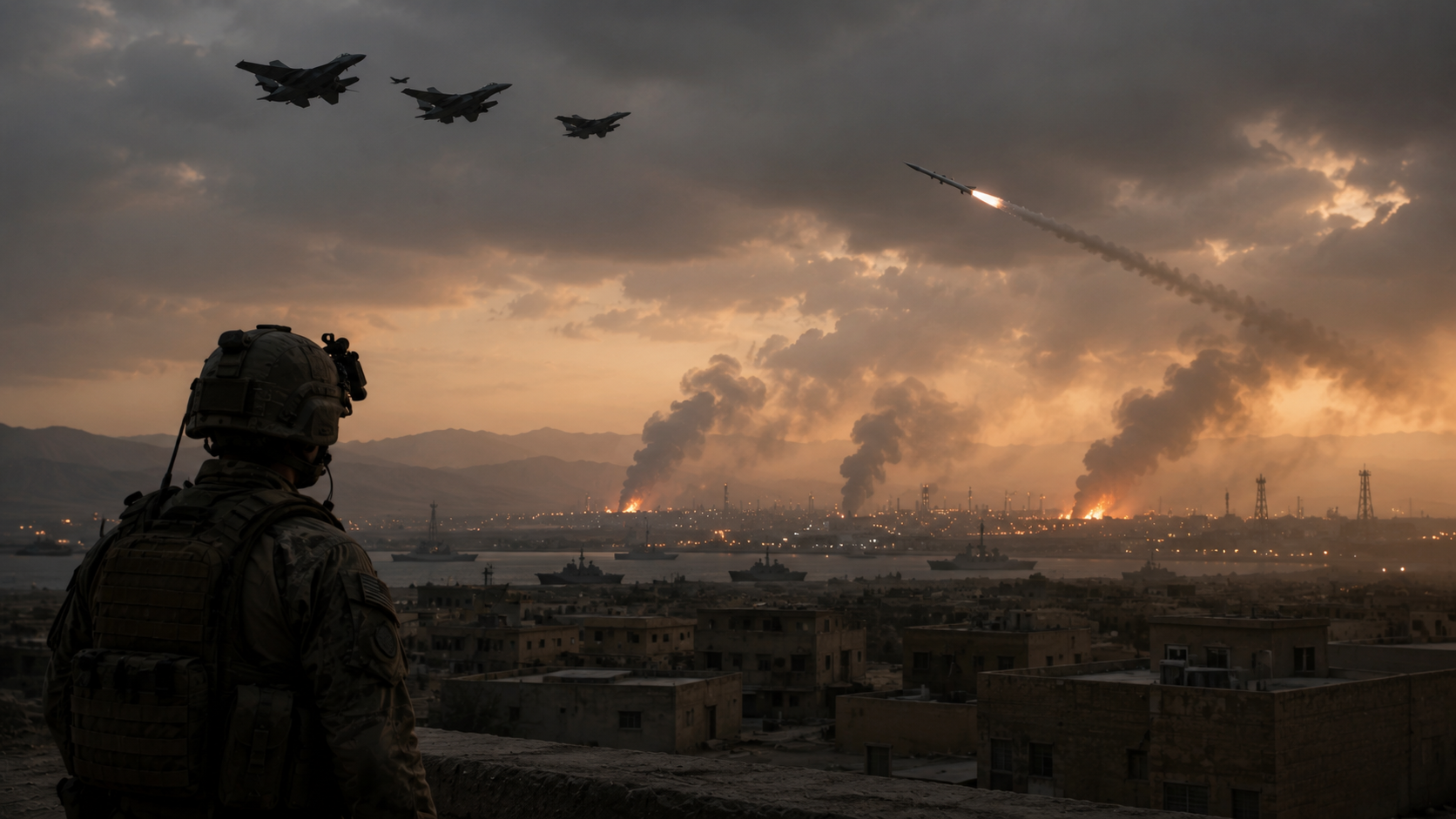
US Iran attacks killed a third American service member in two days as strikes spread across Iraq, Jordan, Kuwait and the Gulf.
The latest death was announced by US Central Command after an American service member in northern Iraq was killed Saturday during an attempt to destroy an unexploded Iranian single-use attack drone. A second service member was wounded in the same operation, the command said in a social media post.
The fatal incident followed a Friday attack in Jordan that the US attributed to the Iranian Revolutionary Guard Corps. Two US troops were killed there, four others were wounded and one was listed as missing, according to Central Command.
Iraq detonation turns fatal
Central Command said Saturday's death raised the US military toll to 17 since the US-Israeli war on Iran began on Feb. 28. The command also reported that unidentified remains had been found in Jordan and said it was investigating whether they belonged to the missing service member.
The pace of strikes has accelerated over the past week and moved beyond direct military targets. Bridges, utilities and port facilities have also been hit, a shift that points to broader pressure on civilian infrastructure and regional supply routes.
Central Command described recent US operations as an effort to reduce Iran's ability to threaten commercial shipping and to punish IRGC forces quickly. The most recent US strikes hit Qeshm Island in the Persian Gulf and southern Iranian locations including Shadegan, Sirik and Hajiabad, Iranian media reported.
Kuwait plants absorb retaliation
Kuwait was again exposed to Iranian retaliation after a power and water desalination plant was targeted for the third time in three days, local authorities said. The attack caused a fire and affected a large number of generation units, according to those authorities.
Kuwait's army said the strikes on power and desalination plants caused fires and severe damage to vital institutions. Iran's state-run IRIB News said drones targeted US forces at Camp Buehring and Ali Al Salem Air Base, though the supplied source included no confirmation that either site was struck.
Bahrain sounded warning sirens on Sunday before saying it had intercepted a wave of Iranian aerial attacks. Israel said it intercepted an Iranian drone near the Israel-Syria border, and Defense Minister Israel Katz warned Tehran that Israel would respond if attacked.
Araghchi frames nuclear demands
The attacks have weakened expectations that a ceasefire signed last month can hold. Iranian foreign minister Abbas Araghchi said in an interview posted on his Telegram channel Sunday that some demands tied to Iran's nuclear program may remain "unresolvable."
That comment matters because the military track and the nuclear track are now feeding each other. If talks cannot define what Iran will accept on its nuclear activities, commanders on both sides have less diplomatic cover to slow retaliatory strikes.
The direct company-level impact in this story centers on operators tied to power generation, desalination, ports and commercial shipping rather than a single named corporation. If attacks on utilities continue, local authorities in Kuwait and nearby Gulf states face pressure to protect water and electricity systems that support households, military sites and energy logistics.
For the wider sector, the mechanism is straightforward: infrastructure strikes raise operating risk for ports, insurers, shipowners and energy-linked facilities across the Gulf. Even when production assets are not directly hit, shipping disruption and higher security costs can move through fuel markets and trade routes.
Three paths shape risk
If the exchange remains limited to military targets, the macro effect may be contained to higher regional risk premiums, while US forces focus on force protection and Gulf infrastructure operators reinforce defenses. That path would still leave shipping firms and insurers pricing in drone and missile threats near the Persian Gulf.
If infrastructure attacks keep expanding, the macro channel becomes more serious because power, water, port and shipping systems are harder to insulate from civilian life and trade. In that scenario, the US military faces a larger protection mission, while Gulf utilities and transport operators become central targets in a conflict no longer confined to bases.
If diplomacy regains traction despite Araghchi's warning, the ceasefire could become a tool for limiting the target set and slowing retaliation. The open questions are whether the missing US service member is identified, whether Kuwait's damaged facilities can operate normally, and whether nuclear demands can be narrowed enough to stop the cycle of strikes.