Hormuz talks stall as Trump rejects Iran’s seven-day plan
Iran is awaiting a US reply on Hormuz talks after President Trump rejected its seven-day plan, while Saudi Arabia faced new Houthi attacks.
Lauren Collins ·
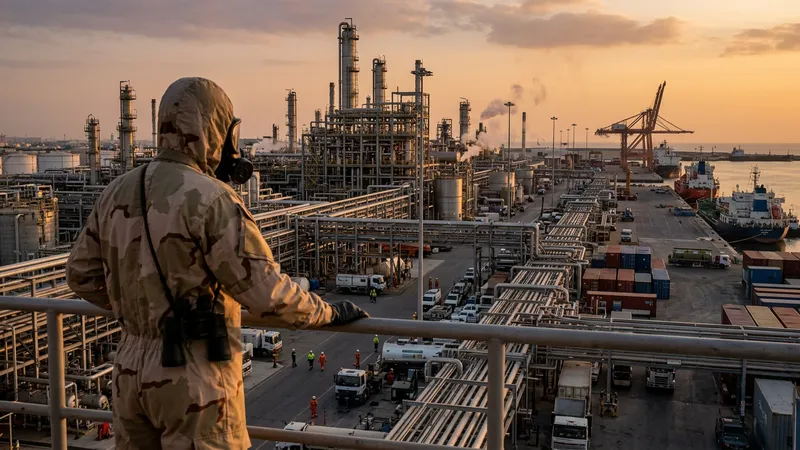
Hormuz talks stalled after President Trump rejected Iran’s seven-day reopening plan, leaving mediators and energy users waiting.
Tehran waits on mediators
Foreign Minister Abbas Araghchi said Iran was aware of Trump’s comments but had not received a definitive message from Qatar and Pakistan, in remarks carried late Saturday by Iranian state media. He said Iran would not ease its conditions, keeping the dispute anchored in negotiation rather than unilateral concession.
Araghchi framed the US position as uneven. "The US president has made some good remarks as well as many contradictory ones, which unfortunately we hear from him frequently," he said.
He added that only a "negotiated solution" could settle the impasse. The wording sets out Tehran’s current posture: access through the Strait is being treated as part of a wider bargain, not a step to be restored outside it.
Seven days, two blockades
US and Iranian negotiators had been exploring an arrangement under which Tehran would reopen the Strait and Washington would lift a blockade of Iranian ports, according to a person familiar with the matter. The proposal had a seven-day frame, the central number now attached to any operational move.
The structure resembled a memorandum of understanding reached in mid-June, the person said. That earlier pact produced a fragile ceasefire that soon broke down, giving both governments a recent example of how quickly a limited arrangement can fail.
President Trump, speaking Saturday as he left the White House for Tennessee, said he had turned down Iran’s approach. "They made a proposal but I rejected it," Trump said. "They want to make a deal where they open the strait immediately because they’re losing so badly."
Saudi attacks widen Hormuz risk
The diplomacy is unfolding alongside renewed attacks by Houthi militants, the Yemen-based group aligned with Iran, against a US ally in the region. Saudi-backed coalition forces in Yemen said air defenses intercepted two drones launched toward Riyadh and a ballistic missile aimed at Khamis Mushait near the southern border.
About a week earlier, Riyadh residents received air-raid alerts for the first time since the March–April peak of hostilities. That sequence gives Gulf governments a second exposure: shipping disruption through Hormuz and direct missile or drone risk at home.
The Strait is a narrow maritime chokepoint for Gulf energy exports, making the political fight larger than a bilateral US-Iran dispute. The mechanism is direct: fewer assured sailings can raise insurance and freight costs before physical shortages appear.
If the seven-day framework is revived, the global effect would run first through shipping confidence: insurers and charterers would have a clearer timetable. Tehran would gain a negotiating channel, while energy companies would regain some planning visibility.
If Trump’s rejection holds and Iran keeps its conditions, the macro channel moves in the other direction: longer routing delays, higher risk premiums and more pressure on Gulf exporters. Iran would retain leverage, but it would also carry the diplomatic cost of being blamed by US allies for obstructing passage.
A third path is escalation through Yemen rather than the negotiating table. If Houthi launches continue toward Saudi cities while Hormuz remains unresolved, Gulf governments would press for tighter air-defense coordination and shipping operators would price regional risk beyond the Strait itself.
The immediate test is procedural rather than rhetorical: whether Qatar and Pakistan deliver a formal US answer to Tehran. Until then, the seven-day offer remains a proposal described by Iran and rejected in public by President Trump, not a settlement with enforceable steps.