Serbia election puts Vucic premiership plan to test now
Serbia election plans accelerated as Aleksandar Vucic prepared to resign and seek the premiership, testing his party against a student-led opposition.
Claire Dubois ·
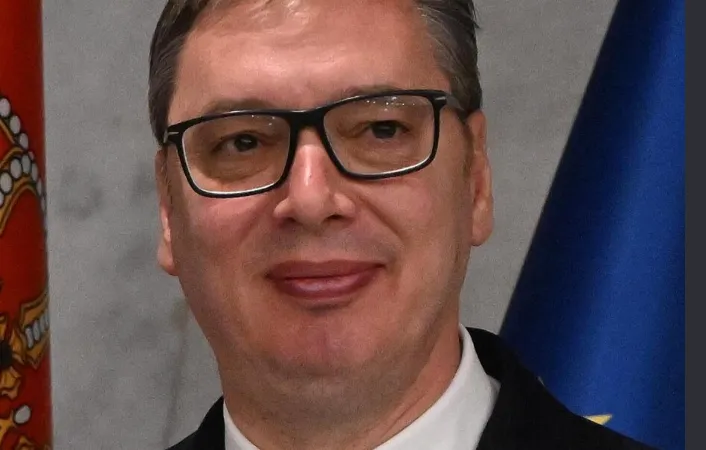
Serbia election plans advanced as Aleksandar Vucic was expected to resign Sunday and seek the premiership after nearly two years of protests.
Parliamentary Speaker Ana Brnabic, a Vucic ally, is set to serve as interim president while Serbia moves toward a snap vote on Oct. 25. The election is intended to settle a political confrontation that has grown from street demonstrations into a direct challenge to Vucic’s hold on power.
Brnabic fills the presidency
Vucic’s Progressive Party has governed Serbia since 2012, a stretch of more than a decade that has made the party the central force in the country’s institutions. Vucic has projected confidence that it will win again, allowing him to shift offices rather than leave the political center.
The proposed move would put Vucic in the prime minister’s post after more than nine years as president. The arrangement resembles the path used by Russian President Vladimir Putin, who spent a four-year period as prime minister when limits prevented another consecutive presidential term.
Vucic spoke with Putin on Saturday about election preparations, according to a Russian statement. Russia said both sides emphasized preventing outside interference in the electoral process, a framing that aligns Moscow with Vucic before the vote.
Students turn Novi Sad outrage
The strongest organized challenge is the Student List, a movement that grew from protests after a canopy collapsed at a refurbished railway station in Novi Sad in 2024. The disaster killed 16 people and was followed by public anger over alleged corruption in contract awards and claims of incompetence among ruling elites.
The Student List says it would loosen Vucic’s grip on state bodies, including the courts and media, while expanding access to housing and healthcare. Those pledges give the campaign both an institutional message and a cost-of-living appeal in a country of about 6.5 million people.
Vucic has denied opposition allegations that earlier elections were affected by voter intimidation, ballot interference and other irregularities. The main political risk is whether voters and opposition groups accept the Oct. 25 process as legitimate if the Progressive Party claims another mandate.
EU path meets Moscow ties
Serbia has kept its European Union bid alive under Vucic, though the accession process remains stalled. At the same time, Belgrade has maintained close relations with Moscow and sought foreign capital from multiple directions.
China has also become a major part of Vucic’s economic model. Under his government, Serbia has positioned itself as a route for Chinese investment into Europe, with billions of dollars directed toward industries ranging from mining to humanoid robots.
The unresolved relationship with Kosovo remains a barrier to Serbia’s EU ambitions. Vucic, 56, has failed to normalize ties with the neighboring state, a requirement for Serbia to move closer to membership in the bloc.
October vote sets three paths
If the Progressive Party wins and Vucic becomes prime minister, Serbia’s foreign policy balance would likely remain intact: EU accession rhetoric, continuing Moscow ties and Chinese-backed investment. For Vucic, that path would preserve executive influence; for industry, it would favor continuity in mining, infrastructure and technology projects already tied to foreign capital.
If the Student List wins enough support to constrain or replace the ruling party, Serbia’s public institutions would become the first arena of change. That scenario could bring pressure for judicial and media reforms, alter the operating climate for state-linked businesses, and shift Serbia’s macro position if investors reassess regulatory and political risk.
If the result is disputed, the political effect would run through legitimacy rather than policy design. Serbia could face renewed protests, Vucic’s transition could become harder to execute, and companies exposed to government contracts or foreign-financed projects could delay decisions until the balance of power is clearer.