

US Federal Agencies Coordinate to Accelerate Counter-Drone Deployment
The US government has launched an inter-agency task force to accelerate the deployment of counter-drone technologies to secure national airspace against…
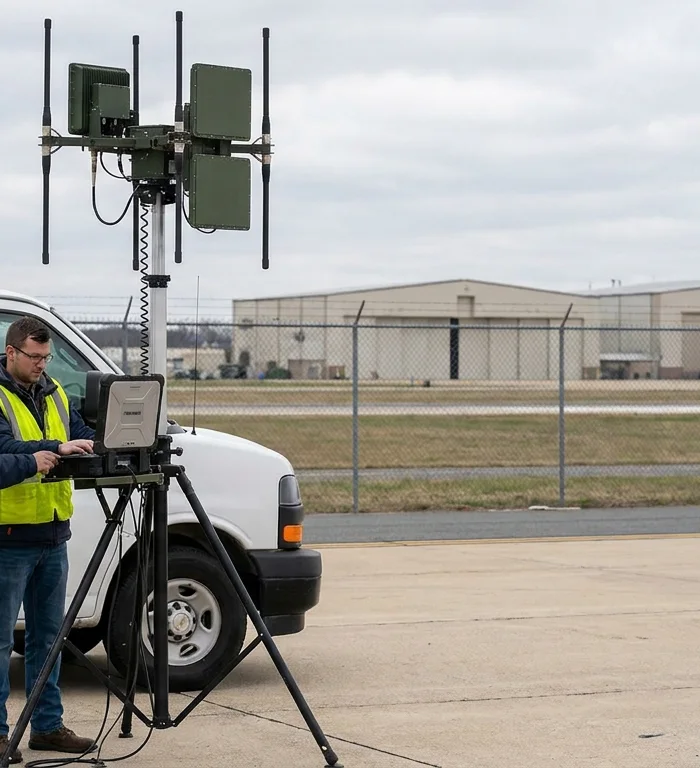
The United States administration has initiated an inter-agency task force to expedite the evaluation and deployment of counter-drone technologies. This effort involves the Departments of Transportation, Defense, Homeland Security, Energy, and Justice, operating under White House leadership to address national security and aviation safety risks.
The initiative aims to streamline the integration of systems capable of detecting, tracking, and neutralizing unauthorized unmanned aerial vehicles (UAVs). Federal agencies are coordinating with the Federal Aviation Administration (FAA) and the Federal Communications Commission (FCC) to reduce bureaucratic delays, with officials noting that some deployment requests can now be processed within 24 hours.
This policy shift follows a series of security incidents, including the arrest of individuals allegedly planning to use explosive-laden drones near a high-profile government event. Furthermore, the FAA has recently implemented flight restrictions for unauthorized drones along the US-Mexico border, prohibiting activity below 400 feet within one nautical mile of the boundary.
The United States
The domestic push for enhanced airspace security aligns with broader international trends, as NATO members have committed to investing over $40 billion in counter-drone capabilities over the next five years. The US effort focuses on standardizing technology across federal departments to mitigate risks posed by the proliferation of low-cost, high-capability drone systems.
Institutional stakeholders should monitor for potential regulatory changes regarding private sector drone operations and the procurement of specialized detection hardware. As federal agencies increase their authority to intercept or seize control of unauthorized aircraft, the legal framework governing airspace sovereignty and electronic interference is expected to undergo further refinement.
More stories
- FCC approves prison cellphone jamming despite 2.5-mile warning
- Congress tests Black Democrats' growing policy influence
- Cotton faults Lutnick over AI chips allegedly sent to China
- Vance declines to back Iran strikes as Trump defends war
- Paul seeks 20%-30% federal credit for U.S. film shoots
- Trump targets data centers abroad with tax threat to firms
- Trump staff shake-up puts Miller in Wiles’ White House position
- Stephen Miller succeeds Wiles as White House chief of staff
- Temporary Protected Status ruling lifts deportation path
- Trump crypto income tops $1.2B in ethics filing data
Latest news
- Trump prepares tariffs on China and other major exporters
- New-car buyers pay record average $50,087 in October
- Banks face ECB reserve debate over liquidity and profits
- Investors see Anthropic debut gains fade below $83 a share
- Iraq orders federal control over Kurdish-area oilfields
- Germans oppose Ukraine aid as poll shows support slipping
- Kim Jong-un receives 10 envoys after constitutional shift
- Ukraine claims Libya strike sinks Russian naval corvette